

Scaloni’s Chess Move: Messi’s Sidelines, Global Market Trembles
POLICY WIRE — Dallas, USA — The rumble around AT&T Stadium isn’t just about another group stage finale. It’s the muted roar of an empire briefly withholding its emperor. Lionel...

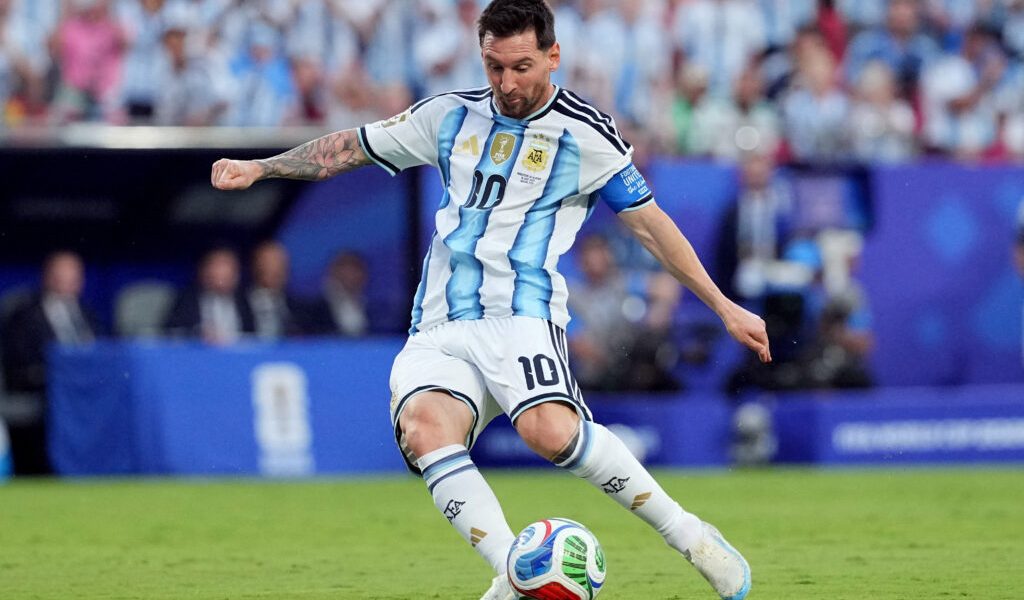
POLICY WIRE — Dallas, USA — The rumble around AT&T Stadium isn’t just about another group stage finale. It’s the muted roar of an empire briefly withholding its emperor. Lionel Scaloni, Argentina’s coach, is pulling a fast one—or maybe, a brutally logical one—by benching Lionel Messi against Jordan. It’s a move that scrambles ticket algorithms, disappoints legions of fans who paid good money just to breathe the same air as the maestro, and sends a shiver down the spine of upcoming opponents. This isn’t just player management; it’s a strategic gambit, a psychological head-fake played out on the global stage.
It’s no secret Argentina’s already stamped its ticket to the Round of 32. Two clinical victories, against Algeria — and Austria, locked up Group J with zero drama. And that’s precisely why the benching isn’t a demotion, but rather an elevation of strategy. Scaloni isn’t merely resting his golden boy; he’s weaponizing the anticipation of Messi’s eventual return. Because, let’s be honest, everyone knows what happens when Leo finally steps onto the pitch.
“Look, we’re not running a charity here. This isn’t about playing favorites; it’s about optimizing our odds,” Scaloni reportedly declared in a pre-match huddle, his voice betraying a hint of impatience with the predictable line of questioning from reporters. “You can’t put a price on keeping our best asset fit for the long haul. Jordan? They’re a good team, but our focus is beyond them. Far beyond.” That’s the cold calculus of tournament football, folks. Personalities take a backseat to podium finishes. He’s already made clear that while Messi might feature later, the starting XI will be a different beast.
The murmurs ripple further than just the stadium’s immediate vicinity, too. Around the world, from Buenos Aires to Lahore, fans aren’t just following the scoreboard; they’re watching Messi’s minutes, gauging his every step. For many in regions like South Asia and the Gulf, football isn’t merely a sport; it’s a shared language, a communal fever pitch that transcends national boundaries and, at times, even deeply ingrained political frictions. They’ve invested emotion, time, — and no small sum of money in replica jerseys and satellite subscriptions. So, when the face of the global game is held back, it creates a palpable tension. Not just in the stands, but across global media networks — and fan communities. And it affects the bottom line.
Because, make no mistake, there’s a hefty commercial dimension at play. Messi isn’t just a player; he’s an economy unto himself. Every match he plays, every goal he scores—he’s already netted five in this tournament, putting him atop the Golden Boot race—generates exponential revenue, from broadcasting rights to merchandise sales. The decision to keep him sidelined, even for a game that doesn’t strictly matter for progression, isn’t taken lightly. It’s a calculated sacrifice. “The truth is, Messi on the field—even for a warm-up—can swing public sentiment and sponsorship deals. It’s a fine line between player welfare and the immense commercial gravitational pull of a legend,” observed Sheikh Bilal Khan, a prominent sports entrepreneur with ties across the Gulf region and South Asia, weighing in on the global implications. It’s true. The financial implications of a star like Messi’s injury would be astronomical, casting a long shadow over commercial partnerships and future market valuations.
📄 POLICY WIRE WHITEPAPER PUBLISHED: PAKISTAN'S NATIONAL SECURITY POLICY PRIORITIES
👉 READ BY CLICKING HEREArgentina, it appears, isn’t taking unnecessary chances, particularly with Messi’s history of left hamstring issues. This tactical rotation won’t stop with him, either. Scaloni intends to shake things up more broadly, with figures like Nico Paz and Valentin Barco poised to get their shot. Even mainstay goalkeeper Emiliano Martinez might be the sole familiar face from the typical lineup. That’s Scaloni doubling down on squad depth, trying to find out exactly what kind of tools he’s got in the shed for the tougher tests ahead. A smart manager does this—tests his lesser-known assets—before the stakes get truly insane.
What This Means
Scaloni’s decision isn’t just about saving Messi’s legs. It’s a masterclass in psychological warfare — and strategic foresight, extending beyond the immediate contest. Politically, it signals Argentina’s confidence—perhaps even bordering on arrogance—that their system is robust enough to succeed without its brightest star. This sends a message to other competing nations: Don’t get comfortable; their depth is real. It’s a policy move, if you will, dictating terms from a position of strength, implying a broader, systemic advantage rather than relying solely on individual brilliance. It also inadvertently underscores the economic disparity in football. Major nations can afford to rest their multi-million-dollar assets; smaller teams often cannot. Consider it an investment in longevity. The value of Messi, as both an athlete and a global brand, dictates that short-term thrills take a backseat to long-term returns. Global viewership of major tournaments has exploded; FIFA reported the 2022 World Cup final alone drew a cumulative audience of nearly 1.5 billion people worldwide. Messi’s presence is a magnet, but protecting that magnet is a shrewd economic policy. When Argentina heads to Miami to face Cape Verde, one would expect the full artillery, including Messi, to be back online, roaring. It’s an escalating strategy that builds tension, and ultimately, aims for maximum impact when it truly matters in the knockouts. It’s a power play, plain and simple, showing that the global phenomenon of football is as much about cunning and strategy off the field as it’s about skill on it. These global tournaments are about legacies, and Scaloni’s banking on his being written with Messi fully charged, not half-cooked.