


Digital Tax Duel: Trump’s Tariff Shot Ignites Global Trade Spat, Sovereign Revenue at Stake
POLICY WIRE — Washington, D.C. — Forget the geopolitical maneuvering for rare earths or semiconductors. The next big brawl on the global stage might just be about… your Netflix subscription. Well,...

POLICY WIRE — Washington, D.C. — Forget the geopolitical maneuvering for rare earths or semiconductors. The next big brawl on the global stage might just be about… your Netflix subscription. Well, indirectly. It’s about who gets to tax the profits flowing from those digital interactions, a question vexing finance ministers from London to Lahore. You see, an economy doesn’t look quite the same as it did a generation ago, does it? More — and more value gets created online, borderlessly. And traditional tax frameworks? They’re just not built for that kind of ghost in the machine.
It’s this gnawing reality—that massive tech behemoths can rake in billions from a country without planting much in the way of physical infrastructure or paying proportionate local taxes—that’s driving nations to cobble together something called a digital services tax. Many governments, grappling with tight budgets and evolving fiscal landscapes, can’t ignore what they consider an uneven playing field anymore. The revenues, after all, are pretty tempting, especially for developing economies desperately trying to fund public services.
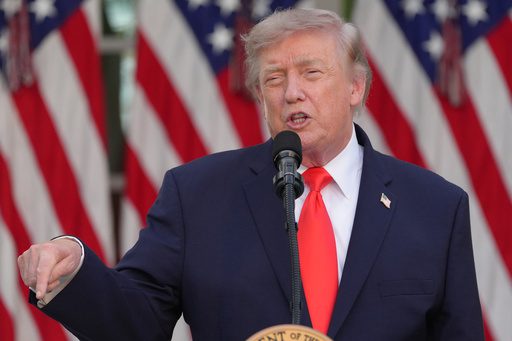
Enter the former occupant of the Oval Office, Donald Trump, whose Friday missive, shot off across the digital ether (the irony isn’t lost on us), was blunt: if you try to tax our tech giants, we’ll hit you where it hurts. Hard. A whopping 100% tariff on all goods coming into the United States from said country. Not a suggestion, mind you. More of a royal decree from his perch. Trump has always been big on tariffs—he’s used them before as a battering ram in trade negotiations. This latest pronouncement? It takes the whole idea up a notch, from saber-rattling to full-blown cannon fire.
His particular aim this time was Europe, countries that, as he sees it, are plotting an “imminent” implementation of taxes on American companies. He’s right, of course; they’ve been discussing it. But it’s not just Europe; nations globally are figuring this out. Consider Pakistan, for instance, a rapidly digitizing economy where millions consume international digital services. Like many countries in South Asia and the broader Muslim world, Islamabad faces the same dilemma: how to capture a fair share of the profits generated by multinational tech companies operating within its digital borders, often without a significant physical presence that would traditionally trigger corporate tax obligations. They’re wrestling with precisely the same challenges. The Organisation for Economic Co-operation and Development (OECD) estimated in 2021 that corporate tax base erosion, a significant part of which comes from digital economic activities, could cost countries between USD 100 and USD 240 billion annually. That’s real money, funds that could shore up healthcare or education systems, for crying out loud.
Trump’s stern warning stated clearly: [QUOTE_PLACEHOLDER] He wasn’t shy about saying this new penalty would, well, trump any previously negotiated trade deals. No nuance there. And he specifically name-dropped those European nations. But hey, it applies to any country. He wants you to know that. Because that’s how he operates, isn’t it?
A spokesperson for the European Commission, Olof Gill, wasn’t exactly pleased, declaring: [QUOTE_PLACEHOLDER] The EU considers these digital taxes “non-discriminatory” and applicable “to all large companies, regardless of their origin.” Seems fair enough, in theory. But the U.S. sees it as a targeted attack, designed specifically to harm American innovation—a point Trump has reiterated time and again, going as far back as last August when he suggested digital taxes and regulation “are all designed to harm, or discriminate against, American Technology.”
📄 POLICY WIRE WHITEPAPER PUBLISHED: PAKISTAN'S NATIONAL SECURITY POLICY PRIORITIES
👉 READ BY CLICKING HEREBut how exactly he’d implement this kind of sweeping 100% tariff remains fuzzy. Would he hit everyone, or just a select few? No one’s quite sure. We’ve seen similar threats before, leading to tussles with major tech companies and international bodies. Back in 2020, the U.K., no longer part of the EU, implemented a 2% digital services tax, targeting big search engines, social media platforms, and online marketplaces based on revenues from U.K. users. Their government’s policy document said those rules for digital businesses had “led to a misalignment between the place where profits are taxed and the place where value is created.” It included thresholds, so mostly the big global players pay up. The tax was specifically crafted [QUOTE_PLACEHOLDER] You can see why they felt the need. And many others feel it too.
What This Means
This latest salvo isn’t just bluster; it’s a high-stakes poker game that could seriously disrupt the global trading order. If Trump makes good on his threat, we’re talking about potentially crippling import costs for European goods, which means higher prices for American consumers. That, in turn, could spark a larger, painful trade war, hurting economic growth for everyone involved. For economies outside the traditional Western blocs—like those in South Asia—the implications are more nuanced. On one hand, these nations might see a stronger push for a globally harmonized digital tax framework if the major players fail to agree. On the other hand, being caught in the crossfire of a U.S.-Europe trade dispute isn’t a good look for anyone. It makes the world less predictable, less stable. And that’s bad for business everywhere. The real story here isn’t just about tariffs; it’s about whether national sovereignty over taxation can adapt to a borderless digital economy without fracturing international relations. We’re in for a bumpy ride, folks. And it won’t be cheap.