


Europe’s Unease: Congo’s Drastic Travel Curb After Ebola ‘Breaches’ Fortress France
POLICY WIRE — Kinshasa, DRC — For years, the Ebola epidemic in the Democratic Republic of Congo was viewed by many distant nations through a peculiar lens—a tragedy, yes, but one confined mostly to...

POLICY WIRE — Kinshasa, DRC — For years, the Ebola epidemic in the Democratic Republic of Congo was viewed by many distant nations through a peculiar lens—a tragedy, yes, but one confined mostly to maps with dark red splotches somewhere on a faraway continent. That comfortable geographical detachment evaporated this week with the brutal finality of a positive test result in Paris. It’s not just a medical diagnosis; it’s a geopolitical jolt.
Kinshasa, never one to dither when an international microscope swivels its way, didn’t waste much time reacting. But did it act effectively? The Democratic Republic of Congo’s Ministry of Health announced stringent new travel restrictions today, effective immediately. And just like that, the invisible lines of pathogen movement got a little more visible, a little more policed—or at least, they’re supposed to. [QUOTE_PLACEHOLDER]
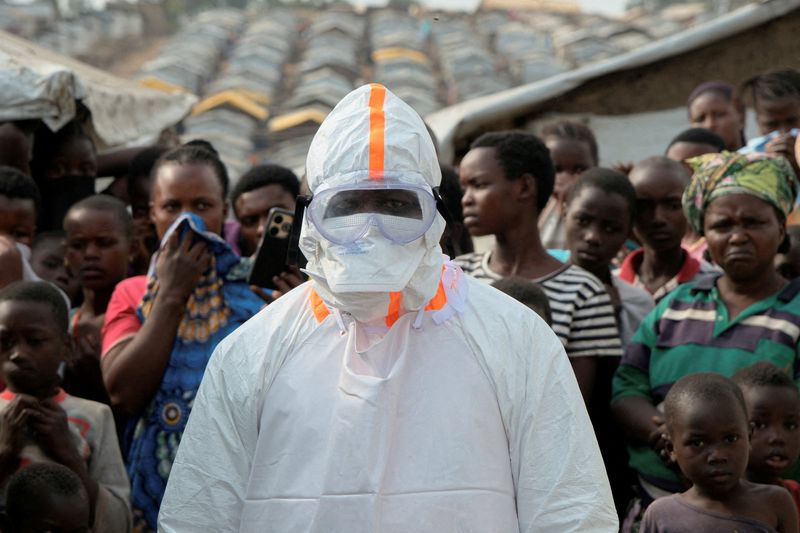
The catalyst, a story unfolding with uncomfortable echoes of earlier viral scares, involves a traveler who embarked from Beni, North Kivu province, an area already grappling with the ongoing Ebola epidemic. This individual eventually landed in Paris via Brussels. The French Ministry of Health reported yesterday that a Congolese national, who had traveled from Beni to Paris via Brussels, tested positive for the Zaire Ebola strain upon arrival. Talk about an unpleasant souvenir. This marks the first confirmed case of Ebola reaching Western Europe during the current outbreak, instantly remapping the ‘containment zone’ in the minds of European public health strategists. French officials have, predictably, launched immediate contact tracing efforts, trying to tie up loose ends before a trickle becomes a torrent.
So, what does Kinshasa do? They declared a digital — and physical gauntlet. The DRC government stated that all passengers departing from Ebola-affected regions, particularly North Kivu and Ituri provinces, will undergo mandatory health screenings at all airports and border crossings. You can picture it: the stern officials, the infrared thermometers, the forms. These measures include temperature checks — and declarations of recent travel history. travelers will be required to present a valid health certificate issued by approved medical facilities, confirming they’re not symptomatic for Ebola and haven’t been exposed to known cases. It’s a logistical nightmare waiting to happen—or, at best, a significant deterrent. Airline carriers and ground transportation services operating in and out of these regions are being briefed on the new protocols and their role in enforcement.
But here’s the rub: do these protocols actually work? Critics argue these new measures, while ostensibly aimed at preventing international spread, could further isolate already struggling regions within the DRC, potentially hindering humanitarian aid and economic activity. Aid groups aren’t thrilled, for obvious reasons. They know better than most that restricting movement often just drives people to more informal, less traceable routes. The World Health Organization (WHO) has previously cautioned against travel bans, citing their ineffectiveness and tendency to create panic and stigma. But still, the WHO has also supported enhanced screening at departure points. It’s a tightrope walk—public reassurance versus pragmatic epidemiology.
📄 POLICY WIRE WHITEPAPER PUBLISHED: PAKISTAN'S NATIONAL SECURITY POLICY PRIORITIES
👉 READ BY CLICKING HEREThe broader context here is sobering, almost relentlessly so. The current Ebola outbreak in the DRC is the second-largest in history, with over 3,000 cases and more than 2,000 deaths reported since August 2018. To put that in perspective, this outbreak has killed more people than the cumulative death toll of a decade’s worth of polio cases in Pakistan. For a nation like Pakistan, where public health infrastructure often battles internal strife and widespread distrust (and occasionally, violent attacks on healthcare workers), the lessons from DRC are stark. Any global health crisis, from a continent away, can find its way to our doorstep through the arteries of international travel, whether via direct flights from Beni or a convoluted journey through multiple hubs. And because the modern world’s connected nature—both digital and physical—makes isolation nearly impossible, what happens in a remote village in Kivu ultimately holds implications for Lahore, Karachi, or indeed, the Champs-Élysées.
Efforts to control the disease have been complicated by ongoing armed conflict, community distrust, and attacks on health workers. It’s not just a virus; it’s a social — and political phenomenon. Vaccine rollout has faced significant logistical hurdles. This new international dimension, reaching Europe’s doorstep, only adds another layer of complexity to an already dire public health emergency. Suddenly, the problem isn’t just ‘theirs’ anymore; it’s everyone’s.
What This Means
This Ebola scare in France marks a clear escalation in the global public health narrative surrounding the DRC outbreak. It shifts the problem from an ‘African issue’—an easy dismissal for policymakers in the West—to a more tangible, immediate concern for major capitals. Economically, expect short-term turbulence for airlines serving the region and a possible, though likely temporary, downturn in business travel confidence to parts of Africa. For Pakistan and other South Asian nations, this incident is a potent reminder of the fragility of public health security, particularly with large diaspora populations and significant trade routes connecting the world. It’s an informal drill for future, potentially far more pervasive, pandemics. This ‘breach’ will undoubtedly trigger calls for stricter health passporting systems, more comprehensive travel histories, and enhanced biosecurity protocols at international airports, a quiet move toward a more surveilled, less freely mobile world, all justified in the name of containment. The subtle irony, of course, is that these reactive measures often do little to address the root causes of disease outbreaks: poverty, political instability, and underdeveloped health systems where pathogens truly thrive, mostly unchecked. Instead, they reinforce a global caste system for travel, disadvantaging those from regions already battling multiple crises.