

The Texas Longneck: Why a Wandering Giraffe Highlights a Policy Paradox
POLICY WIRE — Austin, Texas — For an animal accustomed to vast African plains, the remote scrubland of the Texas Hill Country must’ve seemed like home. Or maybe, for a creature like Gracie, a...

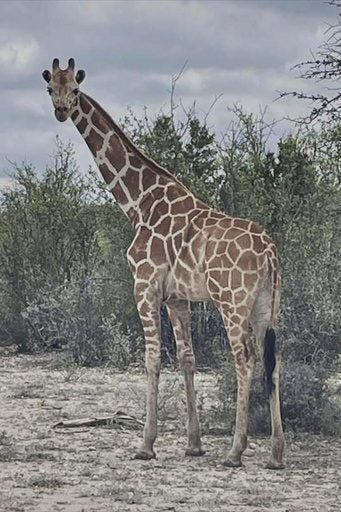
POLICY WIRE — Austin, Texas — For an animal accustomed to vast African plains, the remote scrubland of the Texas Hill Country must’ve seemed like home. Or maybe, for a creature like Gracie, a 1,200-pound giraffe recently gone walkabout, it was just… a bigger paddock. Her two-week adventure, concluded unceremoniously with an aerial sighting, wasn’t merely a quaint local oddity. No, this story, seemingly plucked from a children’s book, inadvertently spotlights a deeper, sometimes baffling, policy paradox playing out across swathes of America’s private land: the unbridled right to own the wild, consequences be damned.
It’s not every day a local sheriff—or anyone, for that matter—is pressed into service tracking a rogue giraffe. Real County Sheriff Nathan Johnson, who by his own admission has fielded reports on everything from missing wildebeests to capuchin monkeys, had to confess, “Never a giraffe, though. That was a new one, certainly.” His relief was palpable when Gracie was spotted, relatively serene, about four miles (6.4 kilometers) from her Cedar Hollow Ranch enclosure. She was, as reported, swishing her tail. Just existing.
Her owner, Vick Jones, a man who, one might assume, isn’t easily fazed by much, spoke of Gracie with an almost paternal air. “She’s in good shape. Couldn’t have looked healthier, really. She’d found water, plenty of greens—the open range agreed with her, for a bit.” This easy cohabitation, however temporary, between a colossal African ungulate and the Texas chaparral raises an uncomfortable question: What precisely are we doing out here?
The Lone Star State is notorious, one might even say legendary, for its lenient exotic animal ownership laws. In fact, a 2022 USDA Animal and Plant Health Inspection Service report indicated Texas houses one of the largest concentrations of privately owned exotic animals in the United States, rivaling some developing nations in its diverse, privately-held fauna. Many of these animals end up on ranches like Jones’s, living out their days far from their native habitats. But what happens when an animal, particularly one engineered for endless horizons, decides its fence isn’t quite good enough?
Because Gracie simply walked off. Jones suggested she’d been exploring a rocky outcrop, found food, then merely continued onward when the path home presented a minor inconvenience—a gate on the wrong side. Getting her back wasn’t a walk in the park; it required sedatives, specialized trailers, and helicopter assistance across terrain impassable by vehicle. It’s an expensive, logistically complex undertaking for a single giraffe, isn’t it?
📄 POLICY WIRE WHITEPAPER PUBLISHED: PAKISTAN'S NATIONAL SECURITY POLICY PRIORITIES
👉 READ BY CLICKING HEREBut this isn’t just a Texas thing. The global trade in exotic animals—legal and otherwise—is a sprawling, often murky business. You’ll find private collections, petting zoos, and even outright illicit markets stretching from European capitals to Gulf nations, and yes, deep into South Asia. Pakistan, for instance, faces ongoing challenges with the enforcement of wildlife protection laws as the demand for exotic species—from rare birds to big cats—as status symbols persists, often leading to animals enduring deplorable conditions or contributing to international wildlife trafficking. The ethical quandary, and indeed the regulatory lacuna, isn’t localized to a Texan ranch, it’s a global debate in miniature played out each time a cheetah or, in this case, a giraffe, lands in an unlikely habitat. They’ve gotta put a new fence up, Jones said, implying the lack thereof wasn’t much of an issue before Gracie.
What This Means
Gracie’s brief excursion is more than just a feel-good story about a found pet. It’s a lens through which to examine a broader societal discussion: Where do the rights of private land ownership intersect—or clash—with public safety, animal welfare, and conservation ethics? The ease with which such large, potentially dangerous (though Gracie is described as docile) animals can be kept, and occasionally lost, on private property, presents real questions for policymakers. It certainly begs questions about permitting, containment standards, and emergency response protocols that extend far beyond simply calling the sheriff. Imagine the international incident if an animal from a heavily regulated species were to wander off and cause harm or stumble onto ecologically sensitive public lands. Don’t underestimate the ripple effect.
Lawmakers, both state and federal, could stand to consider more unified regulations, because disparate local ordinances often lead to regulatory havens where, frankly, anything goes. We’re talking about massive animals here, animals that didn’t evolve for fences or Texas subdivisions. And their continued proliferation in private hands, sometimes in less than ideal circumstances, suggests a reckoning is due—one that moves beyond mere sentiment and towards robust, enforceable policy frameworks. Perhaps Gracie’s little adventure is the unwitting nudge we needed. Or maybe it’s just another Tuesday in Texas.