


Lionesses’ Strategic Gambit: Long-Term Player Deal Hints at Deeper WSL Playbook
POLICY WIRE — London, UK — The modern footballing battlefield isn’t just played out on lush green turf. It’s often waged in sterile negotiation rooms, amidst contract clauses and...

POLICY WIRE — London, UK — The modern footballing battlefield isn’t just played out on lush green turf. It’s often waged in sterile negotiation rooms, amidst contract clauses and performance incentives, especially as women’s football — once largely an amateur afterthought — morphs into a significant global industry. Clubs are increasingly making calculated moves to secure talent, not just for immediate gains but as strategic investments in a burgeoning market. What was once a handshake deal is now a complex proposition, indicative of a wider economic shift.
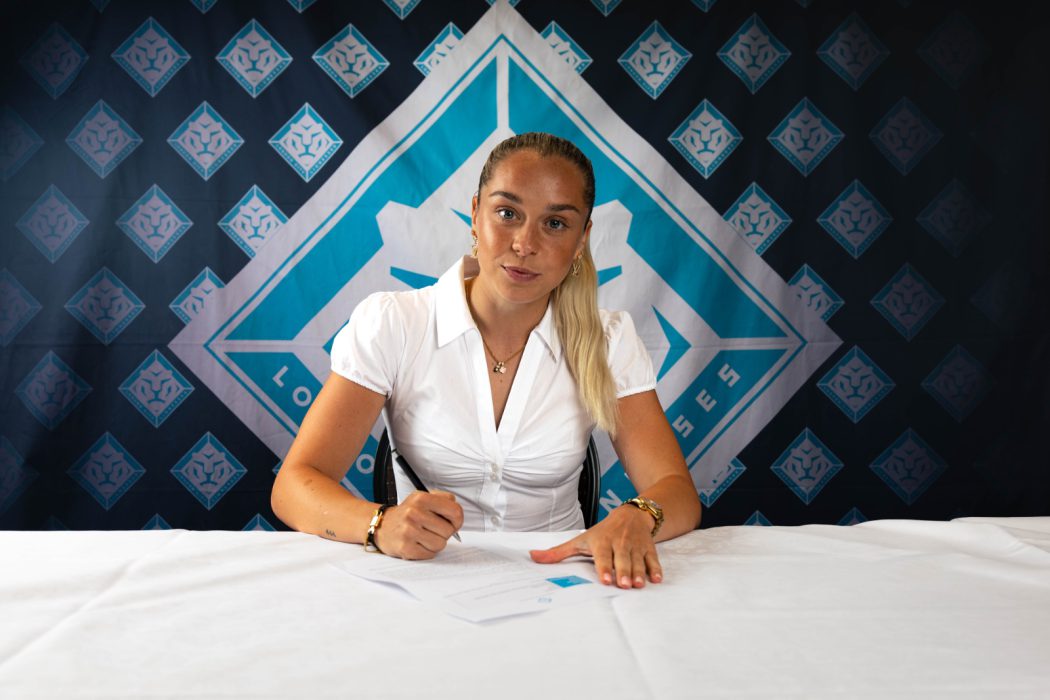
It’s against this backdrop that London City Lionesses recently confirmed full-back Poppy Pattinson will stick around, inking a new, long-term commitment stretching all the way to summer 2029. No longer is a player merely a jersey; she’s an asset, a brand, and in Pattinson’s case, a significant piece of what the Lionesses hope will be a formidable puzzle.
The 26-year-old defender joined the Pride just last summer, making the switch from Brighton & Hove Albion. She wasted little time making her mark, chalking up 13 appearances in the Barclays Women’s Super League during the 2025/2026 season. And then there’s that England cap, a first-time call-up against Ukraine back in March. For a player who joined with little fanfare, she’s certainly found her rhythm – — and the club’s confidence.
“Look, I’m genuinely chuffed to sign on the dotted line here,” Pattinson said, sounding far from the detached corporate drone, yet every inch the professional. “You want to be where you can actually get better, you know? And I reckon I’ve got loads more to give. This squad? Huge potential. Proper buzz to be a part of it.” She reflected on a previous season that was a bit of a mixed bag – an early injury, then that surprise international nod. “I’ll never forget getting my England debut while wearing this badge. Can’t ask for much more.” It’s a candid insight, the kind that money can’t quite buy, but secures for a hefty fee anyway.
But the story isn’t just about player loyalty or individual achievement. It’s about clubs like the Lionesses positioning themselves for a future where player valuation mirrors their male counterparts more closely than ever before. We’re seeing investment pour into women’s sports from unexpected quarters globally—even governments in some Muslim-majority nations, eyeing Olympic glory and cultural soft power, are increasingly backing women’s athletic programs. And clubs, don’t you think, are paying attention to that expanding audience — and potential talent pool?
To put a finer point on it: A recent report by Deloitte estimated the total revenue of the top European women’s football leagues reached €400 million in 2023, marking a nearly 30% jump year-on-year. That’s a serious number, — and it dictates how clubs approach talent. Because every smart football organization understands that stability at the back is money in the bank. Long-term deals mean less churn, more cohesion, and, crucially, less risk of a prized asset walking out the door on a free transfer—a cardinal sin in today’s football economics.
“Securing Poppy wasn’t just about retaining a great defender; it’s about making a clear statement of intent for where we’re headed as a club,” offered Evelyn Thorne, General Manager of London City Lionesses, in a private conversation yesterday. “We’re building something substantial here. This kind of commitment, on both sides, is what elevates you from being just another team to a genuine force. We need that kind of long-view dedication from our key players. It’s not rocket science; it’s smart business in a quickly maturing league.” And Thorne isn’t wrong; clubs are realizing the game isn’t just about kicking a ball anymore. It’s a full-on business operation. It’s not just kings dealing with fiscal scrutiny these days; it’s football clubs too.
What This Means
Pattinson’s new deal is far more than a routine contract extension; it’s a strategic move in a league that’s rapidly professionalizing, where the economics of player retention are becoming as sophisticated as any top-tier men’s club. For the Lionesses, it represents an investment in stability and a signal of their financial commitment to compete in an increasingly competitive WSL landscape. Because clubs with deep pockets are now able to lure players with enticing packages, creating a subtle power shift in player-club dynamics. Long-term contracts help insulate against that.
Economically, such deals reflect a growing belief in the long-term viability — and growth potential of women’s football. It helps inflate player values across the board and solidifies a more structured wage framework—moving away from the ad-hoc payments of yesteryear. Politically, it signals to competitors and potential investors alike that London City isn’t just playing for the season; they’re in it for the long haul, much like the broader, more global push to integrate and monetize women’s sports from entities hoping to capitalize on untapped markets. Remember, these are the new narratives reshaping the global sports arena, influencing even World Cup dynamics.
For players like Pattinson, it means enhanced security and the ability to focus purely on performance, a luxury not always afforded in the past. But it also means increased pressure; extended contracts bring higher expectations. As the WSL continues to attract global talent and investment, such commitments become bargaining chips, indicators of a club’s ambition and its financial health. It’s a fascinating, intricate dance, isn’t it?