

Iran and Egypt’s World Cup Match in Seattle: A ‘Pride Match’ Ignites Controversy
POLICY WIRE — Seattle, United States — A Friday FIFA World Cup fixture, slated to pit Iran against Egypt, has found itself embroiled in an unanticipated controv...

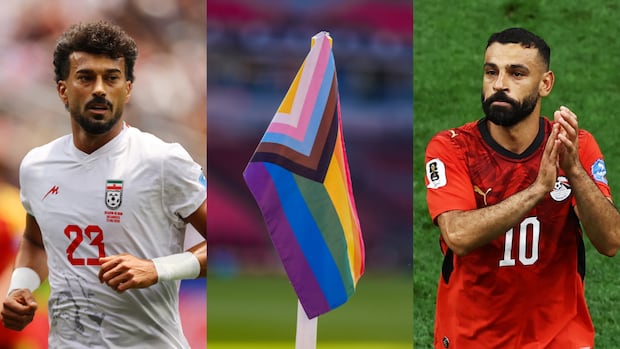
POLICY WIRE — Seattle, United States — A Friday FIFA World Cup fixture, slated to pit Iran against Egypt, has found itself embroiled in an unanticipated controversy, courtesy of local Seattle organizers. Despite the international football governing body, FIFA, having no direct involvement in the designation, the highly anticipated group-stage game is being actively marketed as the ‘Pride Match.’ This move has swiftly generated a wave of contention, clouding the buildup to what would ordinarily be a focus purely on athletic performance.
The decision by Seattle organizers to label such a high-profile game a ‘Pride Match’ immediately brings into sharp relief the differing societal perspectives on LGBTQ+ rights, particularly given the national contexts of the two teams involved. While the official impetus behind the designation remains a local one, independent of FIFA’s global mandate, its implications resonate internationally.
The clash, positioned in this light, transcends mere sporting rivalry, morphing into a public forum for a broader discussion on social inclusivity and human rights within the context of global events. The initiative, although grassroots in its origin, sets the stage for a geopolitical subtext beneath the surface of the ‘beautiful game’ – a recurring theme whenever major sporting events intersect with contemporary social issues.
The ‘Pride Match’ label, intended to celebrate and support the LGBTQ+ community, takes on particular significance when considering the official stances and legal frameworks in both Iran and Egypt.
(As background, according to international human rights reports, both Iran and Egypt have stringent laws that criminalize homosexual acts. In Iran, homosexual acts are punishable by severe penalties, including imprisonment and, in some cases, death. In Egypt, while there’s no explicit law criminalizing homosexuality, individuals are often arrested and prosecuted under broader ‘debauchery’ or ‘public indecency’ statutes, leading to social ostracism and significant legal challenges for LGBTQ+ individuals.)
Placing these nations at the center of an event explicitly named ‘Pride Match’ creates a stark contrast between local celebratory efforts and state-level legal and social realities. This divergence is the primary engine driving the ongoing controversy, turning a football match into a flashpoint for social commentary.
The decision by local organizers is not a precedent-setting move from FIFA itself, meaning it doesn’t represent a top-down policy shift within global football. Instead, it reflects a local initiative seeking to use the platform of a major international sporting event to advocate for specific social causes. However, because the World Cup draws such immense global attention, even locally-originated marketing efforts can ignite significant international dialogue and, as seen here, considerable debate.
This situation underscores a growing trend where international sporting events, once primarily seen as apolitical contests, increasingly become venues for expressions of social and political advocacy. The presence of such designations — often originating from host cities or local groups rather than the international federations — highlights the persistent tension between the universal aspirations of sport and the diverse values of participating nations and communities. For fans and observers alike, the game is now weighted with an additional layer of meaning, distinct from the competition itself, and a topic of discussion that goes far beyond the confines of the pitch.
What This Means
The designation of the Iran-Egypt World Cup game as a ‘Pride Match’ by Seattle organizers serves as a clear illustration of how global sporting events are increasingly entangled with social and political discourse, regardless of the official intent of governing bodies like FIFA. This incident suggests a burgeoning willingness among local hosts and civil society groups to leverage these highly visible platforms for advocacy, even when it directly clashes with the national policies or cultural norms of participating states. The ensuing controversy isn’t merely about football; it reflects deeper global debates on human rights, cultural sovereignty, and the role of international spectacles in driving social change.
Moving forward, such occurrences may force international sporting organizations to confront these issues more directly. Will FIFA, or other federations, establish clearer guidelines on how local organizing committees can — or cannot — integrate social campaigns into their marketing? Or will they maintain a hands-off approach, accepting the inevitable frictions that arise when local values meet global diversity? The incident highlights the persistent challenge of fostering unity in sport amidst profound international disagreements on fundamental social issues, effectively making the playing field a stage for a much larger societal conversation.
(Reporting based on wire reports)