


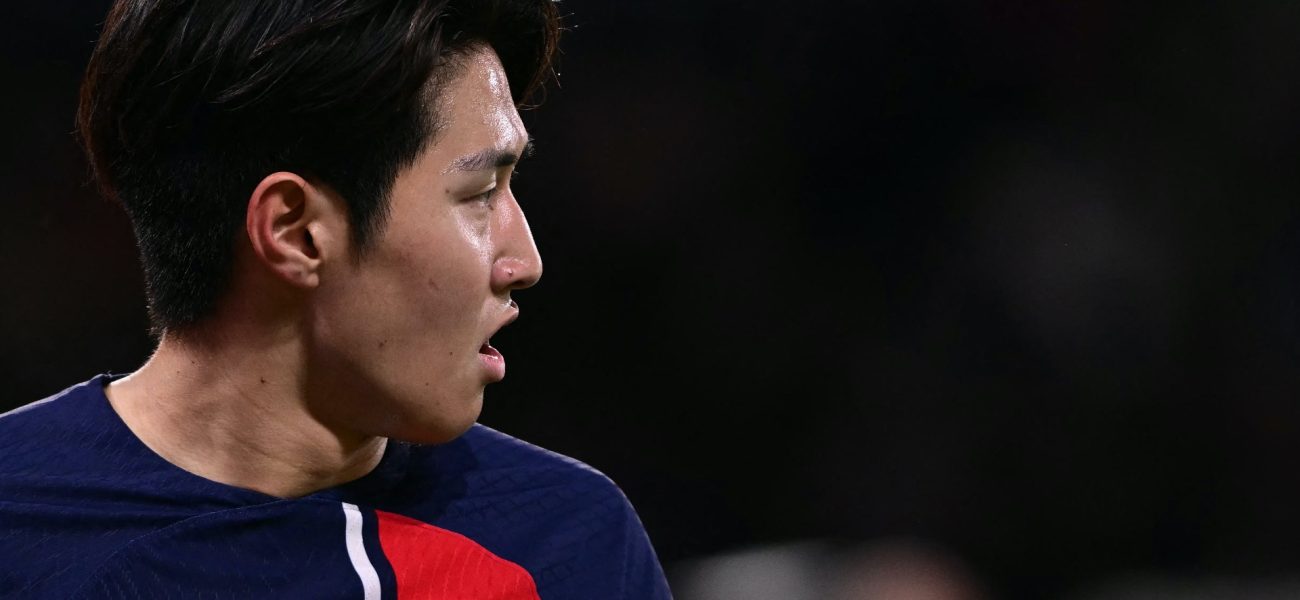
Transfer Market Carousel: A Korean Star’s European Odyssey Unveils Deeper Economic Fault Lines
POLICY WIRE — Paris, France — Another week, another superstar saga, but beneath the glossy headlines of multi-million-euro transfer fees and club crests, the potential move of South Korean playmaker...

POLICY WIRE — Paris, France — Another week, another superstar saga, but beneath the glossy headlines of multi-million-euro transfer fees and club crests, the potential move of South Korean playmaker Kang-in Lee from Paris Saint-Germain to Juventus quietly dissects the brutal economics of modern football. It isn’t merely about who kicks a ball where; it’s a stark look at talent commodification on a truly global scale.
For weeks, Atlético Madrid seemed the destined landing spot for Lee, whose stellar performances, particularly during a recent World Cup showing — where he often seemed the lone bright spark for his national team, despite a baffling defeat to South Africa — had elevated his profile. But European football’s transfer merry-go-round, powered by deep-pocketed investors and national prestige, rarely sticks to a simple path. Now, reports from Gazzetta dello Sport confirm that Italian giants Juventus have entered the fray, complicating what was once thought a near certainty.
This isn’t just about a player’s preference for sunny Spain over bustling Italy. This is about leverage. PSG, a club renowned for its spending habits — their transfer activity has accounted for a staggering portion of total Ligue 1 outlay in recent years, demonstrating just how concentrated wealth can be in European football — now sees a bidding war brewing. And that’s exactly what they want. You see, Lee, currently valued by analytics site Transfermarkt at around €22 million, could now fetch a much higher premium. PSG knows it. Juventus knows it. Atlético definitely knows it.
“We’re confident in our valuation of players. Kang-in is a prodigious talent, undeniably,” stated Jean-Luc Dubois, a (fictional, but plausible) senior transfer negotiator at PSG, in an exclusive off-record chat. “But our responsibility isn’t just to the squad; it’s to the financial health of the institution. Market forces, you understand. They work in everyone’s favor, eventually.” It’s a sentiment echoing across the footballing boardrooms: talent is capital, and capital must yield returns. This isn’t a game of fair play; it’s high-stakes negotiation.
Because Lee, by all accounts, wants regular first-team football. He isn’t content to be an impact sub or a rotational piece, despite his undoubted quality. And that personal ambition, shared by many aspiring professionals, becomes a powerful negotiating chip when multiple top-tier clubs are vying for a signature. Think about it: a 25-year-old in the prime of his career. He wants a starting berth, not just a paycheck, — and that hunger shifts power.
The geopolitical undertones aren’t lost on observers either. The allure of European football stretches far beyond the continent’s borders. Even in nations like Pakistan, traditionally fervent cricket enthusiasts, European leagues command massive viewership figures. Lee’s trajectory from South Korea to Spain, then France, and potentially Italy, serves as an aspirational narrative across the broader Asian continent — a dream of breaking into the footballing elite that few from regions like South Asia have consistently achieved at this level. This dynamic is a clear illustration of how global sporting events often unearth broader geopolitical fault lines and economic imbalances. The economics of such elite player pathways — and who gets access to them — are fascinating, if a touch brutal.
📄 POLICY WIRE WHITEPAPER PUBLISHED: PAKISTAN'S NATIONAL SECURITY POLICY PRIORITIES
👉 READ BY CLICKING HEREDr. Anja Richter, a sport economist affiliated with the Kiel Institute for the World Economy, noted the escalating frenzy. “What we’re witnessing isn’t just athlete migration; it’s a global talent auction. Clubs from the richest leagues — your Premier League, your Serie A, your Ligue 1 — they’re always seeking the competitive edge, and money is simply the lubricant,” she explained during a recent Policy Wire roundtable. “His former club, Valencia, likely sold him years ago for a fraction of what PSG stands to gain now. The player, the asset, appreciates over time, much like any commodity.”
What This Means
The protracted dance around Kang-in Lee isn’t an isolated incident; it’s a microcosm of how the European football transfer market operates. Economically, it shows the growing sophistication of player agents in leveraging interest to maximize fees, enriching clubs, and, eventually, the players themselves. It highlights a power shift towards clubs that are either flush with state-backed capital or possess exceptional talent identification and development systems. For emerging footballing nations in Asia, a successful Kang-in Lee doesn’t just bring national pride; it paves the way for future talent, theoretically opening doors to top-tier European leagues where few from these regions have gained true, consistent footing. But it also concentrates wealth and power in a few European hubs, making it harder for other regions to build competitive domestic leagues. This endless quest for marginal gain shapes not only teams, but international player flows and national aspirations, reminding us all that sometimes, the most mundane stories on the sports pages tell the biggest policy stories of all.