

World Cup’s Half-Time Show: Beyond the Goals, Global Politics at Play
POLICY WIRE — New York, USA — So, what’s a World Cup, really? A showcase of athletic ambition? Absolutely. A revenue-generating behemoth for FIFA? You bet. But beneath all that, past the...

POLICY WIRE — New York, USA — So, what’s a World Cup, really? A showcase of athletic ambition? Absolutely. A revenue-generating behemoth for FIFA? You bet. But beneath all that, past the thrilling strikes and gut-wrenching penalties, it’s always been this peculiar blend of soft power and hard cash, an intricate dance between national pride and corporate interests. Halfway through this gargantuan 104-match tournament, as a staggering 54 games are now ‘in the books’ (that’s 50 to go before someone hoists the trophy in New Jersey on July 19, by the way), the real drama isn’t just unfolding on the pitches; it’s simmering in the economic backrooms and geopolitical sidelines.
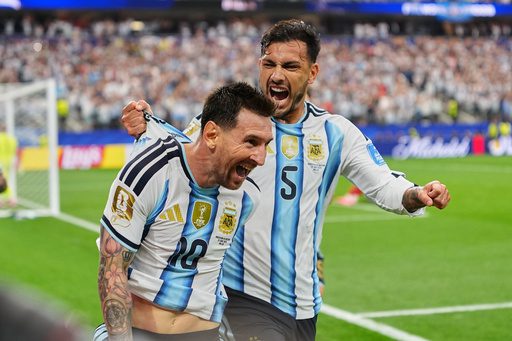
No one’s surprised the U.S. managed to slog its way into the Round of 32. Same goes for its co-hosts, Mexico and Canada, who’ve also carved out their spots in this knockout stage— the ‘biggest World Cup in history,’ they keep calling it, and for good reason. Star power? It’s there, no question. Lionel Messi, at 39, keeps proving that age really is just a number with five goals already. Kylian Mbappé of France, Norway’s Erling Haaland, and Brazil’s Vinicius Júnior all boast four, practically guaranteeing highlight reels for weeks. Most stadiums are packed; FIFA’s boasting about ‘record attendance.’ But these are surface-level narratives, easy picks for any sports desk. [QUOTE_PLACEHOLDER]
But the real story? It’s often the ones tucked away in the margins, the feel-good sagas that barely register a ripple amidst the tidal wave of big-name fanfare. Take Cape Verde’s goalie Vozinha—the sheer delight of seeing his mother finally able to attend a World Cup. It’s a small anecdote, yet it says loads about the human element often dwarfed by the sheer scale of the event. ‘The best is yet to come,’ FIFA President Gianni Infantino told SNTV earlier this week. He’s talking about the on-field spectacle, sure, but he could just as easily be talking about the burgeoning opportunities this global platform offers beyond the touchlines.
Through Wednesday’s fixtures, thirteen teams have punched their tickets to the Round of 32. Heavyweights like Mexico, Switzerland, Brazil, the U.S., Germany, — and Argentina are in. France, Norway, Canada, Morocco, Colombia, Bosnia — and Herzegovina, and South Africa have also secured progression. For some, like South Africa, it’s monumental. ‘I know how it feels, but it’s very difficult to explain how it feels,’ coach Hugo Broos shared after his team’s historic qualification. ‘I’m very happy for the guys.’ Then you have the flip side: teams like the Czech Republic, Haiti, Turkey, Tunisia, Jordan, Qatar, and Panama already packing their bags. These early exits are not just sporting disappointments; they represent lost opportunities for national morale and, dare I say, a sliver of international prestige.
And let’s be blunt: the scoring in this tournament? It’s pretty wild. Forget the old-school low-score defensive battles. This World Cup is smashing records. The original content notes a truly eye-watering pace: a remarkable 161 goals have already been scored through these 54 matches. Tournament data indicates an average of 2.98 goals per game, making this the highest scoring rate we’ve seen in over half a century. Even then, it’s not touching the dizzying 5.38 goals per game seen way back in 1954 in Switzerland – where one game finished 7-5. But you gotta admit, it’s still a heck of a lot of action for today’s tactical game.
Consider the knockout phase itself: win or go home. It’s simple, brutal, — and where careers are made or broken. That’s why it’s aptly called the ‘knockout stage.’ You’re talking about five elimination games to win the whole damn thing, a testament to enduring mental fortitude as much as physical prowess. And for countries where football is less dominant, like, say, Pakistan, Bangladesh, or even Afghanistan, a tournament of this magnitude offers a unique cultural spectacle, a rare shared experience that cuts across domestic divisions. These nations might not compete at this level, but they consume it with a fervent passion, often rooting for geographically closer Muslim-majority nations like Morocco—a side whose continued success offers a certain pride across a vast cultural expanse.
Because the beautiful game, when it comes down to it, isn’t just about what happens on the field. It’s about national identity, projecting power, and, yes, the undeniable draw of big business. Take the U.S. path, for example. They won’t play an Eastern time zone game until—get this—the *final* if they make it. We’re talking a continental crisscross: Santa Clara, then Seattle, then Inglewood, then Arlington. What an odyssey, right? Just imagine the logistical nightmares — and carbon footprint. All this to position the biggest market — and its team — for maximum exposure across different regions. It’s a meticulously choreographed ballet of geography, commerce, — and crowd psychology. And FIFA knows precisely what it’s doing with that.
What This Means
This World Cup, with its unprecedented scale, isn’t just breaking scoring records; it’s flexing some serious geopolitical and economic muscle. For host nations like the United States, Mexico, and Canada, reaching the Round of 32 is a diplomatic win, regardless of how far they advance. It validates the immense investment in infrastructure and organization, burnishing their image as capable global partners. For emergent football nations or those representing vast cultural blocs, like Morocco (now in the knockout stages), their performance resonates deeply. It’s not merely a sporting achievement; it’s a profound statement of capability and identity on a world stage, fostering national pride and a sense of shared identity amongst the Muslim world. Their progress becomes a tangible symbol, a point of shared conversation that stretches from Rabat to Karachi, offering a nuanced counterpoint to often simplistic geopolitical narratives.
Economically, FIFA’s model is a masterclass in global revenue generation. Record attendance, burgeoning sponsorships, — and massive broadcasting deals mean billions pour into its coffers. This revenue then gets recycled, in theory, to develop football globally, but its concentration points to the sheer commercial power of such mega-events. The movement of teams, the planning of U.S. matches to strategically hit different domestic markets, all this points to a finely tuned engine designed to maximize audience engagement and commercial yield. It’s not just about selling tickets; it’s about selling a narrative, a global festival that binds nations, for a time, through a shared passion. It’s a pretty astute play when you think about it — soft power with a capital ‘P’, but always with a keen eye on the bottom line. It reveals how international sports events, despite their ostensibly apolitical nature, remain deeply embedded in broader strategic and economic considerations. And that, dear reader, is far more complex than just a football match.