

The Maverick Coach Reshaping NCAA Hoops, One Pro Draft at a Time
POLICY WIRE — BROOKLYN, USA — When Kevin Young signed on to coach basketball at Brigham Young University, many an eyebrow lifted. This wasn’t some backwater college, certainly, but its hoops...

POLICY WIRE — BROOKLYN, USA — When Kevin Young signed on to coach basketball at Brigham Young University, many an eyebrow lifted. This wasn’t some backwater college, certainly, but its hoops program hadn’t exactly been an NBA factory. Young, a man whose professional resume spanned the high-stakes war rooms of the Phoenix Suns and Philadelphia 76ers, had built a reputation—a deep, tangible one—for molding pros. But Provo, Utah? A unique institution, religiously affiliated, more known for disciplined athletes than draft lottery hopefuls. Fast forward just two years, though, and it seems Young wasn’t just taking a job; he was setting a demolition charge to entrenched collegiate orthodoxies. He’s transformed the place.
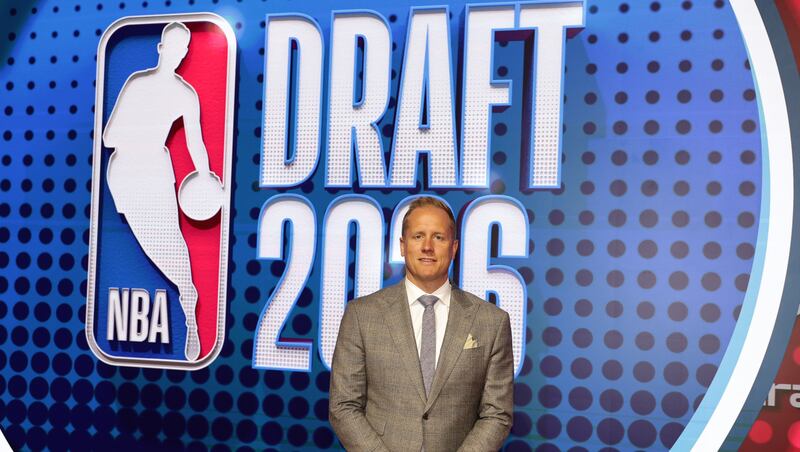
No longer is he huddling with general managers, dissecting scouting reports late into the night. Now, he’s striding red carpets, arm-in-arm with a procession of young men hearing their names called by Adam Silver. This past June, for instance, saw BYU’s AJ Dybantsa snatched up first overall by the Washington Wizards—a historic pick that solidified Young’s audacious vision. It was BYU’s first ever No. 1. And Dybantsa himself confirms Young’s methods aren’t just hype: “(Young) definitely put me in pro-style environments (on the floor). When I go to the Wizards and they start putting in certain plays, I’ll probably know some of them already from KY just helping me early,” Dybantsa shared.
Egor Dëmin, a forward from Russia, kicked things off last year, going eighth to the Brooklyn Nets. This time, beyond Dybantsa, we saw Richie Saunders—a scrappy guy who Young nurtured into a legitimate scoring option—picked early in the second round by the Memphis Grizzlies. Three draft picks in two years. Think about that. BYU managed three NBA draft selections in the entire two decades preceding Young’s arrival, from 2004-2024. But in the 800 days since Young took the helm in April 2024, they’ve matched that total, even securing consecutive first-rounders, a program first. It’s a staggering return, leaving skeptics scrambling for answers. “It’s pretty remarkable to have a guy like him come to BYU in the first place, and then be the first pick in the draft. Super happy for him,” Young told the Deseret News, with a detectable air of satisfaction.
And it’s not just volume; it’s quality. Only two schools, Duke — and BYU, managed top-10 draft picks in both 2025 and 2026. Duke. And BYU. Let that sink in. Young’s stated goal upon joining the Cougars was stark: make BYU “the best place in college basketball to prepare young men to play in the NBA.” A bold declaration, bordering on hubris given the institution’s historical output. But he’s done it.
“I didn’t really have a timeline on how things would jump up,” Young chuckled when pressed about the rapid success. He attributed it to “continuity at the right time for the players, for me, for the Big 12, for NIL,” adding that “it all kind of swirled around at the right time.” He’s right, in a way. The shifting sands of Name, Image, and Likeness (NIL) deals, plus a conference realignment that upped BYU’s exposure, provided fertile ground. But fertile ground still needs a master gardener. A maniacal one, in fact, if we’re to believe Young’s assessment of Saunders as a “maniacal worker.”
Dybantsa, by the way, became the third BYU player ever to earn First Team All-America honors this past year, averaging a nation-leading 25.5 points per game. He’s now tasked with rejuvenating a historically sputtering Wizards franchise, an enormous burden for a rookie. But Young’s not worried: “You’re not going to find a better guy to represent your organization with how he carries himself.” No flattery there; it’s a coach’s plain assessment of a prized asset. This isn’t just about athletic prowess; it’s about character, about being “primed,” as Young put it, by good parenting and an acute awareness of the spotlight. Because frankly, when you’re turning an academic and religious university into an unexpected athletic titan, those subtle attributes matter.
What This Means
Kevin Young’s improbable success at BYU isn’t just a sports story; it’s a fascinating case study in strategic disruption within entrenched systems. It shows what happens when an unapologetically professional mindset infiltrates collegiate athletics. It’s a policy wonk’s dream—or nightmare, depending on your perspective—of efficiency and ruthlessness applied to talent development. This accelerated pipeline generation has stark implications for how mid-major programs, or even major programs with stagnant results, might rethink their strategies. No longer can institutions lean solely on tradition or local recruiting. They need a specialist, a ‘Young,’ if they want a seat at the top table.
Economically, it repositions universities like BYU as active player development enterprises rather than mere feeders. Think about the market value of a No. 1 overall pick – that’s not just bragging rights; it’s an immense boost to a university’s brand equity, recruiting appeal, and frankly, its ability to attract more funding and top-tier talent, athletic or otherwise. It suggests that specialized, professionalized coaching might be the new premium commodity in college sports, eclipsing raw recruiting budget. In this increasingly globalized world of sports, where countries from India to Turkey are aggressively seeking ways to funnel their burgeoning athletic talent into international circuits, BYU’s model offers a somewhat unique, accelerated template for turning potential into polished products. It’s an American athletic story, sure. But it has lessons for ambitious athletic programs — governmental or institutional — everywhere, particularly those operating with unique cultural considerations. This isn’t just about winning games; it’s about winning the talent arms race, and Young just fired a huge salvo from an unexpected flank. And its echoes will be felt.