


Raton’s Desert Stand: A Small Town Wrestles With Big Data’s Thirsty Future
POLICY WIRE — Raton, New Mexico — It’s a silence so profound you can practically hear the dust settle, a high desert hush—that’s, until you imagine a data center. Imagine the constant...

POLICY WIRE — Raton, New Mexico — It’s a silence so profound you can practically hear the dust settle, a high desert hush—that’s, until you imagine a data center. Imagine the constant hum, the unceasing thrum of a thousand servers devouring watts — and guzzling water. That’s the unsettling soundtrack a growing number of Raton residents are now contemplating, even as their city officials deliberate the merits of bringing Silicon Valley’s ravenous appetite for digital space right into their backyard.
This isn’t some distant urban sprawl issue. It’s playing out in Raton, a New Mexico dot on the map, population roughly 6,000. It’s a town fighting to stay relevant, but also fighting to keep its identity—its very quietness. And the stakes feel oddly global, echoing similar energy debates in nascent digital hubs worldwide.
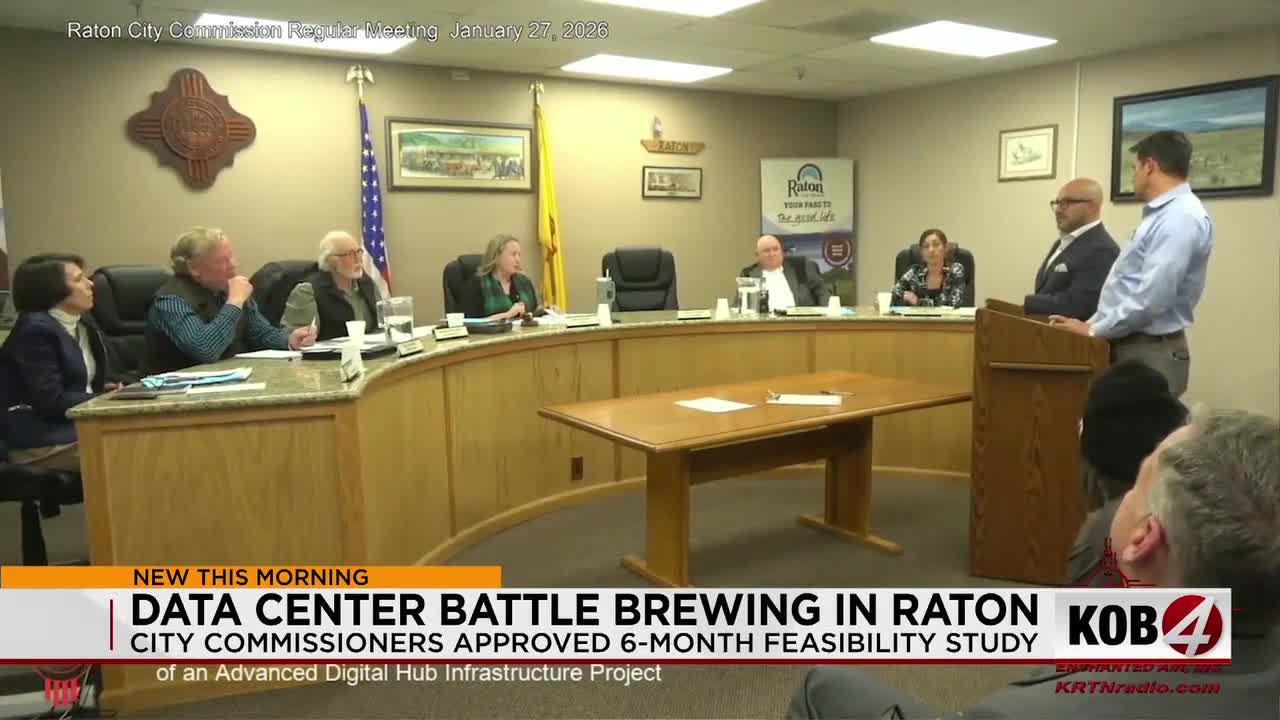
Colorado-based Atterix—a name that sounds less like a benevolent economic partner and more like a high-tech land-grab firm, frankly—received a six-month nod in February. A memorandum of understanding, they called it. Sounds harmless enough, right? Just a feasibility study. But locals are wise to this particular dance, because they’ve seen this kind of foot-in-the-door strategy before. The proposal, once fully realized, isn’t just about transforming a defunct Kmart on the town’s south side into a gleaming server farm, pulling an initial five megawatts of electricity. Oh no, that’s just phase one.
The vision stretches further, far further. Phases two and three reportedly envision more data infrastructure sprouting up at a local power station and even the city’s small airport over the next five years. We’re talking about potentially 50 megawatts of power consumption here—a staggering figure. Local KOB reports suggest that’s enough to power roughly 30,000 homes in this arid landscape. Thirty thousand homes. In a town of six thousand. It gives you pause, doesn’t it?
But the study, a ticking clock set to expire in early August, remains just that: a study. City leaders still hold the power to green-light, or simply, stall. But don’t tell that to the hundred-plus residents who’ve coalesced under the rather self-explanatory banner, “Protect Our Resources.” They’ve smelled smoke—or maybe, more accurately, heard a faint hum from other, more unfortunate communities—and they want this whole thing stopped. Or at least, radically slowed down. And who can blame them?
Their worries are tangible: noise pollution, light pollution disrupting Raton’s famously dark skies (a boon for stargazers), the truly pressing matter of water consumption in an increasingly parched West, and, of course, the sheer amount of electricity required. Pat Walsh, a co-founder of the group, doesn’t mince words. “We’re looking at a project that potentially would put a data center-type facility in the center of our town,” Walsh told local outlets, echoing a frustration heard in communities across the nation. “And we’re hearing lots of stories about these low frequency hums that are driving people crazy in other parts of the country.” Because, apparently, even data needs to sing its mechanical lament.
Raton city manager Neil Segotta isn’t deaf to these anxieties. Not entirely. But he also speaks the language of a municipality trying to survive. “We all have concerns but at the same time, you just can’t push somebody away because of what it’s doing somewhere else,” Segotta admitted, trying to thread that impossible needle. He articulated the blunt truth for many small towns: “We’re a small town struggling and anything we can do to boost the economy in any positive way, we’re open for that conversation.” It’s a sentiment that rings hollow to some residents, who question how many actual jobs a highly automated data center would provide—certainly not a thousand, probably closer to a handful of IT professionals.
Local commissioners briefly considered a moratorium, an immediate freeze on all data center development—much like Socorro County enacted not so long ago. But they hesitated, opting instead to delay a vote on such measures until Atterix’s study wraps up. Concerns over potential legal squabbles—the favorite boogeyman of small-town politics—apparently tipped the scales. Sometimes, it seems, it’s just easier to procrastinate than to pick a side.
What This Means
This isn’t merely a NIMBY (Not In My Backyard) spat; it’s a microcosm of a larger, unavoidable confrontation playing out globally between localized resource preservation and the seemingly boundless demands of the digital economy. For Raton, a successful data center might bring a sliver of new tax revenue — and perhaps a few white-collar jobs. But the political cost, for city leaders like Segotta, will be substantial. They’re navigating a very real dilemma: embrace an industry with a notoriously small payroll-to-resource-consumption ratio or risk being seen as economically stagnant. It’s a calculated gamble. the decision has implications beyond Raton’s borders. What happens here sets a precedent for other struggling communities in New Mexico—and arguably, in similar economically depressed, resource-stressed regions, say, in parts of rural Sindh, Pakistan, facing choices between scarce water and proposed industrial parks. The pushback isn’t against progress itself, but against progress that doesn’t respect the existing environmental budget, especially water. If city commissioners give this project a full green light, expect a protracted, angry political fight. But if they pump the brakes, they’ll have to find another, more palatable, economic engine to quiet the gnawing anxieties of their constituents. Because even the best-intentioned leaders know that a silent hum from distant servers can still echo loud enough to change local elections.