


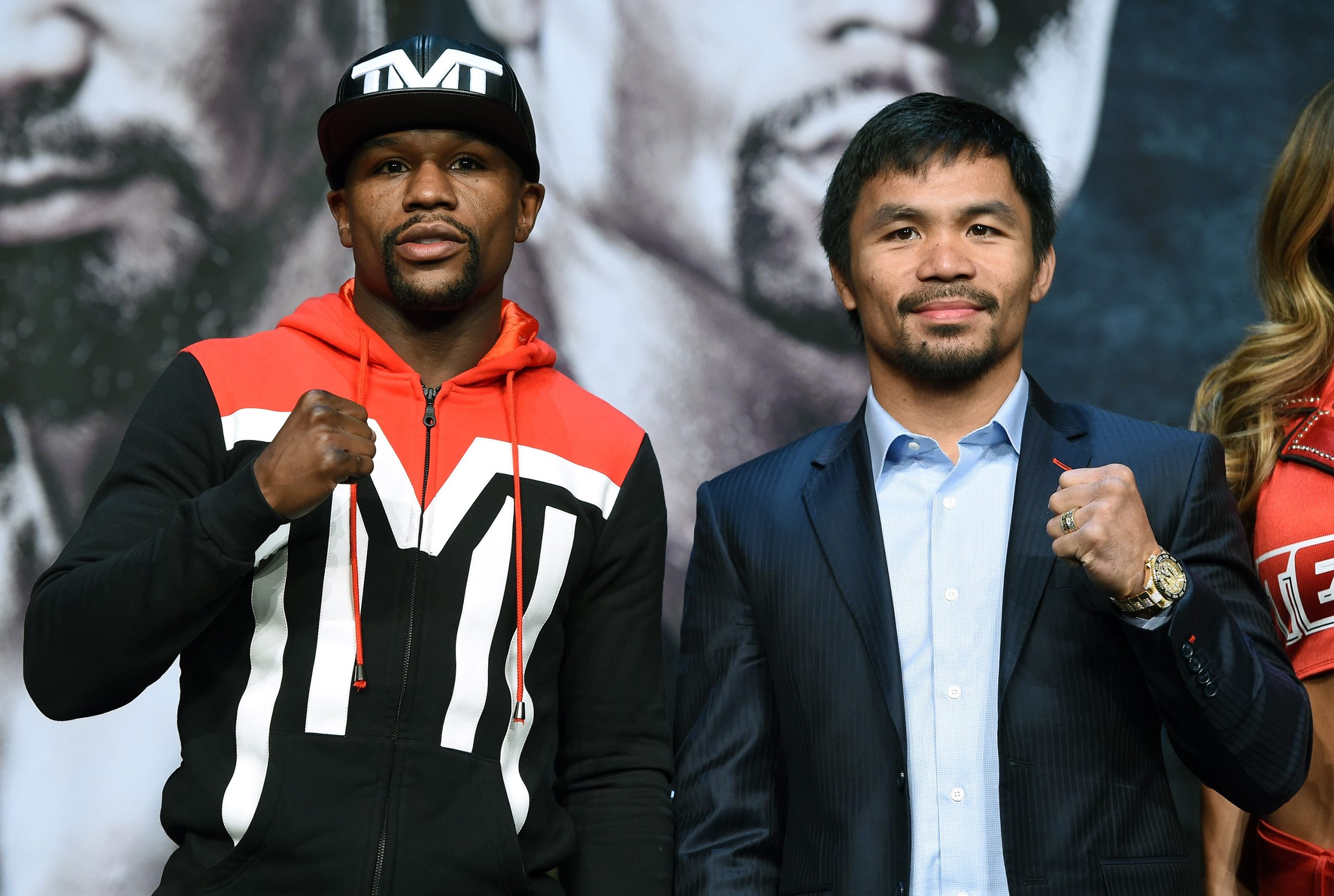
Gloves Off, Lawsuits On: Mayweather’s Reign of Legal Chaos Delays Mega-Fights
POLICY WIRE — Las Vegas, NV — The squared circle of professional boxing, an arena notorious for its theatrical flair and often, its bitter legal tangles, finds itself, once again, in a state of...

POLICY WIRE — Las Vegas, NV — The squared circle of professional boxing, an arena notorious for its theatrical flair and often, its bitter legal tangles, finds itself, once again, in a state of self-induced disarray. Only this time, the undisputed champion of chaotic maneuvers isn’t just ducking punches; he’s dodging subpoenas. Floyd ‘Money’ Mayweather, long heralded for his pristine undefeated record in the ring, is fast establishing an equally formidable, though far less admirable, reputation in courtrooms across Nevada and beyond.
It’s not just the spectacle of a planned rematch against Manny Pacquiao that’s gone awry—it’s the entire business model built around these high-stakes exhibitions. What began as whispers of contractual flip-flops has exploded into a full-blown legal brawl, threatening to derail not just one, but a trio of events promising staggering paydays. For a man whose moniker implies an endless cascade of cash, Mayweather appears, paradoxically, to be enmeshed in a sticky financial web, battling allegations that range from breach of contract to something far more serious.
Indeed, a shadow of discord now stretches over the glitzy world of fight promotion, as Mayweather navigates what many are calling a perfect storm of grievances. Earlier this year, reports surfaced of numerous lawsuits filed by ‘Money’ himself, alleging that former partners and business associates had bilked him out of, get this, hundreds of millions of dollars. As if that weren’t enough, he’s simultaneously grappling with felony charges for allegedly bouncing checks amounting to a cool $200,000, according to official court filings in Nevada’s judicial system. You don’t often hear of a titan of commerce tripped up by a basic bank statement, do you?
But the real clincher in this ongoing saga—and the immediate catalyst for today’s ruckus—is the sudden halt placed on his exhibition bout against former kickboxing champion Mike Zambidis. Scheduled for this past Saturday in Greece, that fight went from ‘highly anticipated’ to ‘high legal drama’ faster than a Mayweather jab. Promoters CSI, asserting prior contractual claims, successfully sought a legal injunction against the event, claiming Mayweather was contractually bound for fights against none other than Mike Tyson and Manny Pacquiao first. They weren’t messing around, serving papers to everyone from Mayweather’s camp to broadcaster DAZN and even Ticketmaster.
“Look, athletes of this caliber, they command massive paydays, but they also sign documents. When you ink a deal for tens, even hundreds of millions, there’s an expectation you’ll honor it,” lamented Barry Goodman, a veteran boxing promoter familiar with such high-stakes negotiations. “It’s not just about the fighter; it’s about the venues, the broadcasters, the global audience. And trust me, when you bring in a name like Pacquiao, you’re not just selling tickets in the US; you’re selling out stadiums, you’re creating national holidays in places like the Philippines.”
Dan Rafael, a well-regarded boxing journalist, was on the ground, even recording parts of the emergency hearing where CSI sought to stop the Mayweather vs. Zambidis bout. He quickly broke down the implications: “Pacquiao fight is NOT happening in September,” Rafael tweeted, delivering the news fans in Asia and beyond certainly didn’t want to hear. He added that the attorneys indicated the Tyson exhibition was tentatively set for September 12, ‘if they work things out with Floyd,’ with the Pacquiao clash possibly shifting to January next year, ‘if it happens.’ It’s a lot of ‘ifs’ for fights that promised definitive action. And the irony? This endless, self-created drama has overshadowed any genuine athletic endeavors.
Pacquiao, a living legend, an icon in his home country, the Philippines—a nation whose proximity and cultural ties to South Asia and the broader Muslim world give him an immense regional following—now finds his future fights held hostage by someone else’s legal wranglings. His bouts are not just sporting events; they’re communal experiences, watched avidly from Manila to Mindanao, and even among diaspora communities across the Muslim world. The disruption impacts millions who view him as a national hero. But then, ‘Money’ has always preferred doing things his own convoluted way, hasn’t he? Always drawn to these peculiar exhibitions against long-retired athletes or unranked challengers. Zambidis fit that mold, a perceived soft touch jammed into a schedule supposedly reserved for bona fide blockbusters.
What This Means
This entire fiasco illustrates a troubling trend in high-stakes professional sports: the increasing tension between athlete autonomy, promoter demands, and the sheer volume of money involved. When fighters like Mayweather operate largely outside traditional promotional structures, opting for exhibition circuits and one-off deals, they gain freedom but often invite legal complications that then affect everyone in their orbit. The current quagmire suggests a systemic failure to adequately vet and enforce contracts, or perhaps, a willful disregard for them once more lucrative, if equally precarious, opportunities arise. Economically, this unpredictability erodes investor confidence, leaving broadcasters, venues, — and sponsors in limbo. Politically, for athletes of Pacquiao’s stature, such disruptions can cast a shadow on their carefully cultivated public image, implying a lack of seriousness or professional commitment, even if the fault lies elsewhere. It reinforces a perception that money, not merit or legacy, too often dictates the direction of the sport. Ultimately, it’s a black eye for boxing—a sport that, let’s be honest, often inflicts them upon itself.
The fate of the Zambidis fight, the Tyson exhibition, and, most agonizingly for fans, the long-awaited Pacquiao rematch, now rests in the hands of judges, not referees. It’s a costly spectacle, less about knockout punches — and more about injunctions and counter-suits. Policy Wire continues to monitor this evolving legal — and sporting saga. What an absolute mess, eh?