
Shadow Games: Rubio’s Gulf Tour Rattles Iran Deal Expectations, Cementing Shaky Alliances
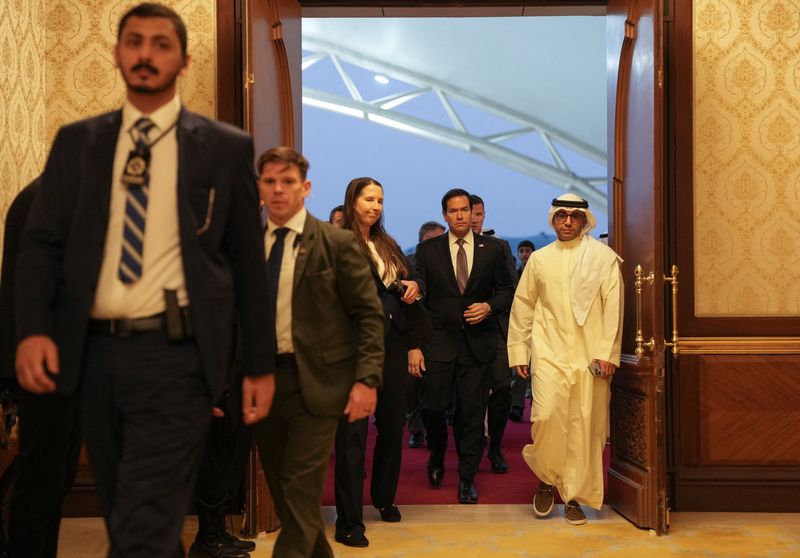
POLICY WIRE — Abu Dhabi, UAE — Senator Marco Rubio, an architect of Capitol Hill’s hardline stance against Tehran, isn’t here just for the sunshine. His recent hop across the Gulf states,...

POLICY WIRE — Abu Dhabi, UAE — Senator Marco Rubio, an architect of Capitol Hill’s hardline stance against Tehran, isn’t here just for the sunshine. His recent hop across the Gulf states, ostensibly to assure nervous allies, felt more like a masterclass in reading between the lines—a very polite, but very firm, rebuke to anyone still clinging to rosy visions of an Iranian detente. The whole visit? A loud whisper, really, saying: “Don’t you dare forget who your friends are, — and who the trouble-maker is.”
It’s no secret the Gulf’s oil sheikhdoms get a bit twitchy when Washington starts cozying up to Iran. The Biden administration, bless its optimistic heart, keeps sending signals about a revamped nuclear deal. But that kind of talk—that kind of hope, even—doesn’t sit well with Riyadh or Abu Dhabi. Not when they’re staring across the Strait of Hormuz at a regime they consider nothing short of an existential threat. Rubio, a Republican hawk from Florida, knows this. He wasn’t just doing a diplomatic meet-and-greet; he was selling reassurance, with a hefty dose of ‘told-you-so’ about Iran’s unchanging nature thrown in for good measure.
But here’s the rub. While Rubio’s visit was framed around future deals ensuring regional security, the actual subtext was all about discrediting any *current* iteration of those diplomatic overtures. And it worked. Sources close to the senator’s delegation made it plain: Washington isn’t blind. They get that Iran’s regional meddling—funding proxies, rattling sabers, pushing nuclear boundaries—it’s a problem that goes way beyond enriching uranium. It’s a fundamental challenge to stability, period.
“We won’t just stand by while Tehran runs roughshod over international norms and their neighbors,” Senator Rubio reportedly declared during a stop, his voice probably resonating with a steeliness honed by years in the Senate’s foreign relations circus. “Our partners here, they know precisely who America stands with when it matters most.” It’s a sentiment designed to steady nerves, to remind allies they haven’t been abandoned for some grand, ill-conceived diplomatic prize.
And you’ve gotta wonder how much of this is optics, how much genuine policy shaping. After all, the US political landscape is… well, it’s a swirling vortex, isn’t it? An administration pushing for talks might find its foreign policy severely handicapped by a Congress keen to pull in the opposite direction. That’s the real headache for our Gulf friends. One administration says one thing, the next could undo it all. Talk about whiplash.
General Mohammed Al-Ghamdi, a prominent security analyst from Saudi Arabia, didn’t mince words when reflecting on the visit. “America’s presence, Senator Rubio’s commitment—it’s always welcome, of course,” he conceded, speaking to local media. “But true, lasting stability, the kind we all crave, only comes when Iran truly—truly—changes course and ceases its destructive adventurism. Words alone won’t secure our borders.” There’s a subtle impatience there, an acknowledgement that promises are cheap when rockets are still flying.
The stakes? They’re monumental. The US Navy’s Fifth Fleet is stationed in Bahrain for a reason. Billions of dollars in arms sales happen because Washington wants its allies capable of deterring Iran. Because let’s be honest, Tehran’s missile capabilities—along with its extensive network of regional proxies—cast a very long shadow. And that shadow extends far beyond the Arabian Peninsula, touching hot zones from Yemen to Lebanon, even influencing security dynamics in places like Afghanistan, often creating ripples felt across the wider Muslim world, impacting Pakistan’s complex regional equations as well. The Islamic Republic, according to the International Atomic Energy Agency (IAEA) in February 2024, now holds enough enriched uranium (in specific forms) to potentially produce multiple nuclear weapons, if further enriched – a rather unsettling data point.
What This Means
Rubio’s swing through the Gulf wasn’t merely a charm offensive; it was a carefully choreographed statement. Politically, it signals a deeper entrenchment of the Republican Party’s adversarial stance towards Iran, aiming to either scuttle a new nuclear deal or force a far more stringent one. It also highlights the growing divide within American foreign policy, a division that leaves Gulf nations wary and constantly evaluating their hedging strategies. They’re buying into Abraham Accords, looking for regional peace-pacts, because frankly, they can’t bank solely on Uncle Sam anymore. It’s a high-stakes geopolitical poker game, where trust is thin — and everyone’s got an ace up their sleeve.
Economically? This persistent tension helps keep oil prices volatile, even high. Think about it: a less stable Middle East means energy markets stay jittery. Companies that want to invest in the region — from Saudi NEOM projects to UAE tech hubs — must constantly factor in potential escalations. The broader regional instabilities, not just those tied directly to Iran, compound these concerns. And Iran’s isolation means less open trade for its citizens, but also greater incentive to look east to partners like China, potentially cementing alternative economic blocs and challenging Western-led global trade norms. This dance isn’t ending anytime soon. Everyone’s got skin in this game.