


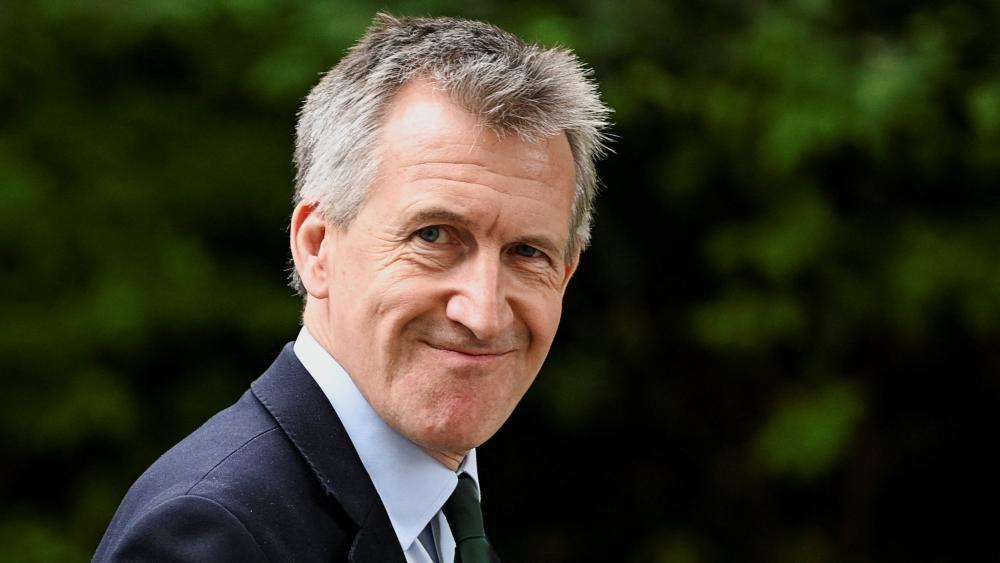
Britain’s Shaky Hand: New Defence Chief Meets NATO, Lacking a Wallet Plan
POLICY WIRE — London, UK — The stage was set in Brussels, the air thick with strategic anxieties and the unspoken tension of a continent grappling with renewed instability. But amidst the grand...

POLICY WIRE — London, UK — The stage was set in Brussels, the air thick with strategic anxieties and the unspoken tension of a continent grappling with renewed instability. But amidst the grand pronouncements of alliance solidarity, a familiar, slightly embarrassing refrain seemed to echo: Britain’s latest defence chief arrived, hands extended, ready for collaboration, yet conspicuously lacking a solid investment blueprint. It wasn’t the kind of debut that sends shivers down adversaries’ spines; more like a polite, hesitant cough at a symphony that desperately needs a powerful crescendo.
It’s a peculiar thing, isn’t it, to step onto the international stage, especially for a portfolio as weighty as defence, without the financial roadmap clearly etched? This isn’t just a British problem, of course. Across Europe, capitals wrestle with ballooning costs — and dwindling budgets. But Britain, a historical linchpin of NATO, faces particular scrutiny. There’s an expectation, frankly. The UK’s new defence secretary meets Nato allies without investment plan in place. It’s a phrase that really ought to send a chill, especially when global security feels thinner than tissue paper. (Awaiting official quote)
One can only imagine the conversations behind closed doors. Pleasantries, certainly. Strong statements of shared values — and collective security. But underneath that diplomatic veneer? An unsaid question, perhaps even a palpable frustration, about what concrete contributions a key partner can actually commit to. Because intentions are lovely; capabilities, however, are what really matter when the stakes climb higher than the Arctic tundra in winter.
Britain’s defence landscape has, for years, been a battleground of political promises — and fiscal realities. It’s a dance successive governments perform, touting global influence while often trimming the very sinews that support it. Think about the legacy, for instance. A long-standing global presence, from the Atlantic to the Indo-Pacific. This absence of a clear plan? It’s not just an internal squabble; it telegraphs a certain ambiguity to friends — and foes alike. One doesn’t really stride onto the global chess board holding half the pieces and expect the respect of grandmasters, do they?
The geopolitical tremors ripple outwards, touching regions far from Europe’s traditional confines. Consider Pakistan, for instance, a nation pivotal to South Asian stability, deeply embedded in complex regional security dynamics, and a recipient of considerable, if often understated, security cooperation from Western powers, including the UK. A robust, financially committed Britain means a more confident, more effective partner in countering extremism, sharing intelligence, and contributing to multinational efforts that indirectly, or sometimes directly, impact security in a Muslim-majority nation like Pakistan. When the UK’s financial footing for defense is seen as uncertain, it chips away at the perceived reliability of Western engagement in broader security concerns, no matter how distant.
And let’s be real, it isn’t simply about maintaining hardware. It’s about projecting influence, providing training, contributing to humanitarian operations — the full spectrum of activities that define a significant global actor. Without a clear financial framework backing up these aspirations, they’re just that: aspirations. A pipe dream, perhaps, in an era demanding sharp, decisive action.
But the government, we hear, is actively engaging with the Treasury to forge this elusive investment strategy. It’s a bit like buying a house and then looking for your chequebook; essential, but typically done before you’re sitting in the living room. Official figures from NATO show that in 2023, only 11 of the 31 member states met the alliance’s target of spending 2% or more of their GDP on defense, underscoring a wider struggle, but not diminishing the need for UK clarity. We’ve got years of historical data demonstrating defence underspending leading to capability gaps that don’t just magically disappear.
And so, the diplomatic waltz continues. The new UK defence secretary meets Nato allies without investment plan in place, a sentence that feels more like a warning than a news item. Everyone’s watching. Allies, certainly. But adversaries, too, who glean far more from these perceived uncertainties than from any pre-packaged declaration of intent. Geopolitical chess matches aren’t won with rhetorical flourish alone; they demand demonstrable commitment.
What This Means
This isn’t merely an administrative hiccup; it’s a symptom of a deeper malaise concerning defence prioritization within a stretched Western economy. Politically, the lack of a clear investment plan weakens the new Secretary’s hand right out of the gate. It provides less leverage in discussions regarding burden-sharing within NATO and could foster distrust among allies who are making tougher choices and dedicating more significant portions of their budgets to defence. Imagine Germany or Poland, boosting their military spending dramatically, now looking across the table at Britain with an unspoken question mark hanging over its head. That’s a dynamic that erodes unity, making collective responses to emergent threats less coherent and perhaps even slower.
Economically, this fiscal dithering creates uncertainty for the UK’s defence industry, potentially chilling investment and job creation in a critical sector. Large defence projects—submarines, aircraft carriers, advanced weaponry—aren’t conjured overnight; they require long-term financial commitments and clear procurement pipelines. Without that, domestic contractors might hesitate, or worse, shift their focus and capabilities abroad, draining the UK’s industrial base. This delay also might necessitate more reactive, and often more expensive, short-term solutions down the line, instead of strategic, planned upgrades. it might subtly shift the balance of power, or rather influence, within Western alliances, as countries with clear, increasing defence budgets (like many Eastern European nations) find themselves with a louder voice and a firmer hand in setting the strategic agenda.