

Highway Hostilities: Gun Pulled as Israel’s Culture Wars Spill Onto the Asphalt
POLICY WIRE — Jerusalem, Israel — Even in a land perpetually teetering on the edge, some days just hit different. The quotidian chaos of Highway 1, usually just a testament to terrible drivers and...

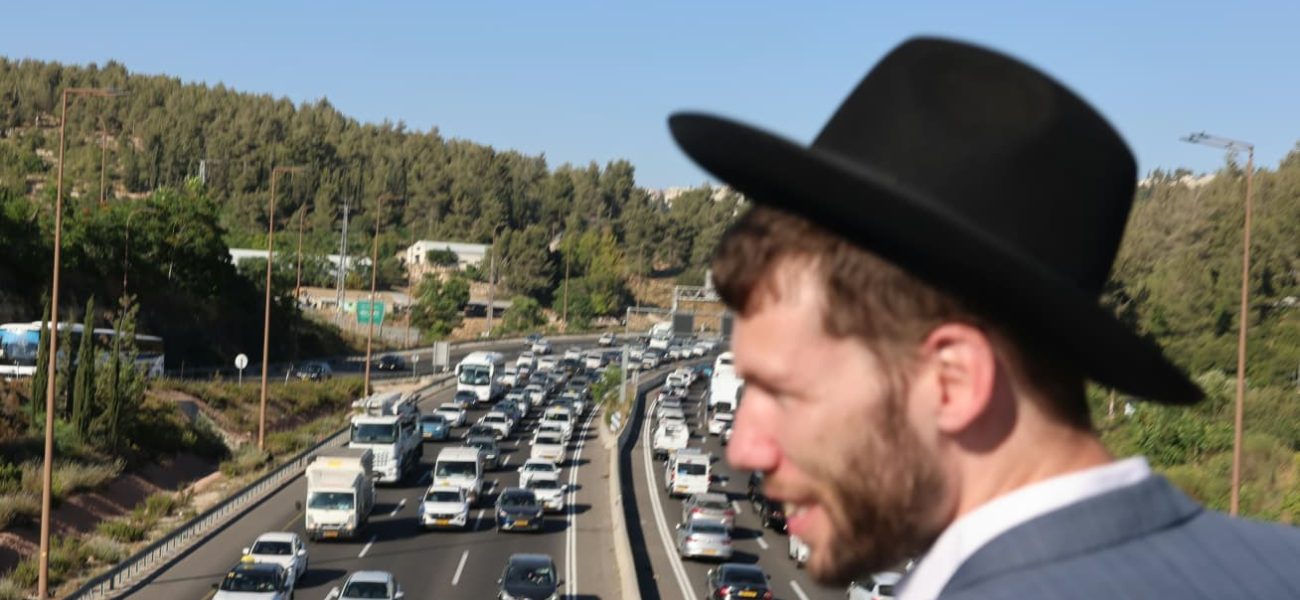
POLICY WIRE — Jerusalem, Israel — Even in a land perpetually teetering on the edge, some days just hit different. The quotidian chaos of Highway 1, usually just a testament to terrible drivers and perpetual construction, turned genuinely ominous yesterday. It wasn’t rockets from Gaza, nor was it another intifada unfolding. No, this time it was two men, allegedly pulling a gun on a throng of ultra-Orthodox—Haredi—demonstrators. They were protesting; that’s nothing new here. But a firearm in a civilian squabble over draft exemptions? That’s, well, it’s a new layer of ugly.
Police hustled the suspects off to some quiet rooms, where they’re doubtless being asked precisely what possessed them to flash steel at a road blockade. The Haredim, cloaked in their customary black, were doing what they do: shutting down vital arteries to protest what they view as a forced conscription, an affront to their deeply held religious studies. This isn’t just about avoiding military service; it’s about preserving a way of life they believe is the spiritual backbone of the nation—a claim often met with derision by a secular majority already stretched thin by actual wars.
And so, we get this spectacle. Men, heads bowed in prayer perhaps just moments before, now facing down a potentially lethal threat from compatriots. It’s a vivid snapshot of an Israeli society pulling apart at the seams. Not everyone’s buying the Haredi narrative either. “This isn’t about religious freedom, it’s about equitable burden-sharing, especially when our soldiers are dying,” asserted Minister for National Security Itamar Ben-Gvir, in what felt like a not-so-subtle nod to the growing calls for a unified front. But then, Ben-Gvir’s never one for subtlety, is he?
The incident itself was over pretty quick. Suspects nabbed, roads eventually cleared. But the psychic fallout? That’s gonna stick. This isn’t some distant border skirmish. This is Israel’s internal wrestling match playing out on its main thoroughfare, and it’s getting physical, violently so. Because when disagreements over national duty manifest with firearms on a major highway, you know something’s fundamentally off-kilter. The fabric’s fraying, — and yesterday, someone nearly tried to snip it with a bullet.
These sorts of internecine frictions aren’t unique to Israel, of course. Across the Middle East and parts of South Asia, the very definition of nationhood—its civic duties versus its religious obligations, its modern demands versus its ancient customs—regularly sparks contentious and often dangerous confrontations. Think of the societal rifts that paralyze development or political reforms in places like Pakistan, where deep ideological divides often clash violently in the public square. It’s a persistent, messy business trying to fuse disparate visions of a nation into a cohesive whole, isn’t it?
In Israel, this particular flashpoint boils down to manpower — and purpose. With a mandatory draft for most citizens, the Haredi exemption—argued as a centuries-old tradition where religious study substitutes for military service—feels increasingly unjust to a populace sending its children to the front lines. Approximately 66,000 Haredi men received exemptions from military service in 2022, according to data from the Israeli Central Bureau of Statistics. That’s a lot of potential soldiers, or at least taxpayers, seen as sitting out the national struggle. And resentment over that imbalance? It’s corrosive.
And let’s not forget the sheer symbolism. A road blockade, inherently disruptive, designed to assert presence — and voice. Then, the counter-disruption: an act of raw, personal escalation. It’s a chilling reminder that sometimes, the most volatile fault lines run not through disputed territories, but right through the heart of one’s own society. Dr. Sarah Golan, a prominent sociologist known for her studies on Israeli society, put it bluntly: “These acts, whether it’s blocking roads or pulling weapons, aren’t just isolated incidents. They’re symptoms of a systemic failure to reconcile vastly different visions of our national future.” She’s got a point. When consensus crumbles, often civility goes right along with it.
What This Means
This incident, grotesque as it was, does more than simply make headlines. It exposes the deepening chasm within Israel’s political and social landscape, a chasm that’s been widening for decades. Economically, the persistent Haredi exemption means a significant portion of the male workforce isn’t fully integrated into the general economy—impacting productivity and the tax base, all while consuming substantial state subsidies for religious institutions. Politically, the issue is a perennial hot potato, regularly collapsing governments or dictating coalition agreements. But now, it’s escalated to personal threats on public infrastructure, shifting from merely political leverage to outright public danger. It’s a barometer reading, signaling that the pressure cooker is about to blow its lid. It suggests that state-imposed solutions—legislative or judicial—will likely face increasingly volatile resistance, rather than being quietly absorbed. Expect more confrontations, more tension, — and fewer easy answers. The parallels with societies grappling with deep internal fissures, where social frustrations boil over into visible and aggressive public action, are unsettling. This wasn’t an anomaly; it was a foretaste.