


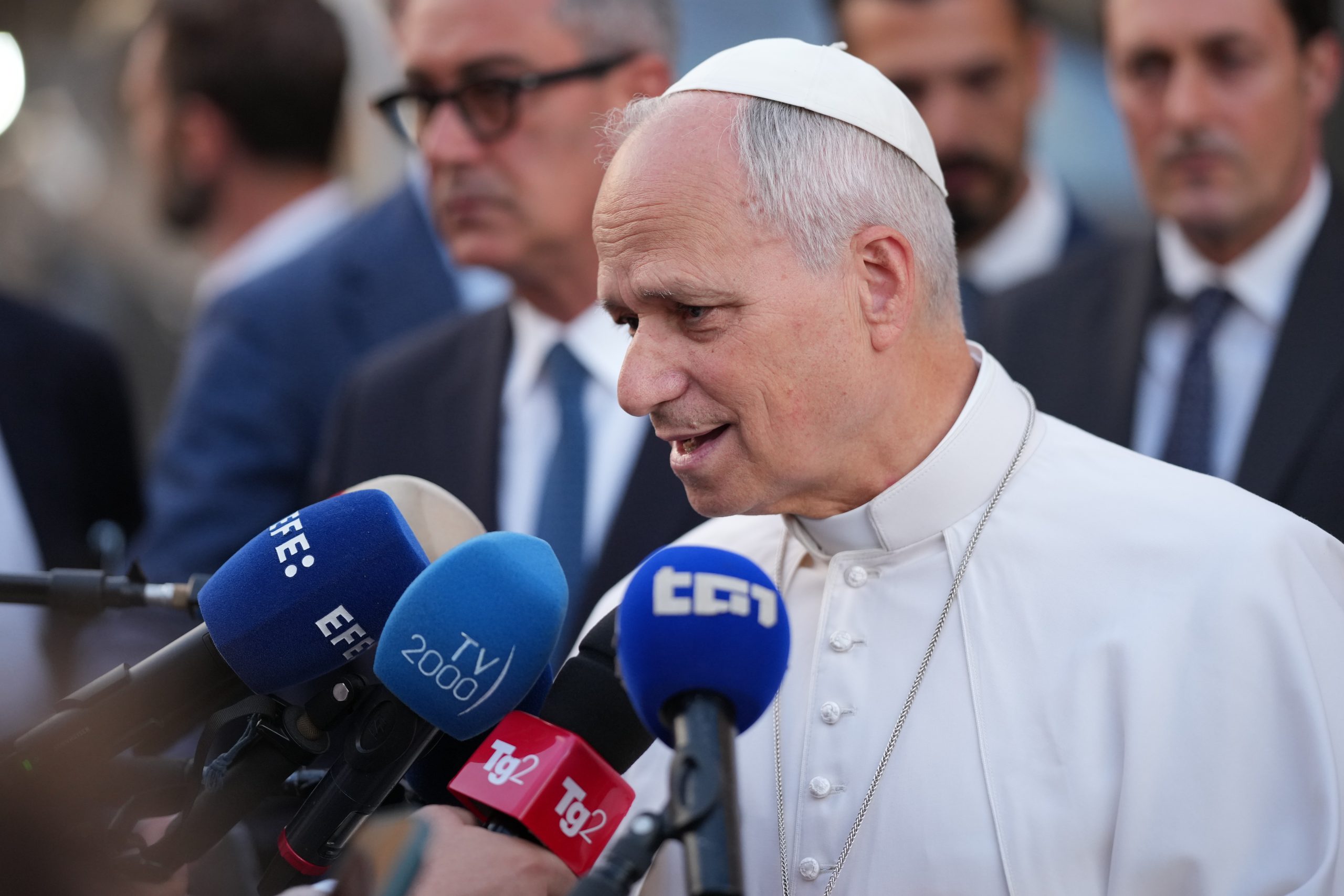
Vatican Rift: Traditionalists Chart Defiant Course Amidst Papal Reforms
POLICY WIRE — Rome, Italy — Not long ago, in the eternal city’s quieter corners, you might find an argument over incense, or the precise Latin cadence for vespers. Now, that quiet dissent has swollen...

POLICY WIRE — Rome, Italy — Not long ago, in the eternal city’s quieter corners, you might find an argument over incense, or the precise Latin cadence for vespers. Now, that quiet dissent has swollen into a full-throated rejection, one that’s shaking the gilded foundations of the Vatican itself. Pope Leo XIV, a pontiff known for his modernizing zeal, thought he’d set a new course for the faith, nudging the institution into an ever-more pluralistic world. Turns out, a good chunk of his flock wasn’t really feeling the change.
It’s not just grumbling, see. We’re talking about an active, almost joyful, embrace of being outside the main tent. These traditionalist Catholics, as they’re known, they’re not just tolerating their ostracization; they’re weaponizing it. They’ve decided Leo XIV’s reforms – things like liberalized liturgical practices or shifts on certain doctrinal interpretations – well, they’re just plain wrong. It’s a classic power struggle, really. Who gets to decide what’s sacred — and what isn’t? And perhaps more fundamentally: who actually holds the keys? [QUOTE_PLACEHOLDER]
And these folks aren’t just an oddball fringe. Numbers tell part of the story. A recent analysis by the Center for Applied Research in the Apostolate (CARA) suggests a growth in membership for explicitly traditionalist parishes, with an estimated 1.5 million adherents across the globe choosing pre-Vatican II expressions of faith. It’s a significant segment, isn’t it? A chunk that won’t be ignored, however inconvenient it might be for the current Curia.
For these traditionalists, Leo XIV’s papacy, frankly, represents a break. They speak of a dilution of doctrine, an unfortunate surrender to secular influences. They cling to ancient rites—the Tridentine Mass, for instance—as though these are the unyielding bedrock of their faith, things Leo’s modernizing eye has, to their minds, unfairly dimmed. It’s a spiritual anchor they believe is slipping, — and they’re holding tight, damn the current.
But this isn’t solely about hymns — and old Latin prayers. There’s a deep, gnawing cultural anxiety beneath it all. They see a world unraveling, morally speaking, — and believe the Church should be a bulwark, not a compromiser. It’s a worldview—staunch, unapologetic, and frankly, inflexible—that puts them directly at odds with Leo XIV’s emphasis on outreach and inclusion. They don’t want inclusion for things they deem incorrect; they want orthodoxy, pure and unadulterated. And that’s causing major friction. It’s like two trains on the same track, hurtling in opposite directions. Something’s gotta give, or a crash is coming.
This defiance isn’t a uniquely Catholic phenomenon, mind you. You see echoes of it elsewhere, even in the Muslim world, where deep-seated traditional interpretations often clash with reformist movements or secularizing forces. Consider the political landscape in Pakistan, where the balance between various religious factions and a more modernizing state has always been a precarious one. Just like Washington grapples with Pakistan’s geopolitical balance, so too does the Vatican navigate its own internal divisions. The underlying tension—how to reconcile historical doctrine with contemporary life, and who defines that reconciliation—it’s universal, really.
The traditionalists’ willingness to be outsiders, then, it’s not a weakness. It’s their strength. It lends them an almost prophetic aura among their followers, an image of untainted purity in a compromised age. They’re cultivating a parallel ecclesiastical ecosystem, a counter-narrative, complete with its own publications, schools, and—crucially—sense of identity. That’s what makes them such a challenge: they don’t just disagree; they’re actively building an alternative.
What This Means
This standoff isn’t just an internal ecclesiastical squabble; it carries significant political — and sociological weight. For one, it fragments what was once a monolithic moral authority, making it harder for the Holy See to speak with a unified voice on global issues. Politically, traditionalist movements, when alienated from central power structures, can become powerful counter-forces, attracting adherents disillusioned with perceived institutional decline or societal liberalism. Their organizational zeal, even in opposition, represents a kind of soft power, drawing in disaffected groups who crave certainty in an uncertain world. Economically, while not a direct financial drain, splintering communities often redirect their tithes and support away from established channels, funding alternative institutions, effectively creating shadow economies of faith.
Beyond that, it speaks to a broader, global tension. Folks are trying to figure out where they stand when everything feels like it’s shifting beneath their feet. This isn’t some abstract academic debate; it’s about identity. It’s about what you believe, who you trust, — and whether you see progress as good or as a slippery slope to moral chaos. The defiance of these traditionalists shows you don’t always win by being louder; sometimes, you win by simply refusing to move. And for Leo XIV, that’s got to be one of his bigger headaches. You just don’t get easy answers when faith collides with modernity this hard.