
Grand Spectacle, Governing Discord: Trump’s 250th Anniversary Kickoff Hits Headwinds
POLICY WIRE — Washington, D.C. — It was a Tuesday evening, but for much of Washington, Wednesday had already kicked off with the quiet clang of judicial authority. Not with a bang, but...

POLICY WIRE — Washington, D.C. — It was a Tuesday evening, but for much of Washington, Wednesday had already kicked off with the quiet clang of judicial authority. Not with a bang, but with the dispassionate prose of a federal judge dismantling core tenets of a presidential agenda. So, even before the National Mall would fill with flag-waving citizens, before Lee Greenwood took the stage, the executive branch had absorbed a significant body blow, yet another judicial rebuke over attempts to overhaul U.S. elections.
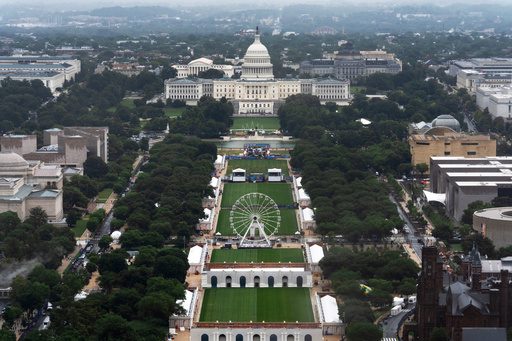
President Donald Trump found himself embroiled in this particular quagmire — a perennial fascination — alongside legislative snags and mounting disquiet among his own party. The stage was set, quite literally, for the official kickoff of America’s 250th-anniversary celebrations. But the real story that day wasn’t the pageantry, it was the persistent undercurrent of discord washing over a capital often more accustomed to grand narratives than fragmented reality. One observer noted that on the National Mall, [QUOTE_PLACEHOLDER], and the scene often felt more like a political event than a unifying national milestone.
While Marine Corps bands played rousing tunes, an unusual distraction had gripped the Oval Office for a staggering 12 minutes earlier in the day: the deteriorating condition of the Lincoln Memorial Reflecting Pool. It’s been gruesomely vandalized by thugs, bad people, the President later lamented from his bully pulpit, reiterating a strange fixation on what’s essentially a multi-million-dollar renovation project — already troubled — even as larger geopolitical and domestic crises clamored for attention. But hey, it makes for good copy.
Because there were bigger fish to fry. Congressional Republicans were frankly getting fed up. The White House, on the very day of national jubilation, yanked its support for a bipartisan housing bill — one months in the making — demanding electoral reforms as a condition for its passage. And GOP senators, vexed by Trump’s murky strategy on the Iran war, found themselves without a signature legislative win, missing an opportunity to show voters they care about affordability ahead of upcoming midterms. Talk about optics.
But the public, or at least a considerable swath of it, turned out. From Buffalo, New York, Jacob Wankasky peeled off a day early from a family trip just so he and Jennifer, with their two young children, could witness the moment. [QUOTE_PLACEHOLDER], Wankasky stated, sporting a bright red America Is Back cap. They cheered for military flyovers — only a little tiny bit of what’s to come in terms of military aircraft display, the President promised, painting a grand, almost fantastical, vision of Fourth of July pyrotechnics 10 times larger than any that we’ve ever done in Washington or in the United States.
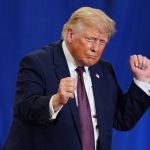
The entire spectacle felt a bit like an outdoor summer concert, complete with VIP seating near the stage and throngs on the grass recording the proceedings. And like all good concerts, there were performers: Christopher Macchio, the American tenor who has sung at a number of Trump’s events across the country, warmed up the crowd. Then, as Trump himself took the stage, Lee Greenwood sang God Bless the U.S.A., a Trump staple. But the President, notorious for his marathon rallies, only spoke for 28 minutes, a mere fraction of his political rally speeches. But boy, did he pack it in. After a brief historical nod, he pivoted rapidly to the Iran war — which had last week seen an agreement to extend a ceasefire — framing it, naturally, as a victory. We signed a historic agreement to end the conflict with Iran, fully open the Strait of Hormuz and accomplish what no president has ever been able to accomplish before, he declared.
And then there was the demand for “loyalty” from NATO allies, conveyed during a meeting with Secretary-General Mark Rutte. Trump, never one to mince words, suggested a hypothetical earlier visit by Rutte to Washington could have ended badly. You had a good chance of being mugged, although you’re a very big guy, he reportedly quipped, highlighting a curious way to reassure a key international partner. This transactional diplomacy extends to Ankara, where President Recep Tayyip Erdogan’s invitation means Trump is attending a NATO summit there out of respect. A potential “gift bag” of F-35 jets might just sweeten that deal.
Even Ukraine’s leader, Volodymyr Zelenskyy, received a rather qualified appraisal of his wartime performance: He’s holding his own at least. The whole affair offered a curious mix of celebratory bombast, ongoing domestic wrangling, and complex international negotiations, all jostling for attention under the capital’s sun.
What This Means
The cacophony surrounding President Trump’s 250th-anniversary launch reveals a deeply fragmented Washington, a capital constantly navigating the churn between performative politics and pragmatic governance. The cancellation of the housing bill signing, for instance, isn’t just about legislative defeat; it underscores a presidency seemingly more concerned with leverage than policy consensus, using critical domestic issues as bargaining chips for entirely separate agendas. This “you don’t get X until I get Y” approach isn’t exactly groundbreaking, but its blunt application has proven repeatedly disruptive. Economically, his very public — and rather aggressive — challenge to major oil companies like ExxonMobil and Shell regarding gasoline prices highlights a fundamental tension between market realities and populist demands, directly impacting consumers. The White House recently asked Congress for $87.6 billion mostly to replenish the Pentagon after the war against Iran. This funding request — at a politically fraught moment — signals a potential widening of the budgetary fallout from ongoing military engagements, likely diverting resources from other pressing domestic or international aid initiatives. For observers in South Asia and the Muslim world, particularly nations like Pakistan that grapple with regional instabilities, such pronouncements from Washington often carry weight far beyond their immediate context. Perceived inconsistencies in US foreign policy, especially regarding Iran or NATO, can introduce fresh uncertainties, affecting regional power dynamics and investment decisions. It just signals unpredictability, which few countries want. A confident, stable America — or one perceived as such — acts as a bulwark against regional chaos; a fractured Washington, fixated on trivialities while grand alliances shift, tends to foster more concern than confidence.