


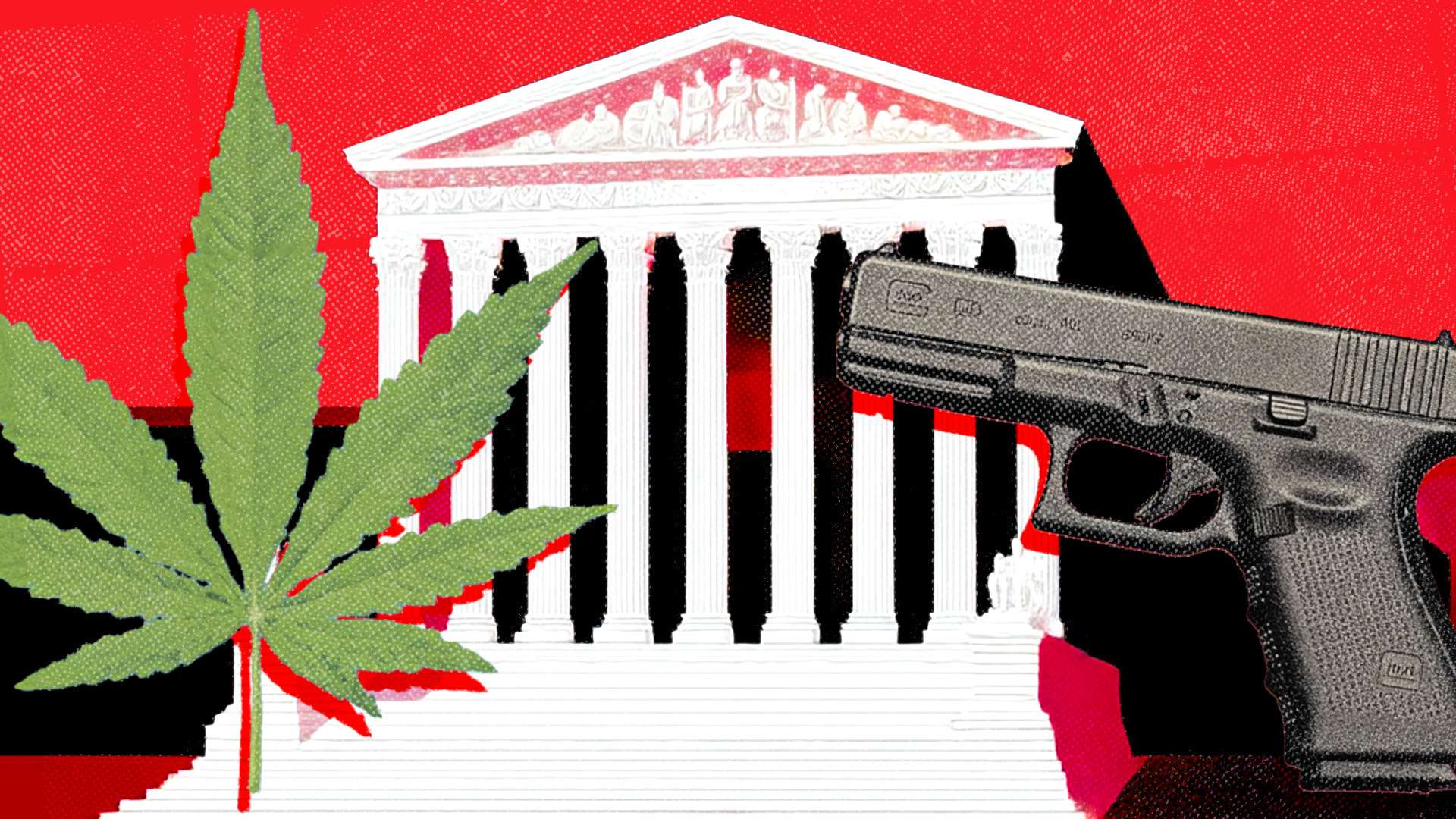
Powder and Paradox: High Court Declares Guns a Right, Even for Past Drug Use
POLICY WIRE — Washington, D.C. — For decades, the mere scent of an old drug conviction could strip an American of one of the nation’s most fiercely guarded rights: owning a firearm. It...

POLICY WIRE — Washington, D.C. — For decades, the mere scent of an old drug conviction could strip an American of one of the nation’s most fiercely guarded rights: owning a firearm. It wasn’t about the current threat a person posed; it was about the supposed indelible stain of their past. But last week, that established order crumbled. The Supreme Court of the United States—SCOTUS—unanimously declared this practice unconstitutional, rewriting who exactly gets to wield what many here consider a fundamental liberty.
It’s a peculiar twist in the never-ending American conversation about individual freedom versus public safety. The logic has always been straightforward enough for the anti-drug lobby: if you’ve dabbled in illicit substances, you’re not a responsible citizen; therefore, no guns for you. But the High Court didn’t quite see it that way. The unanimous decision means a prior federal law, prohibiting firearm possession for those who’ve used controlled substances, can’t stand—at least not without a clearer, more historically rooted justification.
But let’s be real. This wasn’t some soft-hearted appeal for those with past addictions. This was a jurisprudential flex, a further carving out of Second Amendment protections. The justices were, in their own understated way, extending the argument that mere status as a drug user—past or even present, non-violent—doesn’t automatically equate to being a threat warranting such a severe infringement on a constitutional right. They aren’t saying drug use is good; they’re just saying the old federal statute went too far in how it policed people after the fact. It’s got a very specific, technical sort of implication.
And so, we’re left to grapple with the fallout. Law enforcement agencies, already navigating a Byzantine thicket of gun laws, will need to recalibrate their approaches. Prosecutors, too, face a new landscape. The unanimous ruling essentially throws the ball back into Congress’s court, challenging lawmakers to craft narrowly tailored restrictions rooted in historical precedent—if they even want to bother trying. Many probably won’t, preferring the political inertia. But don’t expect a sudden surge in reformed users hitting the firing range just yet. The implications are complex — and gradual.
Because, well, it isn’t often you see the Court push back so forcefully against measures aimed at public safety, especially when drugs are involved. The American justice system, for all its grand pronouncements of liberty, has historically come down hard on drug offenses, treating addiction more as a moral failing than a public health crisis. It’s been a tough slog. The Department of Justice reported in 2021 that drug offenses constituted about 26.6% of all federal convictions, marking a consistent trend of significant enforcement.
Think about places like Pakistan or Indonesia. Their legal systems operate on an entirely different plane when it comes to drugs. Drug offenses there, especially trafficking, can lead to life imprisonment or even the death penalty. Individual liberties, as understood in the West, often take a backseat to state control and conservative interpretations of morality. A person with a past drug offense wouldn’t just face a ban on firearm ownership; their very freedom, their life, could be on the line. It’s a stark contrast that highlights the ongoing tension between societal expectations, public order, and the expanding, often confounding, contours of American individual rights. They simply wouldn’t conceive of linking drug use to Second Amendment rights, because the state’s grip is tighter on both personal conduct and weaponry.
This decision might also be a headache for international cooperation efforts. The US has, for a long time, pressured countries in South Asia—and elsewhere—to adopt tougher anti-drug laws, citing global security. But now, it’s easing up on domestic consequences for past drug users. It’s not exactly hypocrisy, but it does create a strange rhetorical dissonance. Washington pushes nations to crack down, then its own Supreme Court says, hey, those old drug charges aren’t enough to nix your gun rights. It complicates things.
For individuals caught in the justice system, it’s a big deal. For someone who completed their sentence years ago, turned their life around, and just wants their full rights back, this is a win. They’ve done their time, and the courts are finally acknowledging that not every past mistake should carry a lifetime sentence of diminished citizenship. It’s a moment for personal reclamation. It just happens to be a reclamation often tied to firearms—a controversial path to redemption for many.
What This Means
This ruling, though technically about the Second Amendment and historical analysis, has broader implications for how the American state views criminality, rehabilitation, and fundamental rights. Politically, it’s a shot in the arm for gun rights advocates, potentially emboldening them to challenge other restrictions based on non-violent past offenses. But it’s an awkward victory; linking gun rights to prior drug use isn’t exactly the kind of soundbite most Second Amendment groups lead with.
Economically, you might see an uptick in gun sales among this newly enfranchised demographic, however small. More significantly, it could lead to an expensive legal quagmire as lower courts and attorneys general try to interpret what *does* constitute a constitutionally sound restriction. Expect a new round of legal challenges, meticulously arguing what [QUOTE_PLACEHOLDER] truly entails, and whether a short-term prescription for certain pain medication from a decade ago counts as illicit substance use in the grand scheme of things. It’s going to get messy.
it raises tough questions for criminal justice reform efforts. If past drug use isn’t enough to ban gun ownership, then what other historical disqualifications might fall? Are felons, violent or otherwise, next in line for rights restoration? The Court has effectively pruned back one branch of disqualification. The power dynamic between state and individual, between past transgressions and present rights, has shifted. We’re now in uncharted territory, and nobody’s really sure where this particular road leads, except that it involves more scrutiny for government attempts to limit rights—especially those baked into the Constitution.
Globally, particularly in South Asia and other Muslim-majority countries that often face pressure from Washington on human rights and rule of law, this creates a subtle but potent friction. Their legal frameworks often prioritize collective order above individual entitlements, especially when moral conduct is in question. For them, a blanket ban on gun ownership for drug offenders is not only logical but a moral imperative. The U.S. now says, essentially, ‘not so fast.’ This complicates America’s moral authority in pressing other nations on similar issues.