

World Cup’s Silent Diplomatic Shuffle: US Navigates ‘Meaningless’ Clash Amid Global Stakes
POLICY WIRE — Washington D.C., USA — It isn’t always about who scores. Sometimes, the most telling plays happen off the ball—or in a match that, on paper, means absolutely nothing. As the United...

POLICY WIRE — Washington D.C., USA — It isn’t always about who scores. Sometimes, the most telling plays happen off the ball—or in a match that, on paper, means absolutely nothing. As the United States Men’s National Team preps for its final World Cup group-stage outing against a winless, already-eliminated Turkey, the focus isn’t so much on goals as it’s on calculation, preservation, and the subtle, often unspoken, messages delivered on a global stage.
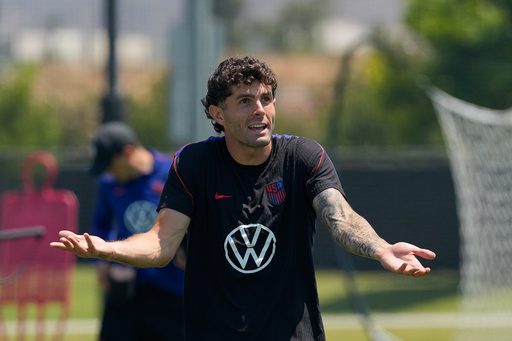
Team USA, having bagged Group D already, has secured a coveted spot in the knockout round. That achievement, while laudable, immediately throws a different kind of curveball at coach Mauricio Pochettino. You see, star Christian Pulisic, he’s back training, after missing that 2-0 win over Australia. But the actual question isn’t whether he’s ready. It’s how much of him to use—or indeed, any of the regulars—when the next, far more consequential game is right around the bend. Pochettino, you just know, has to weigh this carefully. [QUOTE_PLACEHOLDER]
And it’s not just Pulisic. There are similar decisions to make with Tyler Adams, Folarin Balogun, Chris Richards — and Antonee Robinson. They’re all on yellow cards, and they’d definitely miss that first knockout round if they picked up a second against Turkey. So, a meaningless match morphs into a high-stakes chess game of personnel management. It’s an intricate dance of tactical foresight, trying not to stumble right before the actual sprint to glory begins.
Meanwhile, on the other side of the field, there’s Turkey. Their situation is less about cautious planning — and more about, well, salvaged pride. This is their first World Cup in a generation—24 years, to be exact. They’ve yet to net a single goal, — and the plane ticket home is already booked. You’d think the pressure’s off, right? But for nations, especially those navigating complex geopolitical terrains, even a lost cause on a global stage carries weight. And their coach Montella, he already made it clear: he won’t resign after winless World Cup start, admonishes heckling fans. That’s a political statement wrapped in a sports commentary, a clear sign of enduring national will, regardless of the scoreboard.
Think about it. A Muslim-majority nation like Turkey, with deep historical and cultural ties throughout Central Asia and even to places like Pakistan, brings a unique identity to this global spectacle. While the subcontinent of South Asia might cheer on its cricketing heroes, events like the World Cup—even with no teams from the region directly participating this time—still resonate deeply. Nations observe their brethren. They see their struggles — and successes on pitches thousands of miles away. It’s a shared narrative of national aspiration, whether it’s winning or just making a respectable showing.
The global village tunes in, watching how everyone performs. Consider Switzerland. They’ve qualified for the knockout phase for the seventh consecutive time in major tournament football (World Cups and UEFA Euros). That sort of sustained performance speaks volumes about a country’s underlying infrastructure, its commitment to a global sport, and even its diplomatic soft power. Turkey’s struggle, then, isn’t just a football statistic; it’s a moment observed by millions who connect culturally to Istanbul’s history and future ambitions. It presents a stark contrast to nations like Germany or Ivory Coast, both of whom have had more definitive narratives unfold.
Speaking of those other matches, there’s a whole lot happening across the tournament. Ecuador, for instance, desperately needs a win to escape the group stage, having started its campaign on a 19-game winning streak. They could face an early exit if it can’t find a way to beat Germany. And Ivory Coast, well, they’ve got a chance to make history, trying to reach the knockout stage for the first time. The whole thing’s a masterclass in varied ambition, with everyone eyeing something bigger. When billions tune in, geopolitics follow, after all.
What This Means
This supposedly ‘meaningless’ game between the United States and Turkey on the World Cup stage isn’t inconsequential when you zoom out. For Washington, the careful management of its top players like Pulisic isn’t just about sports strategy; it’s a quiet display of professional calculation and future focus. It subtly says, We’re playing the long game, not just this one match. And this approach, in an international arena, doesn’t go unnoticed by geopolitical observers. It’s a pragmatic stance that reflects US foreign policy in many areas—pick your battles, conserve your resources for where they matter most.
For Turkey, despite its early elimination and winless streak, the simple fact of its presence, and the sheer volume of global attention, offers a platform. A chance to show resilience, or at least a united front under coach Montella, helps in shaping international perception. Nations, like football teams, want to appear strong, or at least unbowed, even in adversity. A solid, if losing, performance might actually resonate more deeply than a single fluke victory with the larger Muslim world audience, including those in South Asia who follow closely. They want to see integrity — and fight, even when the chips are down.
But the economic implications run deeper, too. Hosting such an event, or even participating in one, generates national pride, yes, but also tourist dollars and brand recognition. For Turkey, qualifying was already a win of sorts, bolstering national spirits, perhaps diverting attention, however briefly, from domestic complexities. The global optics of this game, though low on immediate sporting consequence, maintain a thread of engagement, and for a nation like Turkey—always looking to expand its sphere of influence—that continued visibility, however painful, is a subtle political win in itself. Beyond the pitch, a geopolitical blitz is always underway.