


Bill Gates Expresses Renewed ‘Embarrassment’ Over Epstein Ties to Congress
POLICY WIRE — Washington, D.C. — In a disclosure that underscored the persistent shadow cast by the late financier and convicted sex offender Jeffrey Epstein, M...

POLICY WIRE — Washington, D.C. — In a disclosure that underscored the persistent shadow cast by the late financier and convicted sex offender Jeffrey Epstein, Microsoft founder and renowned philanthropist Bill Gates informed a congressional panel that files recently made public by the Justice Department have only deepened his personal embarrassment over his past interactions.
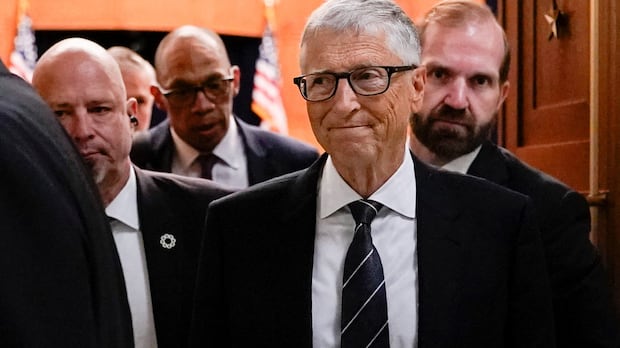
Speaking before the House Oversight Committee on Capitol Hill in Washington, D.C., an interaction reported by Reuters as taking place on June 10, 2026, Gates confronted renewed scrutiny of his links to Epstein. The crux of his testimony centered on how recently unsealed documents had exacerbated his already public regret regarding the association. Microsoft founder and philanthropist Bill Gates told a congressional panel that files released by the Justice Department in January only added to his embarrassment over interacting with the late sex offender Jeffrey Epstein, Reuters reported.
This statement, delivered during a closed-door interview, according to Reuters, indicates an ongoing legislative interest in the broader network surrounding Epstein, even years after his death. The specific content of the Justice Department files released in January that prompted this fresh round of congressional inquiry remains undisclosed in detail. Still, their impact on such a high-profile figure suggests new revelations or heightened clarity on previously ambiguous connections.
Bill Gates, widely recognized for co-founding Microsoft and, more recently, for his extensive global philanthropic endeavors through the Bill & Melinda Gates Foundation, has long grappled with the fallout from his ties to Epstein. (As a matter of historical context, Epstein, who died by suicide in 2019 while awaiting trial on sex trafficking charges, had cultivated relationships with numerous prominent figures across finance, politics, and science.) Gates has previously acknowledged meeting with Epstein on multiple occasions, activities he has publicly described as a huge mistake and a source of considerable personal regret, stating that he allowed himself to be drawn into situations that later proved to be gravely ill-advised.
The House Oversight Committee’s decision to convene Gates highlights the continued dedication of legislative bodies to explore the full extent of Epstein’s influence and alleged co-conspirators. Congressional panels frequently undertake such inquiries, not only to pursue justice but also to understand potential systemic failures that allowed such egregious criminal behavior to persist for so long. For Gates, a man whose public image is meticulously curated around innovation and global betterment, any renewed spotlight on his past misjudgment invariably carries significant reputational weight.
This particular congressional engagement suggests that investigations into Epstein’s affairs are far from concluded, with the Justice Department’s document releases acting as a continual propellant for further scrutiny. The repeated necessity for high-profile individuals to address their associations underscores the public and political demand for accountability and transparency regarding Epstein’s network. Each new piece of information or official statement revives the difficult questions surrounding how a man of Epstein’s history managed to maintain connections within such influential circles.
What This Means
The fact that a figure of Bill Gates’s stature is once again testifying before Congress on his connection to Jeffrey Epstein, specifically citing recently released government documents, signals several critical ongoing developments. First, it reinforces that the full story of Epstein’s operations and associates has yet to emerge entirely, with federal agencies continuing to process and, periodically, release pertinent information. The files released by the Justice Department in January act as tangible evidence of this continuous, if sometimes incremental, unearthing of facts. This methodical release can sustain public interest — and official scrutiny over extended periods.
Secondly, it suggests that despite past statements and apologies, individuals who had dealings with Epstein remain subject to public and official reckoning. For a public figure whose personal brand is inextricably linked to ethical leadership and global impact, the persistent stain of the Epstein connection can significantly complicate their narrative and credibility. While Gates has long condemned Epstein’s actions and expressed regret, the legislative summons indicates that a congressional body felt there was more to learn, or at least more to put on the record, following the recent document release. This pattern reinforces the notion that true closure on such scandals can be elusive, particularly when new evidence emerges to reignite scrutiny and accountability processes.