


White-Collar Reckoning: DC Claims $6.5 Billion Healthcare Scam
POLICY WIRE — Washington, D.C. — For an administration often perceived as having a rather cozy relationship with corporate America, the recent pronouncements from the U.S. capital struck a notably...

POLICY WIRE — Washington, D.C. — For an administration often perceived as having a rather cozy relationship with corporate America, the recent pronouncements from the U.S. capital struck a notably different chord. In a dramatic display, officials laid claim to what they called the largest healthcare fraud bust in the Department of Justice’s history—a sprawling network of alleged malfeasance encompassing 455 individuals, a fair number of them physicians, and an eye-watering $6.5 billion in purported losses. But what does such an announcement really signify?
It’s an impressive figure, sure, one that makes for punchy headlines and satisfies the bureaucratic craving for demonstrable action. The public, it seems, enjoys seeing medical professionals in the dock as much as anyone else—especially when their fees consistently induce sticker shock. This particular sweep, we’re told, hit doctors, nurses, and other medical practitioners—all charged in 295 separate criminal cases across 50 federal districts. That’s a lot of paper trails. And it certainly makes for good press, painting a picture of relentless government oversight protecting taxpayers from rapacious fraudsters. Never mind that the total annual cost of healthcare fraud in the U.S. is estimated to be far, far higher—some studies pegging it at hundreds of billions, as cited by the National Health Care Anti-Fraud Association (NHCAA) at www.nhcaa.org. The alleged $6.5 billion here? It’s a start.
Attorney General [QUOTE_PLACEHOLDER] called the actions an attack on the most vulnerable in society. Other officials echoed the sentiment, with [QUOTE_PLACEHOLDER] saying [QUOTE_PLACEHOLDER]. It’s a classic D.C. narrative: the good guys fighting the bad guys, ensuring the sanctity of federal healthcare programs like Medicare and Medicaid. Because, let’s be honest, those programs—cornerstones of American social welfare for millions—are often viewed as cash cows by less-than-ethical operators. They’ve got long histories of vulnerability. This isn’t a new problem; it’s an endemic one that’s grown right alongside the complex labyrinth of American medical billing.
Among those charged, there’s a significant representation of individuals accused of involvement in opioid-related schemes. And that’s not particularly surprising, is it? The opioid crisis continues to carve a devastating path through communities nationwide, leaving a wake of addiction and tragedy. Officials highlighted some 120 defendants connected to alleged schemes involving the unlawful prescription and distribution of opioids. But don’t conflate fraud with addressing the root causes of addiction. It’s tackling a symptom, not the disease itself. They’ve also netted individuals implicated in various schemes like prescription drug fraud, phony tests, and kickbacks for services that never even happened. You know, the usual fare.
But the government isn’t just arresting people; they’re also attempting to recover money. The alleged $6.5 billion sum represents funds they claim were either billed or disbursed. This type of aggressive prosecution serves multiple purposes: deterring future fraud, recovering taxpayer dollars, and demonstrating regulatory muscle. It’s a multi-pronged attack on a persistent problem, albeit one that keeps morphing — and adapting. You can bust all the rings you want, but the incentives for fraud in a fractured, profit-driven system often remain.
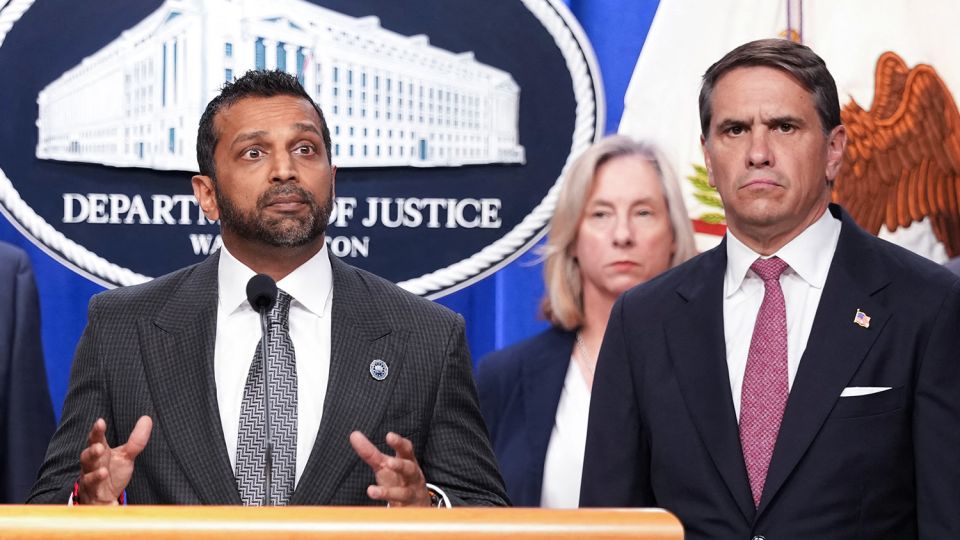
This grand spectacle wasn’t some quiet, behind-the-scenes operation. It was a highly orchestrated media event—a press conference featuring various law enforcement and government agency heads all lining up to claim their piece of the glory. They wanted the public to see them in action, tackling a visible societal ill. Because in Washington, perception is sometimes just as important as the reality. It’s how the public knows their money isn’t all vanishing into thin air, presumably.
What This Means
This sweeping federal action, despite its sizable numbers, speaks volumes about the enduring systemic challenges within the U.S. healthcare apparatus rather than signaling some sea change in prosecutorial philosophy. On a practical level, this announcement gives the Trump administration a quantifiable win against white-collar crime, providing fodder for election cycles. Economically, while $6.5 billion sounds substantial, it’s a mere fraction of the overall healthcare budget—a splash in a very deep pool. The true impact lies less in the recovered funds and more in the message of deterrence sent to those considering illicit activities. The U.S. Department of Justice [QUOTE_PLACEHOLDER] will continue its work, it’s clear.
From an international perspective, particularly for countries navigating their own complex healthcare landscapes, these American experiences offer cautionary tales. Nations across South Asia, like Pakistan, grappling with immense populations, often fragile public health infrastructures, and nascent insurance markets, must learn from the U.S. struggle. Pakistan’s nascent health insurance programs, for instance, are increasingly facing challenges not just of access and quality, but also of potential fraud, which could destabilize their efficacy before they even truly take root. The sophistication and sheer scale of fraud outlined here—orchestrated by supposedly legitimate medical professionals—highlights the universal vulnerability of healthcare systems, regardless of their level of development. It serves as a stark reminder: when vast sums of money flow through intricate systems, opportunities for exploitation emerge, a truth as relevant in Karachi as it’s in Kansas City.