

Trump, Meloni Photo Spat Signals Deeper Fissures Over Iran, NATO
POLICY WIRE — A seemingly innocuous disagreement over photographs has spiraled into a diplomatic row, escalating tensions between former U.S. President Donald T...

POLICY WIRE — A seemingly innocuous disagreement over photographs has spiraled into a diplomatic row, escalating tensions between former U.S. President Donald Trump — and Italian Prime Minister Giorgia Meloni. The clash, which emerged into public view on Saturday, underscores a deeper geopolitical struggle, tying into fraught discussions around Iran and the future of NATO.
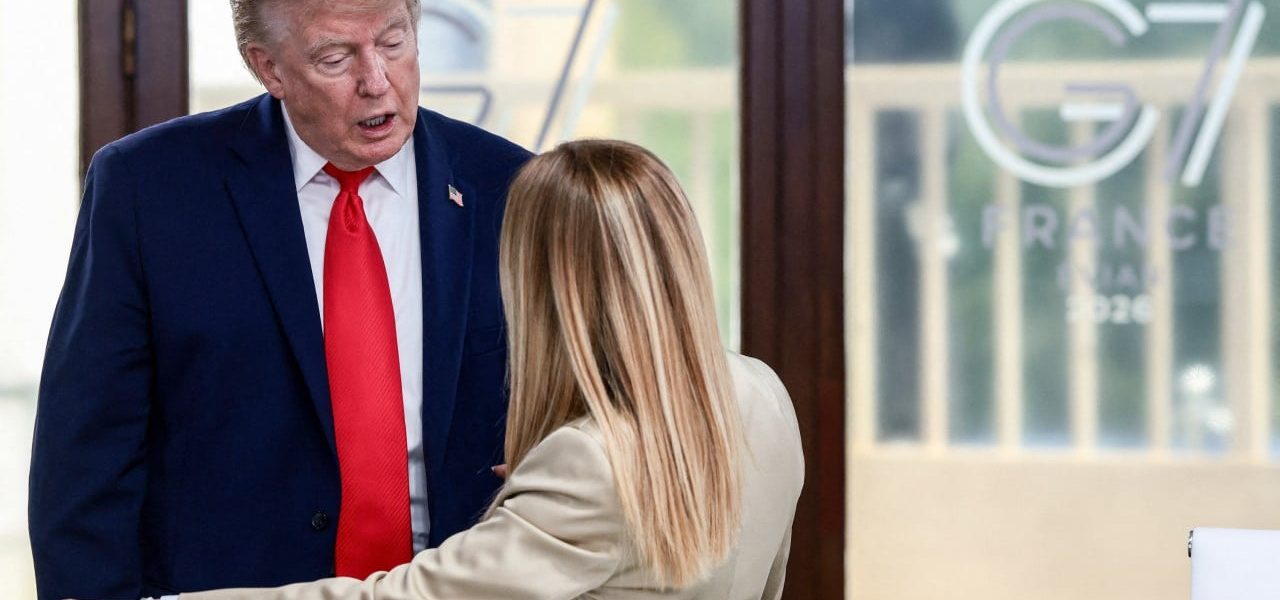
Trump initiated the latest volley in what has become an unusually personal dispute. He publicly accused the Italian leader of repeatedly seeking a photograph with him. This claim was made while he simultaneously linked the alleged photo-seeking behavior to broader strains over Iran and NATO, signaling that the disagreement transcended mere celebrity-style interactions into the realm of high-stakes foreign policy.
For Giorgia Meloni, one of Europe’s most recognizable right-wing figures, this direct challenge from Trump represents a notable shift. She has, particularly in the lead-up to Trump’s potential return to the U.S. presidency, diligently worked to position herself as a crucial interlocutor—a bridge between Washington and the European continent. The recent spat risks undermining this carefully crafted diplomatic posture and highlights the volatile personal dynamics that often intertwine with international relations under such influential figures.
The former president’s accusations, relayed through media, specifically an Italian broadcaster identified as La7, add a public dimension to what might otherwise have remained a behind-the-scenes negotiation. While the exact context of the photographic encounters or the precise nature of Meloni’s alleged overtures for a picture remains a point of contention and speculation, Trump’s decision to weaponize this detail in connection with strategic policy debates is telling. It frames the incident not as a casual social interaction, but as a deliberate attempt by Meloni to curry favor, and implicitly, to influence American foreign policy through personal engagement.
Meloni’s strategy has been to navigate the complex landscape of transatlantic relations, especially as the prospect of another Trump administration looms large. Her political alignment often places her in ideological proximity to Trump, yet her government has largely maintained a mainstream European stance on international alliances and conflicts, including support for Ukraine and adherence to NATO commitments. The challenge, then, for Meloni, is to maintain a rapport with a potentially isolationist-leaning American administration without alienating her European allies or sacrificing Italy’s geopolitical principles.
The referenced tensions concerning Iran — and NATO further complicate this picture. NATO’s future, particularly its financial burden-sharing among member states, was a frequent point of contention during Trump’s previous term, and his comments consistently raised concerns among European partners. Similarly, policy approaches to Iran — spanning sanctions, nuclear agreements, and regional stability — often see a divergence in strategy between the U.S. and its European allies. By intertwining the photographic accusation with these weighty policy areas, Trump frames the dispute as not just a personal slight, but a reflection of a deeper perceived strategic misalignment, or perhaps, an attempt by Meloni to project an image of influence he feels is undeserved or manipulative.
The current confrontation indicates the potentially fraught nature of diplomacy should Trump return to the Oval Office. Personal chemistry, or the lack thereof, has often been a significant factor in international relations. Here, a seemingly trivial claim about seeking photographs becomes a symbol, exposing vulnerabilities and perceived allegiances on the world stage. It spotlights the delicate dance European leaders perform as they seek to build relationships with, or brace themselves for, a potentially unpredictable American foreign policy.
📄 POLICY WIRE WHITEPAPER PUBLISHED: PAKISTAN'S NATIONAL SECURITY POLICY PRIORITIES
👉 READ BY CLICKING HEREWhat This Means
This incident offers a glimpse into the kind of interpersonal dynamics that could define the next phase of transatlantic relations, particularly if Donald Trump returns to the U.S. presidency. The politicization of what appears to be a minor social interaction underscores a larger trend: the increasing role of personal feuds and perceived loyalties in shaping international alliances and policy agendas.
For Meloni, a leader who has carefully positioned herself as a bridge-builder, the spat could weaken her standing both at home and abroad. Will European allies view her as compromised, or as someone who failed to manage a delicate relationship? Conversely, Trump’s willingness to escalate such a personal dispute suggests a transactional approach to international relations, where personal perceived slights are quickly linked to broader geopolitical concerns. This approach challenges traditional diplomatic norms, replacing them with a more confrontational style that demands unequivocal loyalty rather than nuanced partnership.
The broader implications for NATO — and Iran policy are significant. If such personal disagreements can be leveraged to criticize a leader’s stance on critical defense and foreign policy issues, what does this portend for the cohesion of existing alliances? Could a second Trump administration use similar tactics to pressure or isolate European nations over perceived slights or misalignments? This ongoing drama signals that personal relationships, as much as — and perhaps more than — formal agreements, may dictate the course of global affairs in the coming years. It forces us to ask: how durable are multilateral institutions when individual animosities can spark international disputes?
(Reporting based on Reuters)