
International Press Freedom Day: A Reflection on Global Norms and the Case of India and Kashmir
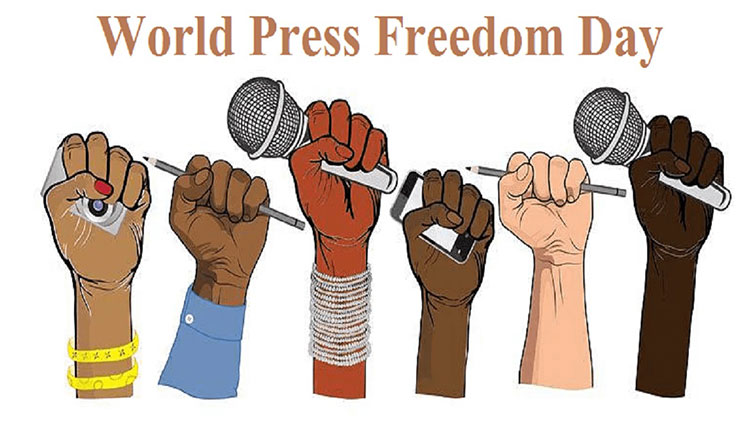
Each year, May 3rd is commemorated globally as World Press Freedom Day, an occasion to acknowledge the vital role a free and independent press plays in democratic societies. Established by the United...

Each year, May 3rd is commemorated globally as World Press Freedom Day, an occasion to acknowledge the vital role a free and independent press plays in democratic societies. Established by the United Nations General Assembly in 1993 following a recommendation from UNESCO, the day also commemorates the 1991 Windhoek Declaration, which emphasized the need for a free, pluralistic, and independent media, particularly in Africa. It serves not just as a symbolic gesture but as a call to action for governments, civil society, and the international community to safeguard journalistic integrity, ensure the safety of media workers, and defend the right to freedom of expression.
While many nations publicly commit to the values of press freedom, the reality in several regions starkly contradicts these ideals. One such case is India, often hailed as the world’s largest democracy. Over the past decade, India has witnessed a steady decline in press freedom, a trend that is particularly pronounced in the contested region of Jammu and Kashmir. The repression of journalists in this area, through legal, economic, and physical intimidation, has become a symbol of how states can manipulate media control under the guise of national security and sovereignty.
India’s Constitution guarantees freedom of speech and expression under Article 19(1)(a), but successive governments have invoked “reasonable restrictions” to suppress dissent. Laws such as the Unlawful Activities (Prevention) Act (UAPA), sedition statutes under Section 124A of the Indian Penal Code, and various provisions of the Information Technology Act have been routinely employed to arrest, intimidate, or censor journalists critical of government policies. These measures have created a climate of fear, encouraging widespread self-censorship and curtailing investigative journalism.
In Indian-administered Kashmir, this repression has been even more pronounced. Following the Indian government’s decision in August 2019 to revoke Article 370—which had granted the region a degree of autonomy—Kashmir was plunged into an information blackout. Internet access was suspended for months, and journalists were effectively barred from reporting on developments. The shutdown was one of the longest ever imposed in a democracy and was widely criticized by international human rights organizations.
Even after the restoration of limited connectivity, journalistic freedom in Kashmir has remained severely restricted. Reporters Without Borders (RSF) has consistently highlighted the perilous conditions under which Kashmiri journalists work. According to RSF, “Kashmiri journalists have been forced to work in a climate of fear and intimidation. They are often subjected to police questioning and harassment simply for doing their job.” The arrest of prominent Kashmiri journalist Fahad Shah, editor of The Kashmir Walla, on multiple occasions since 2022 under anti-terror laws, underscores the systematic targeting of voices that challenge the official narrative. Another journalist, Sajad Gul, was arrested for publishing a video of a protest and remains in custody under the Public Safety Act.
These cases are not isolated incidents but part of a larger pattern. In 2020, Indian authorities introduced a new “media policy” in Jammu and Kashmir, giving officials the power to determine what constitutes “fake news,” “anti-national content,” or “plagiarism.” This policy effectively institutionalized censorship, giving government officials the authority to decide which media outlets could receive official advertisements or permissions to report. The Press Council of India, as well as international bodies like the Committee to Protect Journalists (CPJ), have expressed concern over such policies that undermine the autonomy of the press.
International observers have repeatedly flagged India’s declining press freedom. In the 2024 World Press Freedom Index by RSF, India ranked 159 out of 180 countries, one of the lowest rankings among democracies. This marks a steady decline from previous years and signals a deepening crisis. Nobel Peace Prize laureate Maria Ressa has also criticized governments like India’s for using disinformation laws as tools to target independent journalism, stating, “Legal systems are being weaponized to silence dissent rather than protect the public.”
📄 POLICY WIRE WHITEPAPER PUBLISHED: PAKISTAN'S NATIONAL SECURITY POLICY PRIORITIES
👉 READ BY CLICKING HEREIndia’s government often defends its actions in Kashmir and elsewhere as necessary for maintaining national unity and public order. However, these justifications fall flat when weighed against the international legal standards to which India is a signatory, including the International Covenant on Civil and Political Rights (ICCPR), which affirms the right to freedom of expression without undue interference. Repressive media policies not only undermine democratic accountability but also exacerbate conflict and mistrust in already volatile regions.
For countries like Pakistan and others in the Global South, the situation offers a sobering reflection on the fragility of media freedoms and the importance of safeguarding them as part of broader democratic governance. While Pakistan has faced its own challenges in press freedom, the extreme securitization of journalism in Indian-administered Kashmir offers a stark reminder of how state institutions can silence entire communities by targeting the messenger.
As the world observes International Press Freedom Day, the case of Kashmir should not be seen as a regional or bilateral issue alone. It is emblematic of a global trend where state power increasingly seeks to dictate narratives, restrict access to information, and criminalize journalism. Upholding press freedom must be a non-negotiable standard for all nations committed to democracy, transparency, and human rights. Without a free press, the foundation of any democratic society remains dangerously incomplete.
Author