


Pakistan’s Missile Test: Strategic Signaling or Escalation?
On May 3, 2025, Pakistan conducted a test launch of its short-range ballistic missile, Abdali, marking a significant move in the midst of rapidly deteriorating relations with India. The launch came...

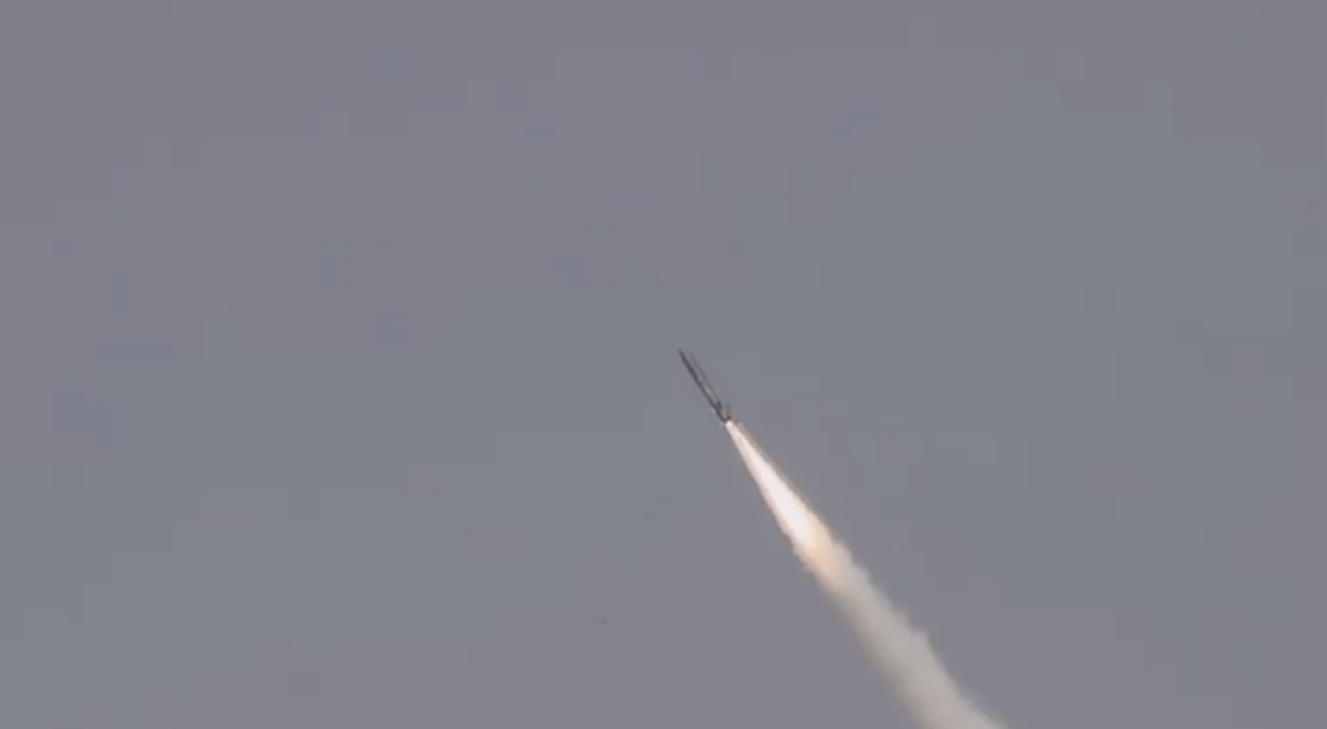
On May 3, 2025, Pakistan conducted a test launch of its short-range ballistic missile, Abdali, marking a significant move in the midst of rapidly deteriorating relations with India. The launch came just days after the April 22 attack in Pahalgam, Indian-administered Kashmir, where 26 civilians were killed. While Pakistan termed the missile test a routine validation of its operational readiness, the timing and broader geopolitical context point toward strategic signaling in response to increasing hostility from New Delhi.
The Abdali missile, capable of striking targets within 450 kilometers, is a key component of Pakistan’s tactical deterrence architecture. Although not new, the missile’s publicized test served as a clear message that Pakistan remains militarily prepared and unwilling to concede to intimidation or aggression. Official statements from Pakistan’s military emphasized national security and deterrence, underlining that such measures were necessary in view of India’s escalatory posture.
In the weeks following the Pahalgam attack, India was quick to blame Pakistan-based groups, although credible evidence has not been independently verified. Rather than pursuing diplomatic channels, New Delhi opted for a series of severe countermeasures. These included the suspension of the Indus Waters Treaty, expulsion of Pakistani diplomats, trade freezes, and a large-scale military mobilization exercise near the Line of Control (LoC), called Aakraman. Concurrently, Indian forces intensified operations in the Kashmir Valley, detaining thousands and demolishing civilian properties, raising significant human rights concerns.
Pakistan’s official stance remained firm, it condemned the Pahalgam attack, denied state involvement, and warned against “false flag” narratives being used as a pretext for Indian belligerence. In what can be seen as a symmetrical response, Pakistan suspended the 1972 Shimla Agreement and closed its airspace to Indian aircraft, an act signaling diplomatic and strategic disengagement from frameworks it believes India has repeatedly undermined.
Missile tests during such periods are not unprecedented in South Asia. Historically, both India and Pakistan have used ballistic missile launches as a means of signaling resolve and strategic parity. For instance, during the Kargil conflict in 1999, Pakistan tested the Ghauri missile, reaffirming its nuclear posture amid combat on high-altitude frontlines. Similarly, during the 2001–2002 standoff that followed an attack on the Indian Parliament, both sides conducted successive missile tests, India with Agni-I and Pakistan with Ghauri and Shaheen series. In each instance, these actions were used to communicate deterrence and prevent miscalculations, even if they increased rhetorical temperature.
After the Pulwama attack in 2019, India conducted airstrikes in Balakot, claiming to target militant camps. Pakistan responded proportionately and responsibly, downing an Indian aircraft and returning a captured pilot, a gesture that de-escalated tensions at a critical juncture. Both nations again turned to missile tests to reiterate their red lines. These historical patterns show that missile launches have become part of a strategic grammar unique to the subcontinent, often filling the vacuum left by faltering diplomacy.
In this light, Pakistan’s May 2025 missile test should not be viewed as a provocation but as a calibrated signal intended to deter further Indian adventurism. The absence of meaningful dialogue and India’s unilateral decisions to suspend long-standing treaties have left Pakistan with fewer diplomatic tools, compelling it to rely on strategic demonstrations. Unlike India’s often rapid shift toward militarization after terror incidents, Pakistan has generally used such tests not as a threat but as a means to reinforce the logic of mutual deterrence.
Critics who argue that missile tests exacerbate tensions fail to recognize the imbalance in conventional military capabilities between the two nations. India’s growing defense budget, cross-border strikes, and frequent incursions into Pakistani airspace have pushed Pakistan to emphasize its credible minimum deterrence posture. In a region where political dialogue has been systematically eroded, strategic signaling becomes one of the few remaining options to prevent misperception and miscalculation.
There is, however, a broader concern. The continued breakdown of stabilizing agreements such as the Indus Waters Treaty and the Shimla Accord risks unraveling the fragile balance that has historically restrained both sides from full-scale confrontation. These treaties, while sometimes imperfect in implementation, have served as institutional buffers in moments of crisis. India’s recent decision to discard these frameworks, without international mediation or bilateral discussion, raises legitimate concerns about the erosion of trust and the potential for conflict escalation.
📄 POLICY WIRE WHITEPAPER PUBLISHED: PAKISTAN'S NATIONAL SECURITY POLICY PRIORITIES
👉 READ BY CLICKING HEREWhile global actors, including the United States and Russia, have urged restraint, their calls often fall short of addressing the asymmetries in political narrative and media portrayal. Pakistan’s efforts to highlight the systemic oppression in Indian-administered Kashmir, the weaponization of water resources, and the undermining of regional agreements are frequently overshadowed by a default tendency to equate both sides in diplomatic statements. Such false parity does little to correct the imbalance or support genuine peacebuilding efforts.
Ultimately, missile tests like the one conducted by Pakistan in May 2025 must be understood not in isolation but in the broader context of sustained diplomatic disengagement and strategic mistrust. Far from being destabilizing, these tests serve as controlled expressions of deterrence, necessary in a regional environment marked by power asymmetry, narrative manipulation, and reduced space for dialogue.
The need of the hour is not condemnation of strategic signaling but a reinvestment in bilateral mechanisms that can reduce the chances of miscommunication. Both nations, and the international community, must recognize that peace cannot be enforced through coercion or one-sided narratives. Confidence-building measures, revival of backchannel diplomacy, and equitable mediation are essential for any long-term solution.
Pakistan’s missile test, therefore, is not merely a display of power, it is a call for strategic balance in a rapidly destabilizing region. As South Asia once again teeters on the brink, this action serves as a timely reminder that deterrence, in the absence of dialogue, becomes not a threat, but a necessity.
Author