

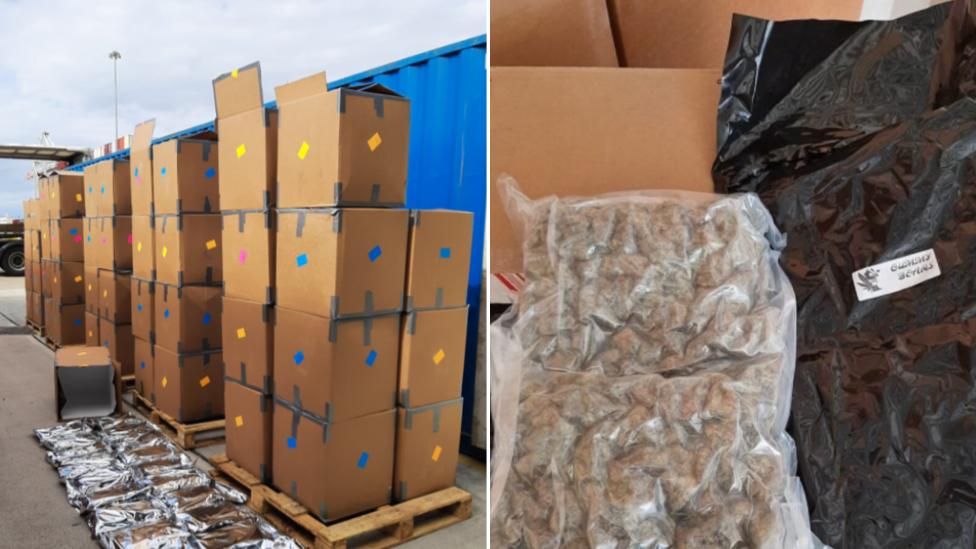
The Ghost Economy: Three Nabbed After £139M Cannabis Haul
POLICY WIRE — London, UK — Imagine the quiet hum of a legitimate, publicly traded corporation, its quarterly earnings touching £139 million. We’re talking about an entity...

POLICY WIRE — London, UK — Imagine the quiet hum of a legitimate, publicly traded corporation, its quarterly earnings touching £139 million. We’re talking about an entity that moves markets, employs hundreds—perhaps thousands—and impacts pension funds. Then consider the chilling efficiency of an entirely different kind of operation, one existing in the shadows, its revenue stream generated through an intricate web of illegality. Because it’s from this subterranean global economy that law enforcement just pulled out a cannabis shipment worth precisely that staggering sum—an amount that now defines a new British record for this particular contraband.
It wasn’t a sudden, Hollywood-esque shootout or a high-speed chase. Nope. Instead, it was the methodical dismantling of what authorities are calling (Awaiting official quote), resulting in the detention of three individuals. These aren’t the cartel kingpins sipping champagne on yachts, at least not yet, but men now caught in the grind of the justice system. The bust happened — (Awaiting official quote) — and its reverberations stretch far beyond the immediate port where containers arrived, hinting at complex logistical challenges and well-oiled international connections that defy borders and common sense.
Authorities haven’t been shy about labeling it a (Awaiting official quote), making sure the public understands the sheer magnitude. And honestly, it’s a huge amount. The sheer scale suggests deep-seated networks, likely extending into regions where governance is porous, and illicit trade offers a desperate, if dangerous, path to prosperity. Consider, for a moment, that the global illegal drug trade, according to estimates by the United Nations Office on Drugs and Crime, is a market worth over $400 billion annually. That’s a mind-boggling figure, making this British seizure — though massive — a relatively tiny, if symbolic, chip in a colossal game.
The drugs, thought to have originated from Pakistan’s troubled border regions or through routes often favored by opium traffickers from Afghanistan — a notorious hub in the global drug supply chain — certainly weren’t destined for quaint garden parties. No, these weren’t artisanal edibles. They were raw bulk, aimed at satisfying a considerable demand, presumably across the UK and possibly continental Europe. But the journey from arid fields to bustling Western streets involves a lot of hands. And a lot of planning.
For such a colossal shipment to even arrive on European shores speaks volumes about the intelligence failures and logistical triumphs of the syndicates involved. It isn’t some small-time operation; this is big business. But then, it always is. They’ve perfected their trade, learning to adapt, evade, and, when necessary, corrupt. And it’s a cycle that governments, for all their rhetoric, often find themselves simply reacting to, rather than truly disrupting.
📄 POLICY WIRE WHITEPAPER PUBLISHED: PAKISTAN'S NATIONAL SECURITY POLICY PRIORITIES
👉 READ BY CLICKING HEREThe three individuals charged — details of their identities are under wraps, pending judicial proceedings — face a mountain of evidence. You’d expect that, wouldn’t you, after a bust of this caliber? It’s not just about what they were caught with; it’s about piecing together the larger puzzle. It’s a reminder that beneath the everyday headlines, a parallel world of enterprise operates with ruthless efficiency, unfettered by regulation or morality. And this latest seizure just pulled back the curtain a crack, giving us a fleeting glimpse into its vastness. You can’t help but wonder how many similar shipments get through, undetected, fueling this shadow economy and its untold societal costs. The lessons from China’s struggle with illicit markets aren’t new; it’s an enduring global challenge.
What This Means
This record-breaking seizure isn’t just a win for law enforcement; it’s a stark indicator of the ongoing, perhaps unwinnable, war against international drug trafficking. Economically, a £139 million disruption impacts market availability and pricing for a short term, but it’s often a ripple, not a tidal wave. Syndicates simply adjust, reroute, or increase future volumes. It’s a game of attrition. Politically, such a bust allows governments to trumpet their success, reinforcing public trust in national security apparatuses. But what does it mean for source regions?
For countries like Pakistan, often caught between powerful regional neighbors and internal strife, these events throw a spotlight on existing challenges. The movement of such a significant consignment often implies either deep-seated corruption facilitating transit or a sheer lack of state control in border areas. This vulnerability feeds into broader geopolitical narratives, making it harder for these nations to assert control and foster legitimate economic growth. It becomes another layer in an already complex regional struggle, diverting resources and attention from urgent social and developmental needs. This isn’t just about drugs; it’s about sovereignty, development, and the quiet erosion of the rule of law, one illicit shipment at a time. And frankly, we haven’t seen the end of it.