


The High Cost of Longevity: Eight Dead in B-52 Crash Amidst Push to Keep 65-Year-Old Bombers Flying
POLICY WIRE — EDWARDS AIR FORCE BASE, Calif. — For seventy-plus years, America’s B-52 Stratofortress has been a Cold War relic, a flying anachronism, really, steadily refusing to fade into history...

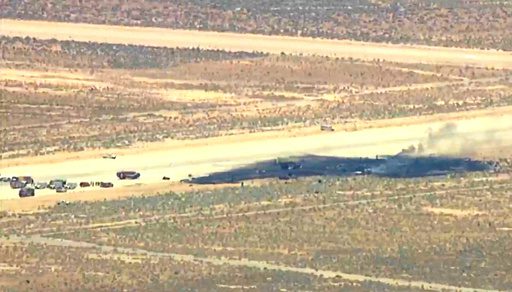
POLICY WIRE — EDWARDS AIR FORCE BASE, Calif. — For seventy-plus years, America’s B-52 Stratofortress has been a Cold War relic, a flying anachronism, really, steadily refusing to fade into history books. Now, eight dedicated professionals are dead after one of these behemoth bombers went down hard during a test flight at California’s Edwards Air Force Base. Their mission? Ensuring the venerable B-52, which first saw service in 1955, could still soar — and potentially fight — all the way into the latter half of the 21st century. Quite a goal for a nearly geriatric airframe.
It wasn’t just pilots or flight crews involved here. This fiery catastrophe on Monday wasn’t some run-of-the-mill incident. It’s a gut-wrenching reminder of the very real human toll tied to maintaining an aging military fleet, particularly one they’re planning on keeping aloft until 2050. That’s pushing it close to a full century of active duty, mind you. You’ve gotta ask, is this ambition running headlong into grim reality?
Military officials, with somber efficiency, finally released the names this Wednesday: four active-duty airmen, a reservist, and three civilians. They were all on a team devoted to keeping the bomber flying for decades to come, military officials said Wednesday. Their roles weren’t just about making the plane go. One, Christopher Rischar, a flight test engineer with government contractor JT4, loved going to airplane museums and showing their two children, 15 and 14, different types of aircraft and how they functioned, according to his wife. She told The Associated Press that he said, (Awaiting official quote). Rischar’s father, who also works at the base and tragically saw the crash unfold, called his daughter-in-law to ask if Christopher had been flying. It’s just brutal, isn’t it? The sheer weight of that call. Lauren Smith, wife of Jeromy Smith, another flight test engineer lost in the crash, summed it up perfectly for Eyewitness News KBAK-CBS and FOX58: (Awaiting official quote).
This B-52 that crashed was a testbed, not just some museum piece. It had rolled into Edwards back in December, fresh from having a modernized radar installed at Boeing’s facility in San Antonio. The plan, according to an Air Force press release at the time, was to use the bomber as a testbed throughout 2026 to help military officials decide whether to proceed with the B-52 Radar Modernization Program. Think about that: a critical decision hinged on this program, on these flights, on these lives.
The aircraft itself, affectionately nicknamed “The Spirit of Aggieland” during its previous life at Barksdale Air Force Base, represented a specific kind of dedication—a dedication that’s now stained by fire and wreckage. The 412th Test Wing at Edwards, where this happened, has quite a history, too. It’s where legends like Chuck Yeager broke the sound barrier. Test missions take place at Edwards daily, officials said. And then one day, it just doesn’t work. The aircraft took off shortly before noon on a clear day, heading southwest into the prevailing winds. It flew straight — and crashed on the same 15,000-foot runway. Compact wreckage, they say. Dropped sharply.
But how does an iconic bomber, built to project power across continents — and for generations, fail so spectacularly? The exact cause remains elusive. Officials said it could take six months to complete the investigation. Aviation safety experts, bless their pragmatic hearts, speculate about a malfunction in the flight controls or engines. However, it’s much too early to know, they concede. Investigators will consider several factors, including the age — and maintenance of the plane. It begs the question: are we pushing these machines too hard, or just trying to extract too much from them?
📄 POLICY WIRE WHITEPAPER PUBLISHED: PAKISTAN'S NATIONAL SECURITY POLICY PRIORITIES
👉 READ BY CLICKING HEREBecause the B-52, that long-range bomber, has indeed been used in conflicts involving the U.S. military from Vietnam to Iran. It’s a strategic asset whose longevity is directly tied to the geopolitical realities, past — and present. The constant need for a global reach, a deterrent — a visible display of power, particularly in volatile regions like the Middle East or South Asia, where the US frequently operates or has strategic interests — keeps these older assets relevant, at least on paper. And Pakistan, a crucial if sometimes complicated partner in the Muslim world, often finds itself navigating the consequences of regional power dynamics where such capabilities are key factors. Maintaining this capability comes at a cost, in blood and treasure, even as new forms of conflict emerge, forcing nations to deal with threats both old and new across its borders, as seen in instances like the smuggling routes in the Iran-Pakistan borderlands.
What This Means
This incident isn’t just a tragic accident; it’s a policy conundrum wrapped in scorched metal. For one, it spotlights the considerable investment — and gamble — the Pentagon is making on its existing, battle-hardened hardware. Modernizing a bomber that entered service over six decades ago to serve for nearly a century means massive R&D budgets are tied up, money that perhaps isn’t going into truly next-generation capabilities. It raises eyebrows in an era of rapid technological advancement — and a shifting global threat landscape. Is the quest for extreme longevity practical, or just a reflection of procurement inertia and a desire to maximize existing investments?
And what about the human element? These were not just statistics. These were eight lives, families torn apart. The implicit understanding that testing military equipment is dangerous is always there. But this crash should force a candid re-evaluation. Is the modernization effort genuinely making these aircraft safer for a prolonged operational lifespan, or is it merely papering over inherent obsolescence, asking aircrews and test personnel to effectively risk life and limb for what might be diminishing returns? This isn’t just about an airplane; it’s about a defense strategy, the allocation of billions in taxpayer dollars, and ultimately, about people who believe they’re serving a higher purpose, even if that purpose asks them to strap into a war machine older than most of their grandparents. The implications extend far beyond Edwards, touching on national security, budget priorities, and the solemn promises made to those who keep the fleet flying.
It’s not just a technical problem; it’s a political one, and an economic one too, because every dollar spent propping up the B-52’s future is a dollar not spent on other military priorities or even domestic programs. We’re really putting a lot of eggs in some very old baskets.