


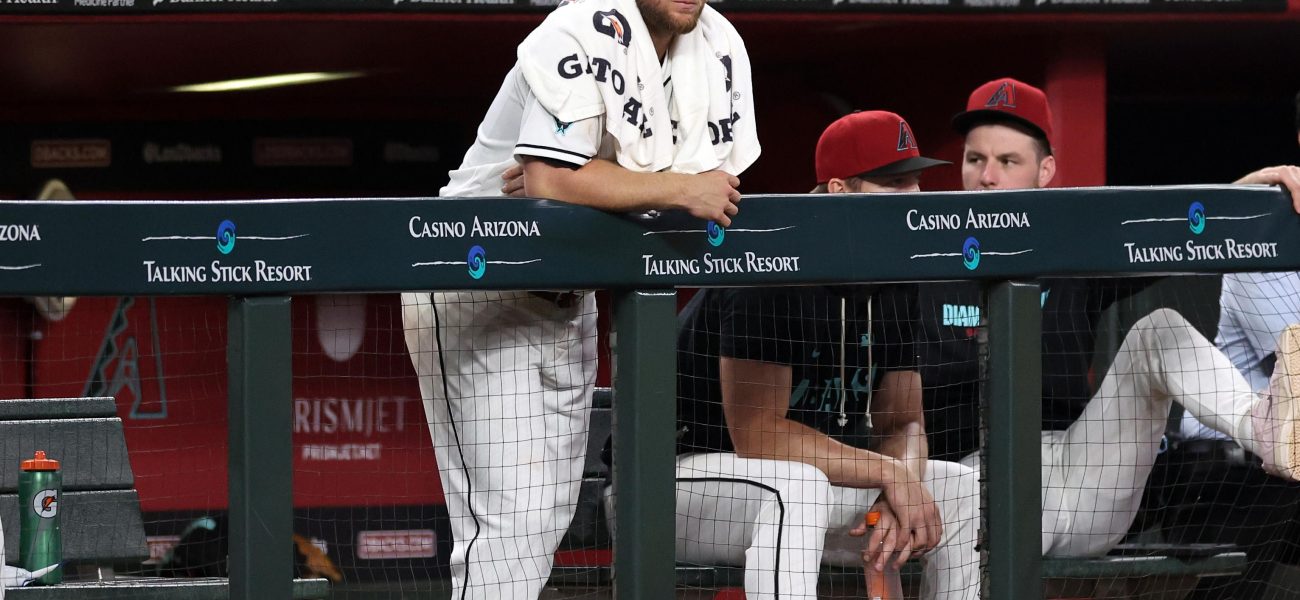
Beyond the Bullpen: Arizona’s Global Talent Gambit Amidst Diamondbacks’ Slump
POLICY WIRE — Phoenix, USA — When a club’s on-field performance is, shall we say, less than stellar, the typical response from management often involves soul-searching, minor roster...

POLICY WIRE — Phoenix, USA — When a club’s on-field performance is, shall we say, less than stellar, the typical response from management often involves soul-searching, minor roster adjustments, or perhaps a frustrated public statement. Not so, it seems, for the Arizona Diamondbacks. Their latest maneuver feels less like a course correction and more like a high-stakes bet placed on a wholly different table: the global talent market, thousands of miles away from Chase Field.
It was only recently that the D-backs endured another bruising encounter. Pitcher Merrill Kelly, an experienced arm, got slapped around for six runs in 5 q/3 innings. That’s a stark stat, particularly when considering reports from the dugout that the offense only managed four hits and five base runners all game. The immediate outcome? Predictably, a one-sided drubbing on the Diamondbacks by perennial cellar-dwellers, the Anaheim Angels of Los Angeles. But even as the dust settled on that humbling defeat, the team’s front office had already, and rather quietly, made an intriguing signing official. (Awaiting official quote)
Enter Jun-Sang Eom. This wasn’t some minor-league journeyman or a late-round draft pick. He is a shortstop and a right-handed pitcher who was considered a top prospect in the upcoming Korean Baseball Organization draft. An 18-year-old kid, uber-athletic, with a 6-foot-1, 205-pound frame, Eom’s appeal comes from his dual threat capability: he can throw up to 95 MPH on the mound while also playing shortstop. Policy Wire learned that Korean two-way star Jun-Sang Eom, who was considered a top prospect in the KBO draft this year, inked a deal with Arizona that had been reported just over a week prior.
Now, this move feels like a calculated shift. You see, while the home team struggles, losing ground with the domestic talent they already have, they’re simultaneously investing significant capital in a distant, unproven commodity. It’s a strategy that underlines a subtle, but growing, desperation — or perhaps prescience — among American sports franchises. They’re chasing the next big thing, the anomaly, wherever he might be found, because the domestic pipelines aren’t always gushing with enough game-changers.
This global scavenger hunt isn’t unique to baseball. It mirrors trends we observe across various sectors worldwide. For instance, the talent pool in places like South Asia, particularly in nations like Pakistan, constantly grapples with the challenge of either nurturing and retaining its brightest minds or watching them contribute their expertise to global economies. And that’s often the case when sports or specialized industries are perceived to have higher returns or better infrastructure elsewhere. Here, in Phoenix, the bet is on a single, young prodigy.
It isn’t about immediate fixes, mind you. No one expects an 18-year-old to turn a franchise around tomorrow, especially not when the veteran hand of Merrill Kelly couldn’t keep six runs from scoring in 5.3 innings against a team hardly considered an AL powerhouse. But it does signal a strategic realignment. Also, on the current roster, pitchers like Reid Detmers rank highly on the list with the Diamondbacks as potential suitors for trade, which suggests management is juggling immediate needs with future ambitions.
📄 POLICY WIRE WHITEPAPER PUBLISHED: PAKISTAN'S NATIONAL SECURITY POLICY PRIORITIES
👉 READ BY CLICKING HEREWhat This Means
This Arizona Diamondbacks’ gambit speaks volumes about the globalized nature of modern sports and, frankly, the increasing scarcity of transcendent talent in certain national markets. What it signifies is a willingness — or necessity — for franchises to scout beyond traditional borders. It’s a quiet acknowledgment that the world is flat, not just for trade goods, but for human potential, even in something as uniquely American as baseball.
Economically, it indicates a shifting valuation of talent. It isn’t just about raw skills; it’s about the market inefficiencies a franchise can exploit internationally. And this kind of long-term investment, while perhaps not offering immediate returns in terms of game wins, certainly presents a different kind of balance sheet entry – one banking on future superstar potential that could, conceivably, reshape an entire brand and generate untold millions in future revenue. It reminds us how a simple player signing, not unlike the buzz around a new sneaker launch, can offer insights into far broader economic currents and talent pipelines globally.
For South Asia, specifically Pakistan, where sporting focus primarily orbits around cricket, this scenario highlights both a challenge and an opportunity. While baseball doesn’t command the same public attention, the global hunger for unique athletic talent means that niche sports or undeveloped capacities, once properly cultivated, can become powerful avenues for international recognition and economic benefit. Pakistan’s considerable youth demographic—it’s one of the youngest nations in the world—means there’s an enormous untapped pool, but also that infrastructure for diverse sports needs serious cultivation to truly engage with this global talent market. And then there’s the other side: All-star ballot performance rankles the feathers of fans when beloved players don’t get the recognition they’ve earned domestically, making these global, long-shot bets even more intriguing against the backdrop of present dissatisfaction. It’s a high-stakes, cross-continental roll of the dice for the Diamondbacks, and one can only wait to see if it pays off, much like the development of any teen prodigy under the intense glare of the spotlight.