

Pine Peril: New Mexico’s Forest Devastation Echoes a Global Climate Alarm
POLICY WIRE — Santa Fe, New Mexico — It wasn’t a record year for scorched earth, not quite. Nor for forests disappearing under the relentless buzz of chainsaws, for that matter. No, what made 2025...

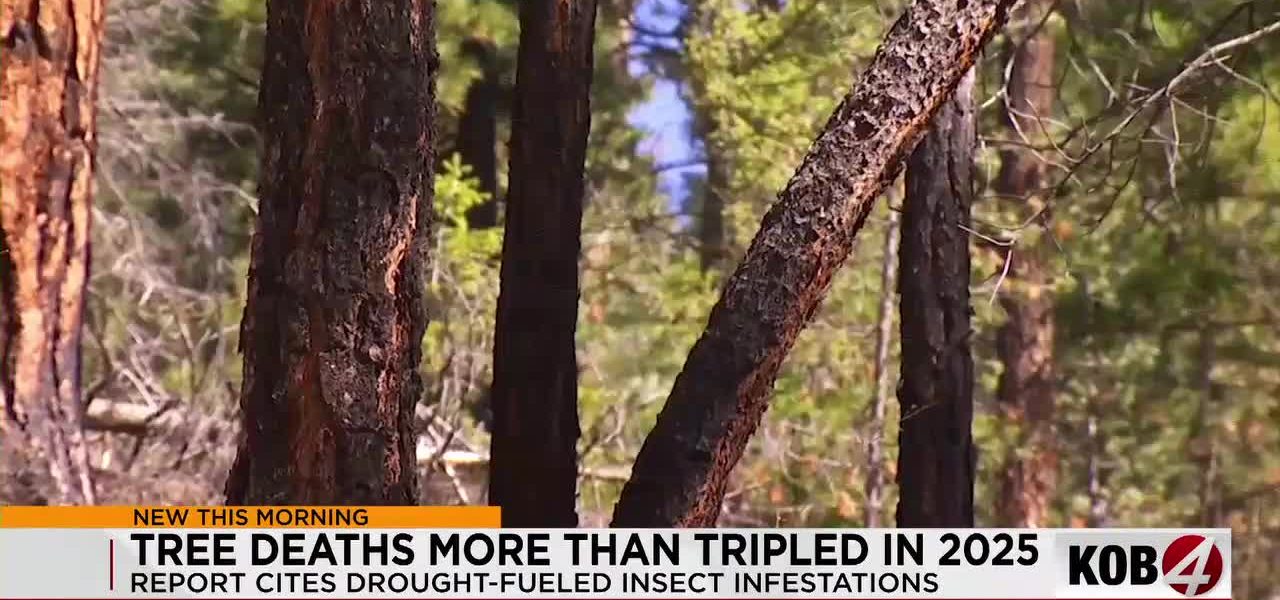
POLICY WIRE — Santa Fe, New Mexico — It wasn’t a record year for scorched earth, not quite. Nor for forests disappearing under the relentless buzz of chainsaws, for that matter. No, what made 2025 such a jarring annum for New Mexico’s venerable pine forests was something far more insidious: a quiet, insect-driven massacre, executed by armies of bark beetles enjoying an extended season of destruction.
While wildfires often grab headlines, it’s these less dramatic, creeping blights that paint a bleaker long-term picture for our ecosystems. But for New Mexico’s trees, it was a proper rout. According to the 2025 Forest Health Report from the New Mexico State Forestry Division, the number of trees killed by bark beetles and other insects more than tripled compared to 2024. And that’s after years that weren’t exactly good, making this spike not just concerning, but outright alarming for anyone who values the state’s natural canopy—or perhaps just the timber trade.
Pine species, specifically the hardy ponderosa and piñon, found themselves on the front lines, suffering the worst of this quiet onslaught. It’s not just a localized bad run, though. This kind of ecological fracturing, spurred by climate abnormalities, is hardly exclusive to the American Southwest. Look, a sustained, long-term assault on the planet’s green infrastructure presents not just environmental quandaries but serious socio-economic fault lines across continents, including many a nation stretching from Pakistan to the Maghreb. When the forests — or farmlands — falter, populations suffer. People can’t simply stand by — and watch their livelihoods wilt away.
But back to the high desert. The official word attributes this devastation squarely to increased temperatures and prolonged drought conditions, which basically leave the trees — literally, physically — too weak to fend off their tiny aggressors. Think about it: a weakened immune system is a gift to any pathogen. An unusually warm fall — and winter, says the report, didn’t help a bit. It actually gave the beetles a longer window to do their dirty work.
Victor Lucero, the New Mexico State Forestry Division’s Forest Health Program Coordinator, put it plainly in December: (Awaiting official quote) There’s no complex economic model here; it’s just biological opportunism writ large across the landscape. The environment offers an opening, — and nature takes it.
Here’s the thing: while 2025 wasn’t the absolute peak year for insect damage (2022 and 2023 saw even greater mass die-offs, for some context), the sharp upturn still indicates deeply troubling trends. The numbers don’t lie; this wasn’t an anomaly but part of an escalating pattern. And how could it not be? The report makes it clear: 2025 was the second hottest year in New Mexico history and the 38th driest year on record. You don’t need a PhD in climate science to connect those dots. Most of New Mexico currently grapples with drought conditions, which just means more enfeebled trees awaiting their inevitable end.
And that’s the brutal reality of environmental stress in the Anthropocene. The kind of stresses hitting New Mexico’s forests aren’t so different from the water scarcity battles shaping lives and economies in agrarian regions across Pakistan’s Indus Basin or the struggling farming communities facing relentless desertification in parts of North Africa. The causes — global warming, erratic weather patterns — often share roots, even if the trees, or lack thereof, are entirely different. The localized struggles are, increasingly, reflections of a planetary malaise.
📄 POLICY WIRE WHITEPAPER PUBLISHED: PAKISTAN'S NATIONAL SECURITY POLICY PRIORITIES
👉 READ BY CLICKING HEREWhat This Means
For New Mexico, the obvious, immediate implication is a significant reduction in forest cover. This isn’t just about pretty scenery, though. Dwindling forests affect everything from local water retention (more runoff, less groundwater recharge) to increased wildfire risks (dead trees burn faster, hotter). Ecologically, it shifts habitats, messes with biodiversity, — and alters entire watershed dynamics. Economically, rural communities relying on forestry, tourism, or recreation face real fiscal consequences. Less tree cover means hotter summers, requiring more energy for cooling, which cascades into other cost burdens. It’s a feedback loop from hell, quite honestly.
Politically, these environmental pressures typically translate into increased demands on state resources for mitigation and adaptation, often leading to fierce debates about funding priorities. Where do you find the budget when schools need funding and healthcare is strapped, but your forests are literally dying on their feet? Because let’s face it, these are problems no simple patch will fix; they require coordinated, long-term strategies and — perhaps most difficult of all — a consensus on their cause and scale.
Globally, New Mexico’s pine peril serves as yet another glaring reminder of shared climate vulnerabilities. The specific impacts might differ from region to region, sure. But the underlying engine of accelerated climate change affects us all. Whether it’s drought in the American Southwest or increasingly unpredictable monsoon seasons leading to devastating floods and agricultural losses across Pakistan and India — an issue with real security ramifications that’s often left unexamined (read more on US-India dynamics here)—the stakes are universally high. Leaders, be they governors in Santa Fe or prime ministers in Islamabad, aren’t just managing land anymore; they’re wrestling with the unruly consequences of a planetary climate undergoing a significant, and often destructive, realignment. We’re in for quite a ride, it seems.
The cycle of hotter, drier conditions making trees vulnerable, which in turn exacerbate climate issues, forms a vicious feedback loop. This isn’t just an American story; it’s a worldwide one, telling a story of ecosystems teetering on the brink under pressures we’ve collectively engineered. The irony, perhaps, is that these tiny beetles are far more effective at changing landscapes than all the environmental policy debates combined.