


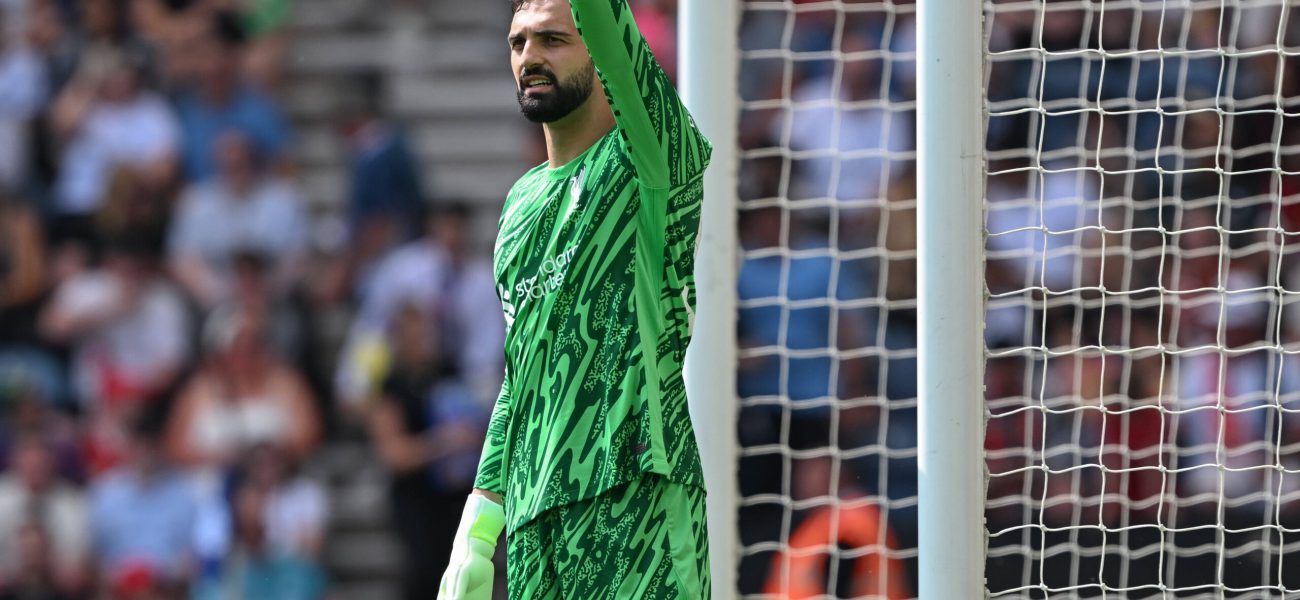
Anfield’s Goalkeeping Gamble: The Clock Ticks on a Dynasty
POLICY WIRE — Liverpool, UK — Even the most formidable bastions, built with grit and graced by brilliance, must someday reckon with change. For Liverpool Football Club, that reckoning draws closer to...

POLICY WIRE — Liverpool, UK — Even the most formidable bastions, built with grit and graced by brilliance, must someday reckon with change. For Liverpool Football Club, that reckoning draws closer to its sacred goalmouth. It isn’t just about finding a new pair of hands; it’s a multi-million-pound calculation, a strategic pivot, and a psychological tightrope walk that many a global conglomerate could learn from. But this isn’t just a British sporting affair; the stakes resonate far beyond Merseyside, echoing in boardrooms and backstreets from London to Lahore.
For much of the past eight years, Anfield faithful haven’t had to fret. They’ve reveled in a rare indulgence: a world-class presence, Alisson, whose every dive and distribution spelled serenity. He’s been the last line of defense, sure, but also the first spark of offense. The club expects the Brazilian to remain at Anfield for the final year of his contract, as Gregg Evans of The Athletic notes, quieting, for now, the buzz about a summer exit. And yet, the unavoidable truth—harsh, unyielding—is that his tenure, like all others, has a shelf life. (Awaiting official quote)
The inherent difficulty of replacing elite goalkeepers is profound. You don’t just swap out a widget; you’re attempting to replicate a rare cocktail of instinct, authority, and shot-stopping artistry that defies easy quantification. Replacing these stalwarts requires forethought, something Liverpool’s recruitment machine started working on some time ago. Enter Giorgi Mamardashvili, the Georgian international, whose acquisition represents a tangible facet of that succession blueprint. His intent upon arrival? Undeniable. From the moment he moved to Merseyside, Mamardashvili’s ambition was clear: he saw himself as a future No 1 and had joined the club with the aim of eventually claiming that role.
But aspiration isn’t always the same thing as immediate readiness. His debut season delivered moments of pure class, interspersed with blunt reminders that English football, with its furious tempo, chews up and spits out even the most gifted. Evans highlights concerns regarding his distribution — and overall command when in possession. And it isn’t just subjective optics; Mamardashvili didn’t perform anywhere near as well as expected from a shot-stopping perspective
, an observation from Evans. The cold hard facts dictate that a modern Liverpool keeper must do more than simply catch; they must orchestrate attacks, exude calm under suffocating pressure, and—critically—consistently secure those precious points. While Mamardashvili has shown glimpses of these qualities, he’s yet to deliver the whole darn package.
His development, naturally, becomes paramount. The arrival of Andoni Iraola as head coach could be quite pivotal in this saga. Iraola’s prior connection to Mamardashvili—a near collaboration at Bournemouth—implies an established understanding of the keeper’s strengths, yes, but also a stark awareness of his imperfections. That intel, no doubt, factors into any forthcoming big decisions.
The quiet operations behind the first team spotlight also deserve scrutiny. Freddie Woodman, for instance, has delivered precisely what was asked of him as a third-choice stopper. Evans’ description? reliable and composed, but not perfect
— a refreshingly honest assessment for someone navigating the thankless role of understudy. Then there’s Vitezslav Jaros, whose potential shimmered before a serious knee injury stalled his Ajax loan spell. But his ambition, he’ll tell you, hasn’t diminished one jot. When I’m (going to be) ready to become Liverpool’s first-choice goalkeeper, especially with two formidable competitors like Alisson and Mamardashvili, is difficult to say, because taking their place isn’t easy. But that’s ultimately the goal and, once I succeed, I want to win the Champions League.
It’s an enviable self-belief, probably a necessity for anyone aspiring to the highest echelons. Young Armin Pecsi, too, progresses through the ranks, benefiting from a meticulously crafted loan strategy, part of a long-term developmental blueprint.
📄 POLICY WIRE WHITEPAPER PUBLISHED: PAKISTAN'S NATIONAL SECURITY POLICY PRIORITIES
👉 READ BY CLICKING HEREThe curious case of Caoimhin Kelleher, now thriving at Brentford, adds another wrinkle to this increasingly complex narrative. There was, Evans pointed out, no buyback clause
in his transfer. Still, the Irish international continues to strengthen his reputation, proving to be one of the few to have shown he’s capable of fitting in
. Liverpool, let’s face it, understands Kelleher’s capabilities—the club culture, the exacting standards, the precise tactical demands. If Mamardashvili’s progress doesn’t accelerate as hoped, don’t be surprised if calls for a reunion, however wistful, start growing louder from the stands. And that’s not just a romantic notion; it’s sound business acumen, especially when the club’s global reach means their player development directly impacts their international brand and market value, particularly in regions like South Asia where Liverpool enjoys immense popularity, influencing everything from merchandising to regional broadcasting rights. Just look at the passions surrounding a controversial umpire’s call in cricket in countries like Pakistan, and you’ll grasp the depth of feeling in sports here: Controversial Umpire’s Call Ignites Firestorm in South Asian Cricket.
What This Means
The seemingly straightforward act of replacing a goalkeeper at a football club becomes a microcosm of modern organizational dynamics—part strategic HR, part high-stakes financial play, and entirely subject to the capricious whims of individual performance. Economically, securing a talent like Alisson, who has anchored the team for eight years, is a tremendous return on investment, akin to a stable asset in volatile markets. The club’s foresight in planning for his eventual departure, through acquiring talents like Mamardashvili and nurturing prospects like Jaros and Pecsi, reflects a sophisticated, risk-mitigation approach. It isn’t merely about finding a new player; it’s about safeguarding brand value, future revenue streams, and investor confidence—all tied to sustained on-field success. Politically, the choice of successor isn’t just a coaching decision; it’s a narrative the club curates for its millions of fans globally. An unsuccessful transition can destabilize the entire organizational morale, trigger public dissent, and even impact sponsorship deals. The market for elite sporting talent is a cutthroat global one, influencing decisions from Manchester to Morocco. And Liverpool’s long-term decisions will affect countless stakeholders, especially when viewed through the lens of Pakistan’s quiet yet impactful role in international diplomacy, where careful succession and strategic planning are not just desired but essential for stability.
Ultimately, this isn’t just about the ball and net; it’s a masterclass in managing expectation, mitigating risk, and preparing for the inevitable passage of time within an entity whose very existence thrives on the ephemeral nature of glory. Liverpool’s future may well lie within its current stable of keepers. The colossal challenge, though, remains: determining which candidate possesses the mettle to step into shoes that will forever be associated with one of the Premier League’s finest.