


Ohio Governor’s Death Penalty Turnaround Signals End of an Era
POLICY WIRE — Washington, D.C. — It isn’t often you see a politician, a lifelong creature of the political beast, openly repudiate his own foundational handiwork. Especially not one as seasoned, as...

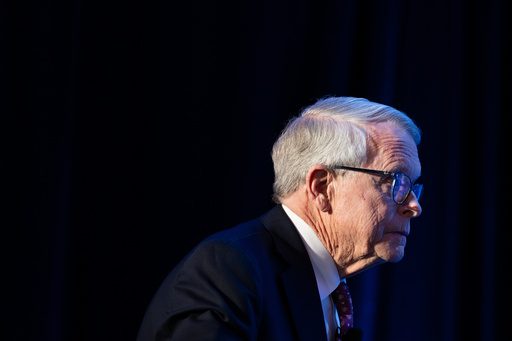
POLICY WIRE — Washington, D.C. — It isn’t often you see a politician, a lifelong creature of the political beast, openly repudiate his own foundational handiwork. Especially not one as seasoned, as etched into the firmament of state government as Ohio’s Governor Mike DeWine. But there he was, 79 years old, confessing a seismic shift—a philosophical and practical rejection of a policy he’d helped craft nearly half a century ago. The death penalty, he now concedes, just isn’t working, hasn’t for a while, and its continued existence, quite frankly, serves no useful purpose.
DeWine, a Republican nearing the close of a long and storied career—county prosecutor, congressman, U.S. senator, attorney general, and governor, each title burnished by his name—aired his profound disillusionment earlier this week. For years, he’s put executions on ice, navigating a maze of ethical quandaries — and pharmaceutical shortages. But his Tuesday announcement went beyond the bureaucratic. It was a moral declaration: Ohio should abolish the death penalty.
Because he’s spent 50 years—you read that right, five decades—grappling with capital punishment, DeWine didn’t pull this idea from thin air. He brought charts. He brandished graphs. His primary contention? That tired old chestnut, the one about deterrence. He once believed it, too—thought it was the big moral play. But no more. The data, he explains, just doesn’t bear it out. (Awaiting official quote) I don’t believe that argument today can be successfully made, nor do I believe that there’s any chance in the future the facts that I’ve cited to support that belief will change, he stated unequivocally. And that’s it, isn’t it?
His deep dive into the subject, buttressed by cold, hard numbers, painted a grim picture of a system that’s increasingly — and pathetically — ineffective. Condemned murderers aren’t really getting executed, you know. They’re dying in their cells of natural causes, sometimes by their own hand. Appeals drag on forever, stretching into decades. This agony, he pointed out, isn’t just for the convicted; it’s inflicted on victims’ loved ones, a cruel prolongation of their suffering. And then there’s the unseen toll on the state employees tasked with carrying out these grisly deeds, folks who serve on execution teams. It’s messy. It’s draining.
Of course, this isn’t happening in a vacuum. The national pulse has been shifting for a while. Data from the Washington, D.C.-based Death Penalty Information Center reveals that as of now, 27 states permit capital punishment, while 23 have effectively scrapped it. And we’re seeing an evolution across the political spectrum—just as Kevin Werner, executive director of Ohioans to Stop Executions, observes (Awaiting official quote) an evolution on the death penalty. Even conservatives are coming around, it seems. And that’s a rare sight.
But the road to abolition isn’t going to be smooth. Republican House Speaker Matt Huffman already said he’d oppose such an effort. The current state attorney general, Andy Wilson, sounds relieved DeWine isn’t just emptying death row with commutations. But the sheer practical reality looms: pharmaceutical companies aren’t selling the drugs needed for lethal injection, not anymore. You just can’t get the stuff, rendering scheduled executions—like the 30 on Ohio’s docket over the next four years—increasingly hypothetical. Even efforts to bring nitrogen gas executions to Ohio, following the lead of some other states (though a recent Alabama attempt using it was halted by the U.S. Supreme Court over cruelty concerns), haven’t gone anywhere.
📄 POLICY WIRE WHITEPAPER PUBLISHED: PAKISTAN'S NATIONAL SECURITY POLICY PRIORITIES
👉 READ BY CLICKING HEREIt’s worth noting, too, that the global lens often trains a critical eye on justice systems, especially on capital punishment. In many parts of the Muslim world and South Asia, for instance, the death penalty remains very much in practice, sometimes rooted in specific religious law or severe interpretations of penal codes. Yet, even in those regions, the international dialogue on human rights and evolving standards of justice often creates ripples. When a long-standing Western democracy, particularly a state in the US, moves away from capital punishment, it inadvertently adds weight to those global discussions, subtly shaping international norms, perhaps even bolstering efforts like Pakistan’s mediation in complex global affairs by affirming certain humanitarian principles. The decline of its use, domestically or abroad, resonates farther than state lines. It just does.
What This Means
DeWine’s stunning declaration isn’t just a personal mea culpa; it’s a political earthquake. Coming from a Republican, particularly one nearing the end of his constitutional limits, it provides a fascinating, almost textbook case study in the slow grind of evolving public policy and, perhaps, the human conscience. Politically, it signals a deeper fracture within the conservative movement regarding penal reform. You’ve got figures like Trump pushing to expand federal executions, but then you’ve got long-serving state Republicans, like DeWine or former Illinois Governor George Ryan, stepping back, often for very similar pragmatic reasons concerning the efficacy and morality of the process itself. It’s a muddle, really.
Economically, maintaining death row inmates and the endless appeals process costs serious coin—taxpayer money that could, ostensibly, be diverted elsewhere. Ohio, having not executed an inmate since 2018, still pours resources into this unwieldy machine. DeWine’s move might not trigger immediate legislative change, given the opposition. But his moral authority, honed over decades in public service, will hang heavy over any future debate. His successor, no matter the party, won’t be able to ignore the raw data and the ethical questions he’s so starkly raised. It’s set the stage. The stage for something different.