
RFK Jr. Sparks Outrage: Hantavirus Traveler Held Against Expert Advice
POLICY WIRE — New York, U.S. — She just wanted to feel fresh air on her face—just wanted to walk on grass, really. Instead, Angela Perryman, a woman caught in a strange public health saga, found...

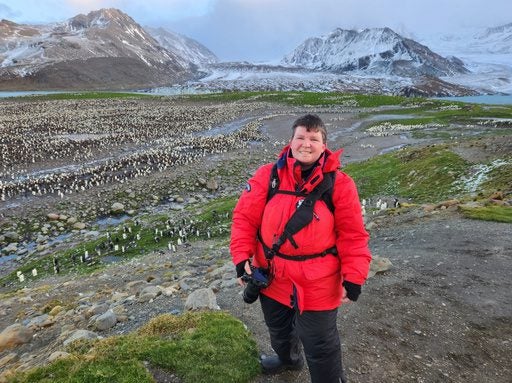
POLICY WIRE — New York, U.S. — She just wanted to feel fresh air on her face—just wanted to walk on grass, really. Instead, Angela Perryman, a woman caught in a strange public health saga, found herself confined, weeks beyond what medical experts deemed necessary. This isn’t a scene from a dystopian thriller; it’s the lived reality of an American citizen, whose continued quarantine for hantavirus exposure has become a lightning rod, drawing legal broadsides against U.S. Health Secretary Robert F. Kennedy Jr. He’s the nation’s most vocal critic of vaccine mandates — and lockdowns. But he’s the one who signed off on keeping her locked down, away from her Florida home, after a federal medical review suggested it wasn’t necessary.
Five weeks after disembarking from a cruise ship where exposure occurred, Perryman remained symptom-free as of Tuesday. Yet, the 47-year-old—who lives primarily in Ecuador but maintains a U.S. residence in Florida—has described her situation as feeling like she was in a “prison.” And what she wants? Simply this: “I want to be able to walk outside and put my feet in the grass. I want to be able to feel fresh air on my face when I want to. I want to be able to see people that are not in full PPE. I don’t want to be dehumanized anymore.” Strong words, for sure. Her order to remain quarantined until June 21 was delivered starkly, slipped under her door on a Monday. Her reaction was immediate: “I was appalled. I was horrified that the secretary, who is not a physician, would override the doctor and violate the law just to keep me locked up.”
This entire ordeal stems from an exposure to hantavirus. Usually, these viruses spread when people breathe in residue from rodent droppings. But the Andes virus, specifically, involved in this particular outbreak—which tragically claimed three lives—can, in rare instances, spread between humans. Experts maintain that symptoms of hantavirus have taken as long as 42 days to appear in previous outbreaks, necessitating a monitoring period. However, the bone of contention here isn’t the need for monitoring, but where that monitoring occurs. Initially, Perryman’s quarantine in Nebraska was voluntary, a CDC official assured her. But then, things changed.
Kennedy’s move clashes sharply with the recommendations of his own department’s experts. Dr. Michael Bell of the Centers for Disease Control and Prevention, part of Kennedy’s Health and Human Services (HHS), oversaw a review of Perryman’s case. Bell’s report, obtained by The Associated Press, concluded she should be allowed to go home. See, federal officials had insisted that returning travelers required daily in-person monitoring and round-the-clock surveillance by local authorities. Florida, her home state, declined these conditions, instead proposing once-daily temperature checks and symptom assessments. Experts, including those at the review meeting, found Florida’s counter-proposal (Awaiting official quote) Lawrence Gostin, a prominent public health law expert involved in shaping federal quarantine regulations, didn’t mince words. He called the federal conditions “overkill” and a “waste of resources.” And then, with an almost theatrical disregard for expert consensus, Secretary Kennedy signed the order to keep Perryman right where she was.
Courtney Spencer, an HHS spokesperson, cited Florida’s non-compliance with federal monitoring requirements as the reason for Perryman’s continued confinement. She maintains Perryman needs to be quarantined to protect both herself — and her community. But critics aren’t buying it. Gostin characterized Kennedy’s decision as “an egregious violation” of a U.S. citizen’s rights. “She’s being held, deprived of her liberty,” he stated, noting the broad medical consensus against such prolonged, mandatory detention without explicit, compelling reason. But the irony—oh, it just drips. This isn’t just about one person’s liberty, though that’s profound. It’s about a man who built a career on questioning the state’s reach, now stretching it to its breaking point.
Back at the start of the COVID-19 pandemic, Kennedy himself had voiced skepticism about widespread government-imposed quarantines, advocating for a debate on the costs of lockdowns and famously asserting that “quarantines kill people too.” Now, with the shoe on the other foot—or perhaps, on his own foot—his actions feel like a profound contradiction. Gostin summed it up, dryly: (Awaiting official quote) This alleged inconsistency not only undermines public trust domestically but could also echo internationally. When an American health official overrules established medical protocol and individual liberty in such a manner, it sends a ripple—a disconcerting signal, especially to countries in South Asia where political power often trumps expert opinion. Such acts become a talking point, fueling arguments against perceived Western moral superiority in governance and human rights, hindering efforts for international cooperation in global health crises. It’s not a good look.
What This Means
This incident is far from just a minor administrative mishap; it signals a chilling willingness to politicize public health decisions at the highest levels. Politically, it frames Secretary Kennedy not as the medical freedom champion he purports to be, but as an official prepared to exert executive power aggressively, even when it means contradicting his own stated philosophy and the consensus of scientific experts. Such a posture could galvanize both his base, who might interpret it as tough action, and his detractors, who’ll see blatant hypocrisy and overreach. His ambition, it appears, might be larger than consistency. For future public health policy, it establishes a worrying precedent where an individual’s constitutional rights—like liberty—can be unilaterally set aside based on an executive decree rather than stringent, evidence-based medical necessity.
Economically, while this specific case doesn’t have direct, large-scale financial repercussions, the erosion of trust in public health institutions and political leadership is costly. This erodes public confidence, potentially leading to increased resistance to future public health initiatives, from vaccinations to disease containment. Businesses involved in international travel, already sensitive to perceived health risks, might face uncertainty as travelers worry about arbitrary restrictions. It doesn’t do tourism any favors. the financial burden of managing such contentious, legally challenged quarantines could be substantial in the long run. When an individual feels their freedom is being gambled with for political points, society pays a steeper price than mere medical bills.