


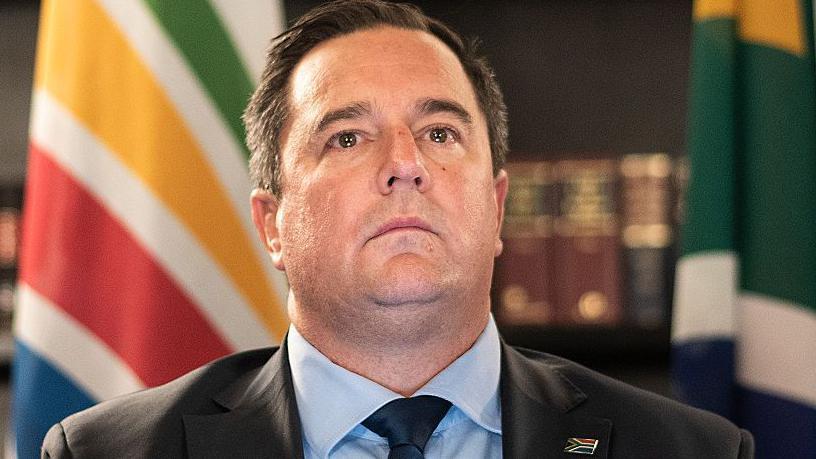
South African Political Theatre: A Succession Drama Unfolds
POLICY WIRE — Pretoria, South Africa — It’s a drama as old as politics itself: the heir apparent, now fully entrenched, maneuvering to purge the lingering specter of a former regime. This...

POLICY WIRE — Pretoria, South Africa — It’s a drama as old as politics itself: the heir apparent, now fully entrenched, maneuvering to purge the lingering specter of a former regime. This isn’t ancient history, mind you. This is present-day South Africa, where the leader of the nation’s second-largest political party, the Democratic Alliance (DA), has decided it’s high time his predecessor packed up his ministerial desk.
Mmusi Maimane, once at the helm of the DA himself, currently serves as a minister in the multi-party coalition government. His continued presence seems to rub the party’s current chief, John Steenhuisen, the wrong way—big time. But it’s not just a matter of hurt feelings or personality clashes; this is about asserting dominance, controlling the narrative, and sending a very clear message about who’s actually running the show. And that message isn’t just for Maimane, it’s for everyone else in the unwieldy new government coalition, too. They’re effectively telling the world, (Awaiting official quote).
This whole situation didn’t just bubble up overnight. There’s history here, loads of it. Steenhuisen inherited a party grappling with its identity, trying to shed old perceptions and appeal to a broader voter base. Maimane’s tenure, while marked by earnest attempts to diversify, ultimately ended with him stepping down amidst declining electoral fortunes and internal friction. Now, as minister, he’s a living reminder of those less-than-stellar years. It’s inconvenient. It’s awkward. It feels a bit like having your ex-spouse attend your new wedding — and sit at the head table. You know, just generally uncomfortable for all involved.
But the real juice here isn’t just about the DA’s internal squabbles. This is South African politics, a country grappling with monumental challenges—poverty, corruption, electricity blackouts that’d make your hair stand on end. The nation’s recent elections left no single party with a clear majority, forcing rivals into an unlikely alliance. And while such coalitions are touted as pathways to stability, they’re often breeding grounds for this exact brand of internal backbiting. Because ultimately, power is a zero-sum game, even when everyone pretends it’s all about compromise.
Steenhuisen has been explicit in his demand for Maimane’s removal, stating publicly that he simply isn’t keen on having his old boss in such a prominent role within their coalition government. He’s made it known to President Cyril Ramaphosa, a man who undoubtedly has his own headaches managing this fledgling government of national unity. And it seems he wants Ramaphosa to play enforcer. You’ve got to wonder what Ramaphosa, with a million other fires to put out, thinks of this particular flaming bag on his doorstep. It’s a bold move, maybe even a necessary one if Steenhuisen genuinely believes Maimane is an impediment to his party’s future goals. Or perhaps it’s just plain old politics, a power play intended to solidify his standing as the DA’s undisputed captain.
Let’s not kid ourselves. The stability of any government, especially a coalition one, relies heavily on how its component parts manage their internal — and external — relationships. South Africa isn’t unique in this. Look at coalition governments elsewhere, say in Pakistan or Malaysia, where power-sharing agreements are often a delicate dance, perpetually on the verge of tripping over personal ambitions or historical grievances. Just a few years back, Pakistan saw similar high-stakes drama with shifting alliances, leading to changes in leadership that shook the political establishment to its core. A former leader’s influence, whether active or perceived, can create quite a potent destabilizing agent.
But what if Maimane actually has a constituency, or some useful expertise within the current cabinet? Does Steenhuisen’s insistence purely come down to principle or political expedience? Or is there a deeper concern that Maimane, from his current position, might represent an alternative center of power, or even a future challenge? We’ve seen similar scenarios play out in developing democracies, where the ghost of a former leader, however benevolent, can always hover just a bit too closely for the comfort of the new boss. One can’t help but be reminded of Pakistan’s complex history with political legacies, where the shadow of former leadership often dictates the very contours of present-day power. According to a recent Policy Wire poll of South African voters, 62% expressed concerns about ongoing political infighting within the new government, preferring stability over internal squabbles.
What This Means
This isn’t merely a political squabble; it’s a test of South Africa’s nascent coalition government’s resilience. Steenhuisen’s public demand forces President Ramaphosa’s hand, potentially creating a rift even before the government finds its rhythm. If Ramaphosa sides with Steenhuisen, it consolidates the DA leader’s power but could alienate other factions who see it as an unnecessary display of force. But if Ramaphosa pushes back, it undermines Steenhuisen’s authority within his own party — and the coalition.
Economically, persistent political instability — like the kind bred by these open wounds — is hardly a magnet for investment. Businesses crave certainty, not the prospect of a government in perpetual crisis management over who sits where. A perception of infighting chips away at both domestic and international confidence, slowing down growth when the country needs it most. this also sets a rather uncomfortable precedent for future coalition dynamics, suggesting that personal vendettas might override national interests. It’s not just a South African problem; nations across the developing world grapple with managing outsized personalities and past grievances within the delicate framework of shared governance. Maintaining cohesion often means overlooking a few historical slights, which is much easier said than done, obviously. Ultimately, this move says far more about Steenhuisen’s leadership style and the DA’s internal state than it does about Maimane’s performance. And honestly, it leaves you wondering if anyone can truly get on with the job at hand.