

Gridiron Echoes: Hope’s Fragile Promise in a Cleveland Spring
POLICY WIRE — Berea, Ohio — They’re back at it, again. You’d think the cycle of spring optimism would get old, especially for a franchise that, since its 1999 revival, has made it an art form to...

POLICY WIRE — Berea, Ohio — They’re back at it, again. You’d think the cycle of spring optimism would get old, especially for a franchise that, since its 1999 revival, has made it an art form to dismantle any budding hope by October. Yet, here we’re in Berea, where the scent of freshly cut grass—and, perhaps, wishful thinking—fills the air as the Cleveland Browns trot out their newest collection of young wide receivers, daring fans to believe it’s different this time. It’s an annual ritual, a fleeting mirage of competence for a fan base conditioned to perpetual disappointment. One can’t help but note the parallel between this seemingly Sisyphean struggle for gridiron glory and the political machinations in places like Pakistan, where cycles of civilian and military rule perpetually promise stability but rarely deliver. A flicker of hope emerges, a new face arrives, — and then the familiar cycle resumes.
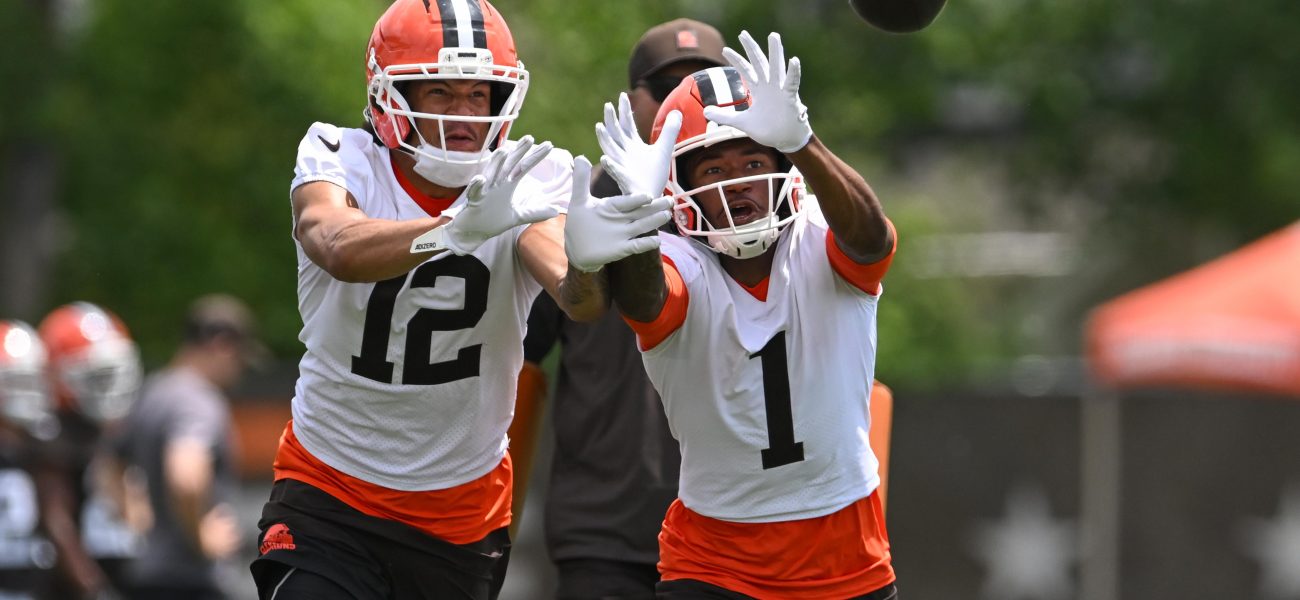
It’s early June. Minnicamp, mind you. No pads, no full contact, no legitimate hits—just the carefully choreographed dance of drills, offering precisely zero contact in conditions that have a tendency to flatter. But that doesn’t stop the whispers, the reports, the quiet, almost hesitant anticipation around a trio of fresh faces tasked with catching pigskins for America’s most persistently underperforming sports dynasty (certainly since 1999, anyway). We’re talking Isaiah Bond, Denzel Boston, — and KC Concepcion. Names that, for now, spark a little fire, before it probably gets extinguished.
Bond, now in what’s effectively his second campaign with the club—though last year was marred by off-field drama and a late entry—is drawing some serious eyeballs. But this isn’t just fan fervor. Wide receivers coach Christian Jones says, “He’s not afraid to go up and attack the ball. He’s not afraid to get guys off of him when he’s running his routes. A lot of fast receivers typically have issues getting in and out of their breaks, carrying their speed into their breaks, and that’s something that I have not seen with him. He’s not afraid to carry all his speed into a speed cut, coming back down the stem, an angle break, a square cut, and that’s been really impressive.” Sounds promising, right? Let’s not get too far ahead of ourselves, because we’ve seen this movie before.
The rookies are grabbing headlines, too. KC Concepcion, a first-round investment, — and Denzel Boston, nabbed in the second round, are turning heads. One prominent report, quoting a source, went so far as to say, “Don’t misunderstand, we like KC (first-round pick KC Concepcion) a lot … but Boston has been phenomenal at times.” Boston, by all accounts, has got size, strength, and those ever-important reliable hands. He notched an impressive 19 touchdown receptions over his final two college seasons, a statistic gleaned from pre-draft scouting reports and widely circulated by sports analysts. And, it seems, Cleveland wisely stuck to their draft board, snatching Boston even after Concepcion.
Concepcion, they say, is improving, shedding those early jitters — and those, uh, a few drops, which were not excessive. The coaching staff envisions him as a versatile piece in Todd Monken’s offense: slot receiver, outside threat, jet sweep guy—you name it. The aim, clearly, is just to get the ball into his mitts — and let the young man work. But this is all still on the practice field, folks. Nobody’s hitting, pads are off. And that’s usually where potential remains glorious and unblemished.
However, you’ve got to concede: it’s encouraging. For a team that saw its offensive struggles bottom out recently, plagued by both historically bad quarterback play and a receiving corps allergic to actual receptions, any positive news is a breath of fresh air. And yes, the perennial question of who’s actually throwing the ball remains. Because you can have the fastest, strongest, most sure-handed receivers on the planet, but if the quarterback can’t hit the broad side of a barn, well, then it’s just more dashed hopes.
This endless quest for offensive stability, a team struggling to accomplish anything and relying on fresh blood to reverse its fortunes, mirrors the perennial leadership challenges in many South Asian nations. Take Pakistan, for instance, which has seen 31 prime ministers since its inception in 1947, each often hailed as a ‘new hope’ before succumbing to familiar systemic pressures and instability. It’s a relentless cycle, isn’t it? Just like here in Berea. The hope is palpable; the skepticism, deeply ingrained. Still, a man can dream, can’t he?
What This Means
From a political economy standpoint, the implications here are more metaphorical than immediate, though not insignificant for regional morale. The investment in young talent, the narratives of ‘hope’ and ‘improvement’ following years of struggle, is a common playbook in both sports and statecraft. In sports, it’s about rebuilding fan confidence, selling tickets, — and revitalizing a brand that’s taken a beating. For struggling economies or unstable political systems, especially in places like the broader Muslim world, it’s about signaling a break from the past, attracting investment (whether monetary or psychological), and retaining public buy-in. It’s a gamble on human capital, an acknowledgment that systemic failures often cascade from inadequate foundational elements—be they talent acquisition in football or institutional integrity in government. But just as Cleveland fans know that practice hype rarely translates perfectly to Sunday results, citizens in regions accustomed to unfulfilled promises remain wary. The underlying systemic issues—for Cleveland, arguably quarterback instability; for nations like Pakistan, deep-seated institutional corruption or geopolitical pressures—must also be addressed. Otherwise, these periodic injections of ‘hope’ simply become another chapter in a long, predictable saga of deferred progress. The real test, then, isn’t the enthusiastic spring drill, but the brutal, unscripted reality of fall.