


Detroit’s PWHL Gambit: Building Olympic Dreams Amidst Public Scrutiny
POLICY WIRE — Detroit, USA — Starting a sports dynasty from scratch? It’s not just about star power, no matter how shiny those Olympic medals gleam. For Manon Rheaume, Detroit’s newly minted PWHL...

POLICY WIRE — Detroit, USA — Starting a sports dynasty from scratch? It’s not just about star power, no matter how shiny those Olympic medals gleam. For Manon Rheaume, Detroit’s newly minted PWHL general manager, the real work begins not on the ice but in the far murkier waters of public opinion and team chemistry. You see, her five foundational players are locked down, with a sixth, a certified legend, poised to join. But even with a roster boasting serious hardware—five Olympians right off the bat, if you’re counting—the expansion team’s honeymoon phase is already facing a few sharp edges.
It’s early June, and the Detroit franchise isn’t even fully formed yet, what with the June 17 expansion draft still on the horizon. Yet Rheaume — and her nascent squad are already performing a delicate dance. On one hand, there’s the electric anticipation around the reported acquisition of two-time Olympic gold medalist Hilary Knight. But then there’s the immediate backlash following the signing of Britta Curl-Salemme, whose past social media activity, specifically advocating against trans woman athletes, has thrown a significant wrench into the public relations machine. [QUOTE_PLACEHOLDER]
And so, building a brand new professional sports team in a city famous for its intense fandom becomes less a straightforward recruitment drive and more an exercise in socio-political management. It’s a familiar tightrope for anyone in the public eye these days, from politicians in Islamabad grappling with online discourse to athletes facing intense scrutiny.
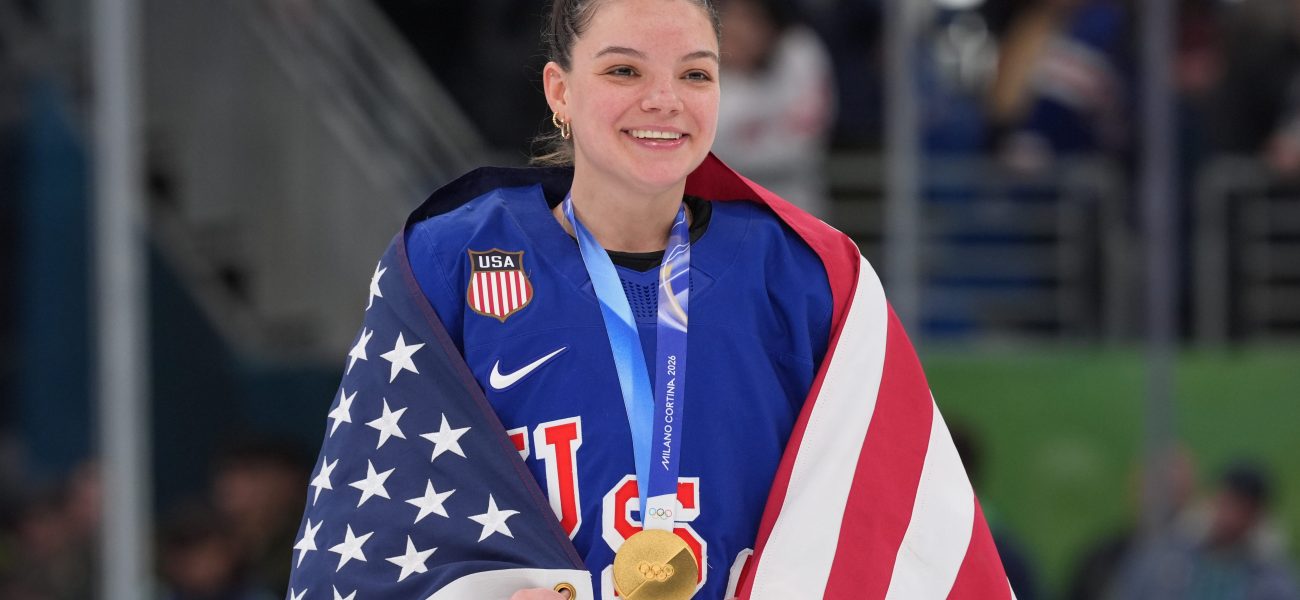
Rheaume, a veteran of the hockey world herself, isn’t sugarcoating things. The official word on Knight, widely recognized as one of U.S. women’s hockey’s most famous faces, is still cautious. A sign-and-trade with Las Vegas is in the works, we hear. But when pressed about the soon-to-be 37-year-old, Rheaume offered a diplomat’s praise: “I can say that Hilary Knight is one of the most accomplished players in hockey, and I have so much respect for what she did for the game of hockey,” she stated. That’s all folks, until the ink’s truly dry. Her potential new teammate, Cayla Barnes, who won gold with Knight at the 2026 Milano Olympics (that’s two years from now, a reporter pointed out, a lovely detail), added that Knight “brings so much to any team she will be on. Any team she’s a part of, she will make an immediate difference. She is a great human — and a great leader, and I think that she’s an important piece to any puzzle.”
This nascent team, meanwhile, is aiming for immediate chemistry. Rheaume was quite clear on this: “We’re really excited about the five first players, having the chance to have five Olympians to start your roster when you’re an expansion team,” she said, listing Hannah Bilka, Barnes, Jesse Compher, Curl-Salemme, and Daryl Watts. “And not only that, but five players that played together in either college hockey or with their PWHL team, with the national team. When you’re a new expansion team, to create some of that chemistry early on, I think it’s important.” You gotta respect that pragmatism. Forget the flashy individual stats, the goal here is a cohesive unit, pronto.
Then there’s the local angle, that ever-present quest for homegrown heroes. Rheaume spoke in May about wanting Michigan players, yet so far, only Compher has a direct local connection via her Red Wings brother, J.T. But that’s enough to light up the fan base, it seems. Compher gets it, big time. “For me the main focus was this hockey organization that we’re building here in Detroit in the PWHL,” she admitted, but then the familial bonus shone through: “That’s definitely my first priority, but the thought of playing in the same city as my brother and seeing what the fans bring to Little Caesars, how passionate they’re, that was just something that was added to the extra bonus and how excited I am to be there.” She’s even looking forward to free dinners—who wouldn’t be? But the enthusiasm was genuine as she spoke about Detroit’s hardcore sports culture, slipping up only slightly when she called the Pistons the ‘Raptors’ – a common mistake, I suppose, if you’ve spent too much time in Toronto. The Detroit market for women’s sports is ripe for the picking; the PWHL’s inaugural season shattered viewership records for women’s hockey, drawing an average of 450,000 viewers per game on linear TV across North America, a figure reported by ESPN Analytics. They’re betting big on that energy.
But the biggest hurdle, you could say, walks onto the ice with Curl-Salemme. Her public comments on social media have triggered an entirely predictable — and for a sports franchise, difficult — round of debate. “I understand that some of the fans have strong feeling about this signing, — and we don’t take that lightly. We want to make sure that people know we want a place where everybody feel welcome,” Rheaume offered. They did their homework, she says: “We did put a lot of time in talking to people that either coach Britta or played with Britta, and everybody that talks about how she’s as a teammate and how she treats every player on the team. We felt confident within the teammate we were bringing into our organization.” Curl-Salemme, to her credit, seems prepared for the fray, acknowledging that “there’s some upset fans and I get that, it’s not something new to me. Manon wouldn’t have taken this on if she didn’t do her research — and talk to the right people.”
📄 POLICY WIRE WHITEPAPER PUBLISHED: PAKISTAN'S NATIONAL SECURITY POLICY PRIORITIES
👉 READ BY CLICKING HEREIt’s an honest appraisal of the new reality: raw talent isn’t the only metric. Character, and how that character interacts with broader societal conversations, increasingly determines an athlete’s place—and a team’s reception—in the modern landscape. Just look at the enduring sagas that plague sports associations globally, from cricket scandals to football’s continuous battle with internal politics.
For now, Rheaume focuses on the hockey. She sees Watts’s skills and vision, Bilka’s speed, Curl and Compher’s power-forward grit, and Barnes’s quiet leadership. “We’re really excited about this group,” she said. But the ‘group’ will have to be more than the sum of its parts. It’ll need to navigate a hyper-aware public and prove that winning—and what that word means in today’s context—is still the ultimate goal.
What This Means
This situation with Detroit’s PWHL expansion team offers a glimpse into the evolving intersection of professional sports, athlete brand management, and contemporary social discourse. It’s no longer enough for an athlete to just perform; their public persona and perceived values now directly impact a franchise’s appeal and even its financial viability. For the PWHL, still in its infancy, these early public relations challenges are particularly acute. They need fan goodwill, robust sponsorships, — and clear messaging to cement their place in a crowded sports market.
The handling of the Britta Curl-Salemme controversy by General Manager Manon Rheaume reflects a delicate tightrope walk. The franchise must balance securing top-tier talent with maintaining an inclusive image and addressing legitimate fan concerns. The quick response, highlighting extensive background checks on character and teamwork, signals an attempt to manage the narrative proactively. But public perception is sticky, you know? This struggle isn’t just a North American phenomenon; it resonates globally. Even in South Asia, where athletes and public figures face immense pressure, often from politically motivated groups, on everything from their social media posts to their religious expressions, managing public sentiment is paramount. Consider how political stances or personal beliefs can inflame or energize fan bases in cricket-mad countries, often shaping how a player is perceived beyond their sporting prowess. For more on navigating contentious issues in the public eye, particularly those tied to social friction, one might consider the broader context of how judicial decisions reverberate in public sentiment, like the cases discussed in Shadow of Shame: Federal Judiciary Grapples With Public Trust Crisis.
Economically, the PWHL’s decision to launch new franchises underscores a belief in the growing market for women’s sports, a bet that fan engagement, evidenced by strong viewership numbers, can translate into significant revenue. The Detroit market, with its rabid support for all things sports, offers a potentially lucrative, albeit discerning, audience. Success here will depend on crafting a team that not only wins but also embodies values that resonate with a diverse and increasingly vocal fan base. It’s a high-stakes gamble, even for a seasoned executive.