


New Mexico Draws Line in Sand, Demands Federal Immigration Suit Dismissal
POLICY WIRE — Santa Fe, N.M. — It’s a fundamental question simmering beneath the surface of American federalism, an old quarrel that resurfaces when the stakes are high: who gets the final say?...

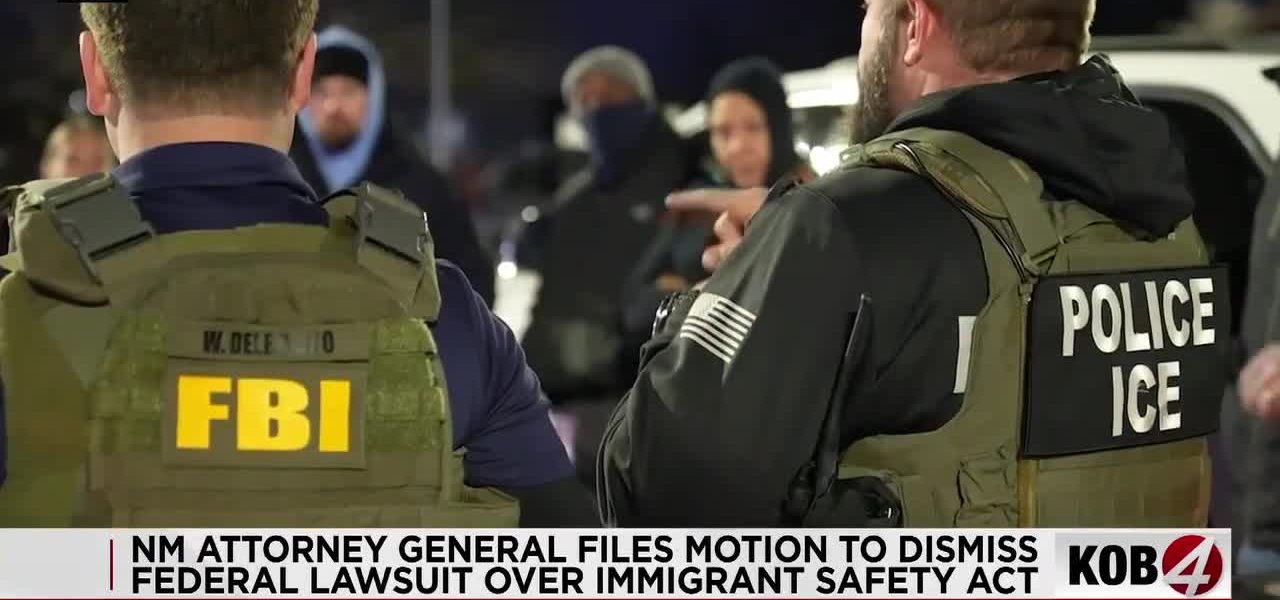
POLICY WIRE — Santa Fe, N.M. — It’s a fundamental question simmering beneath the surface of American federalism, an old quarrel that resurfaces when the stakes are high: who gets the final say? New Mexico, a state that’s seen its share of border anxieties — and diverse populations, isn’t just asking that question. It’s lodging a formal request with a federal judge to throw out a lawsuit filed against its state-level immigration policy, effectively daring Uncle Sam to pick up its own tab.
This isn’t about mere bureaucratic squabbles. This is about New Mexico’s Immigrant Safety Act, a piece of legislation designed to keep local and state outfits from collaborating with U.S. Immigration — and Customs Enforcement on matters related to civil immigration violations. Simply put, New Mexico doesn’t want its police departments or other agencies acting as adjunct federal immigration enforcement units. The federal government? Well, it sees this local defiance as an illegal impediment, a challenge to its supremacy on immigration law. [QUOTE_PLACEHOLDER]
Raúl Torrez, the state’s Attorney General, isn’t backing down, not by a long shot. He argues pretty bluntly that if the federal government wants to detain immigrants, it’s welcome to do so in its own facilities, or, if feeling ambitious, build some new ones. But don’t expect New Mexico to volunteer its strained resources for a job it views as federal. But beyond that, he sees no federal law being broken here. It’s a classic states’ rights argument, cloaked in contemporary immigration policy.
The issue resonates, it really does. Consider a similar push for regional autonomy in places far from the American Southwest, perhaps even reaching into the political complexities of the Muslim world. Across the Durand Line, in parts of Pakistan’s Khyber Pakhtunkhwa province for instance, questions of tribal law and federal writ often clash, with local populations pushing back against what they perceive as Islamabad’s overreach into long-established regional norms and justice systems. Different contexts, sure, but the undercurrent of a central authority demanding local compliance is hauntingly familiar. It’s the friction inherent when sovereign entities – states or tribes – face off against the federal behemoth.
For communities on the ground, this bureaucratic dance isn’t theoretical. Mayor Tim Keller of Santa Fe nailed it when he noted: Schools, libraries and hospitals are here to serve the public, not ICE. This ordinance clarifies that the federal government cannot use our City-owned facilities, or private spaces, to search for immigrants. Our job is to keep families safe and make sure that people can access the services they need without fear.
It’s a sentiment echoing across numerous cities that have, often controversially, adopted similar approaches to protect their immigrant populations and encourage trust between residents and public services.
Indeed, research from the National Academies of Sciences, Engineering, and Medicine showed in 2016 that a sense of fear regarding immigration enforcement has demonstrable negative impacts on access to health and social services for immigrant families. This isn’t just theory, it’s impacting everyday lives.
📄 POLICY WIRE WHITEPAPER PUBLISHED: PAKISTAN'S NATIONAL SECURITY POLICY PRIORITIES
👉 READ BY CLICKING HERENew Mexico, in this case, appears determined to shield its residents, immigrant or otherwise, from entanglement with federal enforcement unless absolutely necessary. And it’s not the only jurisdiction taking this stance. Numerous cities and states across the country have wrestled with similar conflicts, leading to an ongoing, fragmented national policy landscape. They’re making the point that local public trust, especially when it comes to reporting crimes or seeking medical help, trumps serving as an auxiliary arm of the federal immigration apparatus.
This isn’t the first time the federal judiciary has found itself mediating these clashes, and it certainly won’t be the last. These battles aren’t tidy. They reveal the uncomfortable edges of state — and federal power, exposing who holds the leash when priorities diverge.
What This Means
This judicial skirmish isn’t just legal nitpicking; it carries hefty political — and economic implications. For New Mexico, success here would solidify its stance as a bulwark against perceived federal overreach in immigration policy, likely empowering other ‘sanctuary’ jurisdictions across the nation. It could greenlight a more fragmented approach to immigration enforcement, where local nuances and priorities hold greater sway than Washington’s blanket decrees. And that would, without a doubt, complicate the federal government’s efforts to implement a uniform national immigration strategy. It essentially says, look, we’ve got our own constituents, and their peace of mind often conflicts with your enforcement goals.
Economically, states like New Mexico argue that by maintaining a clear distinction between local services and federal immigration enforcement, they foster an environment where all residents, regardless of immigration status, are more likely to engage with the public sector. That means healthier communities, safer cities (because people aren’t afraid to report crimes), and a more integrated, productive workforce. A less fearful population is one that’s more likely to participate economically, rather than retreat into the shadows. Conversely, a loss for New Mexico would bolster the federal government’s authority, perhaps paving the way for more stringent federal-local cooperation mandates across the nation. This would likely be seen as a victory for those who prioritize enforcement uniformity, but a significant setback for advocates of local control and immigrant rights. It could even compel other states to revisit their own sanctuary policies. It’s a high-stakes poker game, where the chips aren’t just legal precedent, but actual policy and the daily lives of countless people. For a state bordering another nation, the outcome feels particularly acute.