


City Hall’s Latest Regulatory Play: Cannabis Cachet vs. Smoke Shop Sprawl
POLICY WIRE — Albuquerque, New Mexico — It’s a rare sight in the often-fractious landscape of local business regulation: a prominent city councilor and a cannabis dispensary owner, unlikely...

POLICY WIRE — Albuquerque, New Mexico — It’s a rare sight in the often-fractious landscape of local business regulation: a prominent city councilor and a cannabis dispensary owner, unlikely bedfellows, finding common ground on the necessity of bureaucratic intervention. You’d think enterprise thrives on unbridled competition, but here in New Mexico’s largest city, the very density of certain commerce has politicians and proprietors alike hankering for a bit more… space. Physical space, yes, but also a clearing of the regulatory thicket for some, — and a thickening for others.
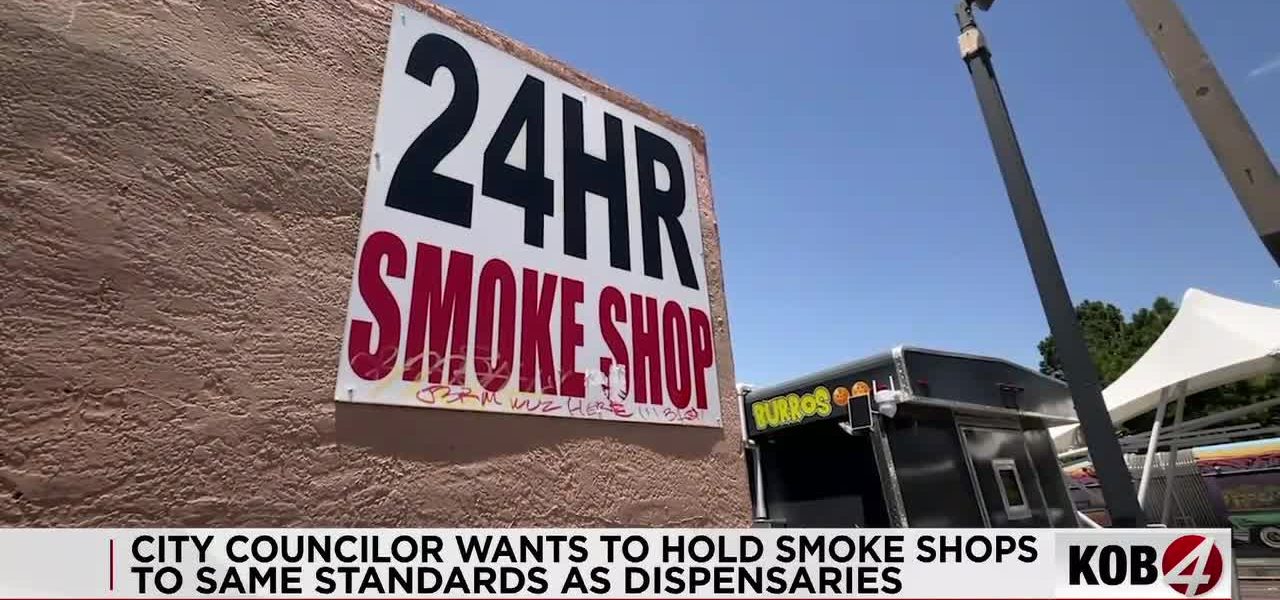
Albuquerque’s City Hall, never one to shy away from micromanagement of its commercial arteries, now casts a discerning eye on smoke shops. Because, apparently, there can be too much of a good (or bad, depending on your perspective) thing. The new push from City Councilor Renée Grout isn’t just about aesthetics, though a clutter of these establishments in concentrated areas clearly grates. It’s about codifying new restrictions, essentially yoking them to the same regulatory wagon that currently pulls cannabis dispensaries.
And what’s curious is that at least one business owner who sells what these shops peddle—accessories, paraphernalia, if you will—isn’t kicking up much dust. Jose Vialpando, who owns Chronic Kings on Lomas, used to have a smoke shop element to his business. He’s seeing a bit of poetic justice, or perhaps just a pragmatic realization, in Grout’s proposition. “I don’t really like it. I would like some distance, you know. It’s kind of clutter full of dispensaries. It’s good for the customer, maybe they have options, so it’s not totally bad,” he admitted, perhaps with a slight wry smile that wasn’t captured by the wire service’s recorder. His stance is less about altruism and more about what helps his bottom line, keeping those other shops a good haul away.
It’s an interesting evolution, isn’t it? Legalized cannabis—once the outlaw, the edgy venture—now dictates the terms for the far older, less glamorous smoke shop. But Counciler Grout clarifies it’s not the green industry itself that’s the headache. “They need to be away from cannabis, and smoke shops need to be at least 1,320 feet from another smoke shop,” she specified. That’s a quarter-mile, by the way. Imagine trying to open a new one within a half-kilometer of another; that’s a challenge in densely populated spots.
The proposed ordinance isn’t just about spacing; it’s a comprehensive squeeze. Think about it: they’re not just moving things around like furniture. “They also need to be at least 350 feet away from a school or a daycare.” No more grabbing your papers next door to the kindergarten drop-off, I suppose. And forget flashy window displays. “Nicotine products and paraphernalia shouldn’t be displayed within five feet of a window or a door.” The proposal also bans drive-throughs, because convenience—that insidious siren call of modern capitalism—must be tamed. Oh, — and here’s a kicker: you can’t even put ’em on main thoroughfares like Central and San Pedro. It’s almost like trying to tuck away a socially tolerated but ultimately undesirable activity into the least visible nooks.
📄 POLICY WIRE WHITEPAPER PUBLISHED: PAKISTAN'S NATIONAL SECURITY POLICY PRIORITIES
👉 READ BY CLICKING HEREVialpando understands the market’s ruthless logic, though he sounds a little conflicted about its outcomes. “I just think it’s just a good business for them to open. I guess it’s good, profitable business for them to open. So everybody’s trying it, but they’re also hurting each other, because they’re all opening by each other,” he said. He’s talking about a self-correcting market, but with a policy assist. This isn’t just about zoning; it’s about managed competition, an effort to inject some deliberate scarcity into a suddenly overcrowded sector. It’s reminiscent of how Pakistan, for instance, grapples with urban planning challenges that can inadvertently lead to clusters of informal markets, making later regulation a Herculean task.
And this isn’t just a quirky local spat; it’s a microcosm of the continuous push and pull between unchecked entrepreneurial zeal and a city’s desire to maintain some semblance of order—or perhaps, control its tax base more effectively. Local ordinances, according to a 2023 study by the International Council of Shopping Centers, impact over 70% of new retail startups in urban centers. The Land Use Planning — and Zoning Committee will hash out the nitty-gritty details on Wednesday. Expect this to hit the City Council agenda next Monday, sparking lively debate from business advocates and neighborhood groups alike. For an analysis on similar issues of oversight and public trust, see Shadow of Shame: Federal Judiciary Grapples With Public Trust Crisis.
What This Means
This Albuquerque proposal, seemingly small potatoes in the grand scheme of things, paints a clear picture of shifting policy priorities and the messy reality of market regulation. Economically, it’s a double-edged sword. On one side, established businesses like Vialpando’s, which weathered earlier regulatory storms (think cannabis legalization’s complexities), stand to gain. Less direct competition for their non-cannabis accessory sales means potentially wider margins. On the other, it erects higher barriers to entry for new smoke shops, stifling emergent entrepreneurs. We’re looking at a solidification of market power, rather than open, free-for-all capitalism. It’s the state acting as a sort of anti-trust agent, but in reverse—making it *harder* to cluster, supposedly for the common good. But whose good, exactly? Perhaps it’s a visual quality of life improvement for some residents, a tacit acknowledgment that endless rows of particular niche stores aren’t everyone’s ideal urban aesthetic. And it’s another sign that as the legal cannabis market matures, its strict regulatory framework begins to exert an influence over adjacent, historically less regulated sectors, pulling them into a similar bureaucratic orbit. That’s a dynamic worth watching across the country, as what starts as one niche policy can very quickly bleed into another. It reflects an evolving philosophy that perhaps some segments of commerce, even legal ones, warrant a certain amount of intentional governmental distancing. Sometimes, less *visible* market access is simply perceived as better for the collective, or at least for property values.