


Family Fortune in the Dock: Reiner Scion’s Plea Tests Limits of Generational Wealth and Justice
POLICY WIRE — Los Angeles, United States — It’s a bitter truth often swept under the Hollywood rug: fortunes amassed by one generation don’t always translate into smooth sailing for the next. But...

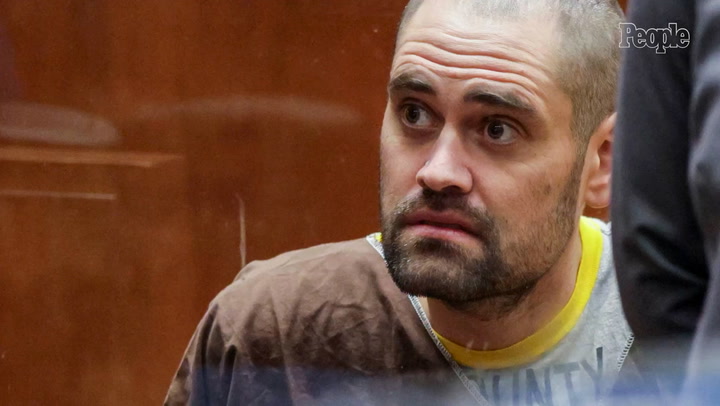
POLICY WIRE — Los Angeles, United States — It’s a bitter truth often swept under the Hollywood rug: fortunes amassed by one generation don’t always translate into smooth sailing for the next. But rarely does a family’s financial architecture face such a stark, unsettling test. Nicholas Reiner, son of famed director Rob Reiner and his ex-wife Penny Marshall, now stands accused of his parents’ slayings—a tragic claim he denies—and he’s petitioning a court to unlock funds from a family trust. His own trust. For his defense.
It’s not just a legal squabble over a dead celebrity’s cash; it’s a cold, hard look at how wealth perpetuates itself, even under the most gruesome circumstances. The irony, you can’t help but notice, is thick. The very parents he’s accused of killing are the ones who set up the mechanism for his legal protection (and lifestyle), now against accusations concerning them. This isn’t just a grim family drama; it’s a systemic question about justice for those who can afford it, or, rather, those whose ancestors could.
But the wheels of justice, even in Los Angeles, grind slowly. Nicholas, known to many as Nick, allegedly stands before the law accused of something profoundly unthinkable, something that shatters any romanticized notion of Hollywood legacy. And with that accusation comes the very real need for legal counsel, which, as anyone who’s ever glimpsed a legal bill knows, isn’t cheap. It’s one thing to fight a traffic ticket; it’s another to navigate a double homicide defense. This petition asks the court to access monies placed in trust for him by Rob Reiner — and the late Penny Marshall.
“This sort of petition, though jarring to the public imagination, isn’t entirely unheard of in probate courts,” remarked Dr. Evelyn Thorne, Professor of Jurisprudence at Georgetown Law, in a conversation with Policy Wire. “The purpose of a family trust often needs adjudication when extraordinary circumstances, like alleged parricide, arise. It’s fundamentally about protecting due process rights, even when that feels, shall we say, uncomfortable.” She’s not wrong. It’s very uncomfortable.
Family trusts are, in essence, legal tools designed to shield — and distribute assets, often across generations. They’re built on an implicit foundation of continued family well-being, growth. But what happens when that foundation is rocked by such an accusation? “Families establish trusts for protection, to manage wealth, — and pass it on. They certainly don’t anticipate them becoming a literal lifeline for defending against accusations of destroying that very family,” noted Marcus Reed, a Senior Fiduciary Advisor who’s dealt with more than a few contentious estates. “It complicates everything, conceptually and practically. Who wins when the trust’s beneficiary is accused of breaching the ultimate trust?”
The cultural implications here are vast, stretching beyond Hollywood Hills. In many societies, particularly in regions like South Asia or the broader Muslim world, the concept of a family trust or inheritance is profoundly intertwined with familial honor, responsibility, and an almost sacred continuity of lineage. In Lahore or Karachi, for example, the notion of a son accused of such a heinous crime petitioning a family trust—designed to protect the very bloodline he’s accused of ending—would provoke not just legal debate, but a deep cultural and ethical reckoning. It isn’t just about financial access; it’s about perceived societal rupture.
And yet, American jurisprudence largely hinges on the principle of innocent until proven guilty, requiring robust defense regardless of the accusation’s gravity. Legal systems are, after all, built on processes, not just sentiment. Still, you have to wonder about the optics, the perceived message this sends to the less privileged. How many indigent defendants, accused of far lesser crimes, struggle to afford even rudimentary representation? According to the Bureau of Justice Statistics, only about 27% of felony defendants in the 75 most populous counties had retained private counsel as of 2009; the rest relied on public defenders or assigned counsel, which, don’t kid yourself, rarely provides the same level of resource allocation as a multi-million-dollar defense team.
It’s an inequity that grates, especially when viewed through a global lens. What would such a legal maneuvering signal to someone in Islamabad, navigating a land dispute where family reputation is paramount? It might confirm a narrative often heard in international circles: that Western justice bends readily to the heft of deep pockets, even when the crimes alleged are against the very source of those pockets. This isn’t a judgment on Reiner’s guilt or innocence—that’s for the courts. But it’s an observation on the stark realities of how money moves within the justice system.
What This Means
This isn’t just another scandalous headline. It’s a window into the structural mechanics of wealth, inheritance, — and due process in America. For starters, it could set an uncomfortable precedent for how family trusts are viewed, especially regarding the ‘slayer rule’ which often prevents beneficiaries from profiting from crimes against the grantor. But accessing funds for defense isn’t the same as inheriting an estate. It blurs the lines. This particular case highlights the immense challenge legal systems face in balancing the right to a robust defense against societal revulsion for certain alleged acts. And it really does emphasize a deep, abiding chasm between justice for the wealthy and justice for, well, everyone else.
Economically, it underscores the intricate web of fiduciary responsibilities. Trust managers aren’t just holding money; they’re navigating ethical minefields and interpreting the original intent of the trust creators in unimaginable scenarios. It places tremendous pressure on them to act fairly while maintaining fiduciary duties, which can feel contradictory in such a case. Policy-wise, this might ignite conversations about tightening trust stipulations for beneficiaries accused of heinous crimes against grantors—especially those where family members are victims. Because while the principle of innocent until proven guilty holds, the ethical considerations of funding an alleged parricide defense from the victims’ own wealth are profoundly unsettling. It’s a system working, yes. But it’s definitely not pretty, and the dark echoes reverberate beyond just one courtroom.