


Alabama’s Execution Crucible: Nitrogen Protocol Faces Supreme Scrutiny as Critics Decry ‘Horror’
POLICY WIRE — MONTGOMERY, Ala. — For up to three minutes, give or take, a person’s final moments might consist of writhing in a gas-filled chamber. That chilling prospect, starkly detailed by a...

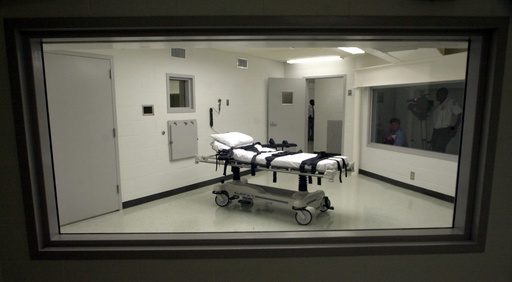
POLICY WIRE — MONTGOMERY, Ala. — For up to three minutes, give or take, a person’s final moments might consist of writhing in a gas-filled chamber. That chilling prospect, starkly detailed by a federal appeals court this week, has thrown Alabama’s preferred method of state-sanctioned death into deep disarray. This isn’t just bureaucratic nitpicking; it’s a direct challenge to what constitutes suffering on death row, right before the ultimate sentence is carried out. You see, the legal machinations over whether it’s truly cruel or unusually uncomfortable have ramped up, and it’s quite the showdown.
On Monday, a three-judge panel decided that maybe, just maybe, replacing breathable air with pure nitrogen to execute someone — strapping on a respirator, all that — requires a whole lot more scrutiny. And that ruling? It could utterly upend a pending execution. We’re talking Jeffery Lee, scheduled for Thursday. It’s got everybody talking, from prison administrators to human rights advocates across continents.
The panel, without holding Lee’s planned execution directly, effectively bounced the case back to a lower court. It’s supposed to take another, harder look at what kind of misery the condemned might endure. They’d previously reversed a May finding that nitrogen hypoxia wasn’t unconstitutional. But now? They need to consider the true price. A man challenging his own demise, the U.S. Supreme Court requires he show two things: a substantial risk of superadded pain, and a feasible alternative method. And yes, the appeals court said Lee had definitely cleared the first hurdle, a sort of grim milestone in capital punishment litigation.
It’s the “one to three minutes” of suffering that seems to have really snagged the judges’ attention. In their view, they wrote, [QUOTE_PLACEHOLDER] They didn’t mince words either: “Counting to 60 or 180 seconds is not a quick exercise, and constitutionally speaking, that timeframe is intolerable given the suffering that would likely take place under Alabama’s nitrogen hypoxia protocol.” Talk about a devastating assessment. It’s not just a quick flick of the switch, is it? Not when we’re talking about state-sanctioned demise.
But Alabama isn’t the only place to dabble in this macabre science. Nitrogen has been used in eight executions nationally, with Alabama accounting for seven of those, and Louisiana for one. Lee’s attorneys aren’t alone in calling it out for causing excessive suffering. That’s because the last nitrogen execution in Alabama, folks say, took [QUOTE_PLACEHOLDER] Thirty minutes! Think about that duration. It gives you a shudder, doesn’t it?
Of course, the Alabama Attorney General’s Office kept mum right after the decision. It’s a customary silence when a legal strategy hits a roadblock. And you can bet your bottom dollar the state continues to say the method is totally constitutional, above board. Yet, the opposition side, the Rev. Jeff Hood, spiritual adviser at two previous nitrogen executions, celebrated the court’s move. He exclaimed that [QUOTE_PLACEHOLDER] Sometimes, the courts, bless their hearts, just catch up to what many of us knew all along.
📄 POLICY WIRE WHITEPAPER PUBLISHED: PAKISTAN'S NATIONAL SECURITY POLICY PRIORITIES
👉 READ BY CLICKING HEREThis whole thing isn’t just about Lee’s suffering, but also about his conviction. He was found guilty of two counts of capital murder, robbing a pawn shop in 1998, killing Jimmy Ellis, the owner, and Elaine Thompson, an employee. The jury, a majority of them anyway, recommended life imprisonment by a 7-5 vote. And yet, a judge, remember, just outright overrode that. He sentenced Lee to death instead. It’s an antiquated power, that override, one that Alabama itself ended back in 2017. They no longer allow judges to ignore a jury’s sentencing decisions in capital cases. So, this decision hangs over Lee’s past like a dark cloud of what-ifs.
It’s an outcome that arrived hours after activists held a vigil outside the Alabama Capitol, pressing the governor to commute Lee’s sentence. But the state’s top lawman, Attorney General Steve Marshall, dug his heels in. He told everyone, “The people of Alabama have not forgotten Jimmy and Elaine. I have not forgotten them,” adding, “Anything short of carrying out the sentence imposed by the court falls short of justice for the victims, and that is not what victims of this state deserve.” It’s a harsh political reality, an unyielding stance, that clashes dramatically with those three excruciating minutes of anticipated suffering.
What This Means
This ruling is more than a hiccup for Alabama; it’s a seismic tremor within America’s contentious capital punishment landscape. Politically, it signals continued judicial skepticism towards experimental execution methods, pushing states back to the drawing board and forcing uncomfortable public discourse about state power over life and death. The economic implications are also real: protracted legal battles mean more taxpayer dollars diverted to appeals, not convictions. Nationally, it’s a potential roadblock for other states eyeing nitrogen as a supposedly more humane, yet arguably untested, alternative. But internationally? It puts the US judicial process under a microscopic lens. Countries like Pakistan, with their own complex legal systems influenced by Sharia and colonial law, also grapple with capital punishment, though the methods and appellate safeguards often differ starkly. Where some South Asian nations might face criticism for perceived swiftness or the nature of punishments, America often finds itself explaining the prolonged, and sometimes seemingly clinical, pursuit of a less ‘barbaric’ death, which nonetheless ends up contested as a form of cruel and unusual punishment. This Alabama decision doesn’t just impact one man; it impacts America’s narrative of justice on a global stage, highlighting how even with modern methods, the question of humanity in death remains agonizingly unresolved.
Copyright 2026 The Associated Press. All rights reserved.