


Europe’s Reluctant Waltz: Kyiv Calls for Truce Amidst Echoing Bomb Blasts
POLICY WIRE — KYIV, Ukraine — They call it progress, I guess. We’re still tallying the dead, counting shards of glass that once were someone’s kitchen window, while the global diplomatic...

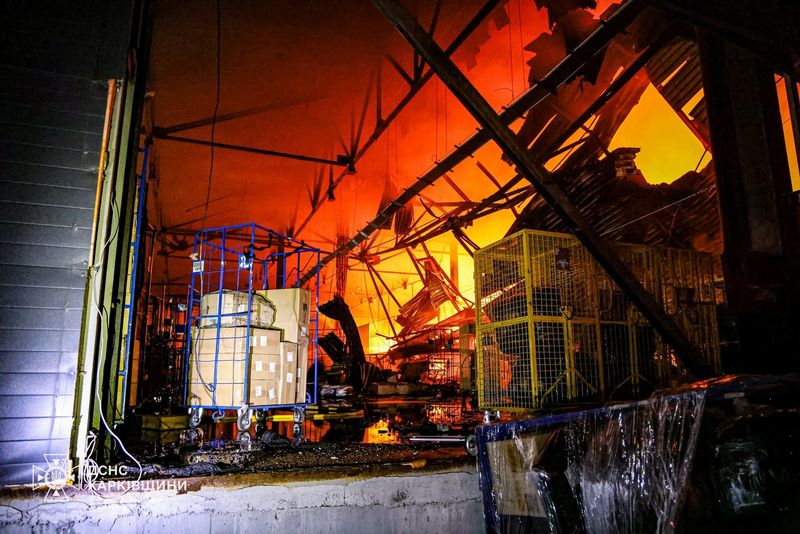
POLICY WIRE — KYIV, Ukraine — They call it progress, I guess. We’re still tallying the dead, counting shards of glass that once were someone’s kitchen window, while the global diplomatic corps —bless their busy hearts— busies itself with ‘frameworks’ for future talks. Four more Ukrainians are gone, wiped from the morning by yet another volley of Russian precision-guided unpleasantries. But hey, at least President Volodymyr Zelenskiy’s whirlwind tour of European capitals seems to have warmed up a few seats at the imaginary negotiation table. Or so the official communiqués would have you believe.
It’s a peculiar dance, isn’t it? Russian forces continue their methodical, destructive work, turning apartment blocks into rebar art installations. The Ukrainian General Staff reports daily bombardments, like some grim weather forecast that never changes. Kharkiv, Zaporizhzhia, Donetsk—just pick a city; they’ve all had their share of craters. And because we’re nothing if not persistent, President Zelenskiy has been trotting out a ceasefire plan, hustling for support across a continent increasingly fatigued by the whole costly mess. His proposal, built on withdrawal of Russian troops and a restoration of 1991 borders, isn’t exactly groundbreaking, but it’s a marker. A starting point, theoretically.
“Every missile fired against our cities just adds another layer of steel to our national resolve,” Zelenskiy told reporters recently, a determined glint in his tired eyes, “but we’re ready for a peace that’s just, a peace built on our sovereignty, not capitulation masquerading as compromise.” That’s a tough line to walk when you’re literally picking up the pieces, isn’t it? The Russians, for their part, simply aren’t keen on ceding what they’ve taken, never mind the blood price. Their current strategy appears to be a slow grind, wearing down Ukrainian resistance and international patience simultaneously. It’s brutal. And it’s working, at least on the latter front.
European foreign policy chiefs, particularly the EU’s Josep Borrell, often sound like a weary parent trying to separate two perpetually fighting toddlers, only these toddlers have intercontinental ballistic missiles. “It’s a brutal reality: for every humanitarian plea, there’s another volley of shells,” Borrell reportedly said in Brussels, likely massaging his temples. “We absolutely support Kyiv’s pursuit of a dignified end, but don’t kid yourselves; the diplomatic table still feels very far from the muddy trenches.” Because honestly, talk is cheap when bodies are still being pulled from the rubble.
This prolonged attritional nightmare has implications far beyond Europe’s eastern flank. Nations in South Asia, for instance, are watching with a mix of trepidation — and careful calculation. Pakistan, a country grappling with its own gnawing economic anxieties—its foreign currency reserves, for example, hovering precariously around $8 billion according to recent State Bank of Pakistan data, barely enough for two months of imports—finds itself needing stability, not just locally but globally. Its leaders are walking a fine line, navigating historical defense ties with Russia while simultaneously seeking Western economic lifelines. They’ve got to buy discounted oil where they can, no matter the origin, just to keep their own fragile economy from imploding. That means, to many, this war is less about abstract ideals — and more about immediate, gritty survival.
📄 POLICY WIRE WHITEPAPER PUBLISHED: PAKISTAN'S NATIONAL SECURITY POLICY PRIORITIES
👉 READ BY CLICKING HEREBut Washington — and Brussels still have to keep the allies in line, right? They’re still trying to forge a unified front. The recent uptick in Western military aid packages might stem the bleeding in Ukraine’s eastern regions, helping fortify positions that desperately need it, much like an unseen netting strategy helps defend against air attacks. But those donations come with political strings and increasing internal debates about sustainability, not to mention efficacy. Ukraine keeps fighting, and the Western powers keep sending checks (and weapons), even as the narrative of easy victory seems to vanish with each new day’s casualties.
What This Means
The intensifying Russian attacks, happening concurrently with Zelenskiy’s diplomatic push, paint a stark picture: neither side is truly convinced the other is ready for sincere concessions. Zelenskiy’s tour isn’t just about lining up humanitarian aid or securing future arms shipments; it’s a bid to lock in international consensus around his peace terms *before* any real negotiation starts. He’s trying to ensure that when—or if—they finally sit down, Ukraine isn’t alone at the table, facing a united Russia. But that’s a big ask, especially with the war dragging on — and the global political compass shifting. Western allies are balancing continued support for Ukraine with their own domestic economic pressures and the very real strategic desire to avoid a wider conflagration. There’s a certain grim irony in this diplomatic shuffle, where the prospect of peace talks actually fuels, rather than diminishes, the intensity of battlefield maneuvers. Everyone’s trying to gain leverage, using blood — and diplomacy as their coin. And that’s what makes this stalemate so utterly intractable. You’ve got to wonder how long this grand political spectacle can endure before someone calls it quits. Or someone breaks the deadlock in a way nobody expected, like an unexpected upset that rewrites the playbook.