


Palmetto State Stalemate: Graham’s Perennial Campaign and the Long Shadow of Power
POLICY WIRE — Columbia, South Carolina — The cicadas drone a familiar song in the Lowcountry heat, a constant hum much like the state’s political landscape. It’s a rhythm that many...

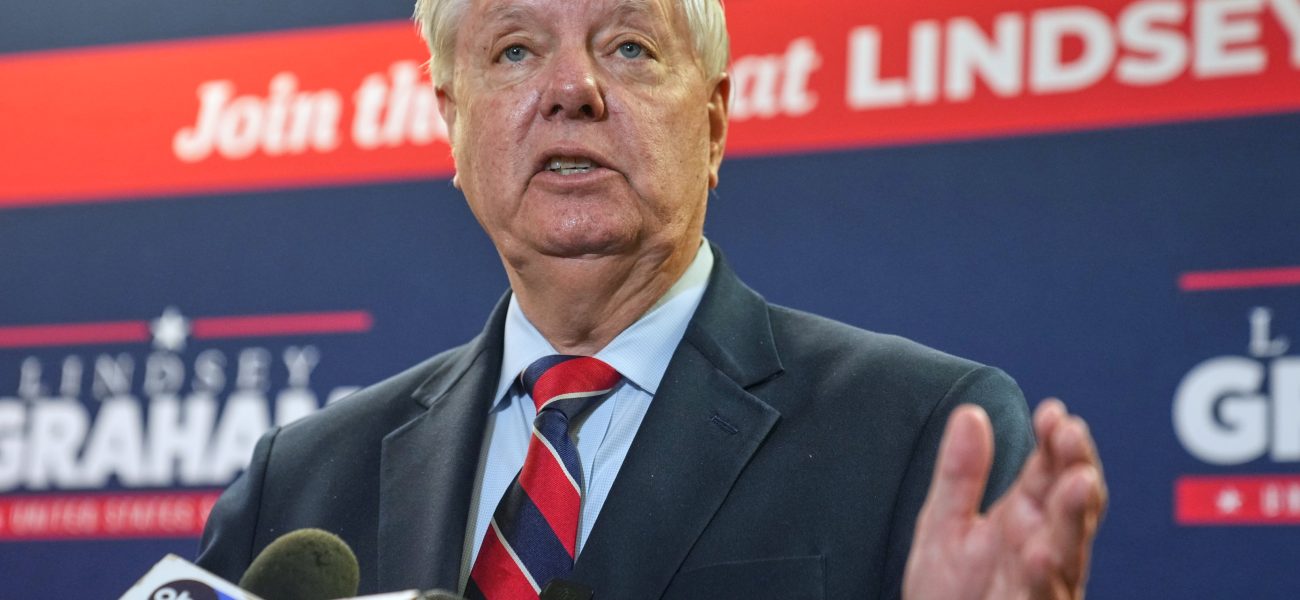
POLICY WIRE — Columbia, South Carolina — The cicadas drone a familiar song in the Lowcountry heat, a constant hum much like the state’s political landscape. It’s a rhythm that many residents have come to expect, an almost geological process of incumbent retention in a reliably crimson corner of the American South. This particular iteration features Senator Lindsey Graham, whose aspirations for a fifth Senate term aren’t just another item on the ballot; they’re a barometer of a specific kind of political endurance—and perhaps, ennui.
It’s not just a statewide phenomenon, though. We’re watching a subtle but sure calcification across various districts, not just in Washington. Think about how these political patterns reverberate beyond our borders—especially when it comes to individuals like Graham, whose decades in power have intertwined him deeply with Washington’s foreign policy machinery. What happens in South Carolina doesn’t just stay in South Carolina. But then, it never really does. [QUOTE_PLACEHOLDER]
His continued presence is less about electrifying speeches or sudden shifts in ideology now; it’s more about sheer institutional gravity. He’s seen presidents come and go. He’s shifted alliances and public personas more times than many career politicians change their socks, earning him a reputation as both a shrewd operator and, at times, a bewildering enigma. That ability to adapt—or perhaps just endure—is his superpower in an increasingly volatile political ecosystem. A recent analysis by the Pew Research Center showed that in 2023, 89% of incumbent senators running for re-election were successful, a figure that certainly buoys spirits in camps like Graham’s, signaling a robust advantage for long-timers.
And let’s not pretend this is purely an American novelty. Pakistan, for instance, a nation grappling with its own tumultuous cycles of political leadership and military influence, watches these extended tenures in the West with a knowing glance. Their geopolitical strategies, inherently reactive to American policy, often must contend with the stability—or rigidity—represented by long-serving figures on committees like Senate Foreign Relations. These aren’t just local figures; they’re nodes in a global network. Graham’s views on everything from counter-terrorism to drone warfare have, in the past, directly impacted debates and decisions that cast long shadows over the stability of South Asian nations. His continued bid ensures that, for better or worse, a consistent—if sometimes shifting—voice remains in Washington’s policy chorus, shaping discussions around aid, defense, and international partnerships that nations like Pakistan depend on.
Because ultimately, these long tenures breed a certain level of comfort—and expectation. Voters, it seems, have less appetite for risk, for unknown variables. This creates a feedback loop: entrenched politicians like Graham become ever harder to dislodge, not necessarily because of soaring approval ratings (those wax and wane with the political tide, don’t they?) but because the alternative often feels too distant, too unfamiliar. It’s like watching a long-running play; the plot might sag a bit, the actors might lose a step, but everyone knows the lines, and the audience keeps buying tickets.
There’s a subtle irony, too. A political career that begins with grand promises of change often morphs into a quiet campaign for stability, for the familiar hand on the rudder. That’s what’s really at stake here: not just another seat in the Senate, but the perpetuation of a system where deep institutional knowledge, even when controversial, is valued above disruptive innovation. One wonders how much longer such predictability can hold, not just in South Carolina, but across a nation that increasingly yearns for something new, something less… expected.
📄 POLICY WIRE WHITEPAPER PUBLISHED: PAKISTAN'S NATIONAL SECURITY POLICY PRIORITIES
👉 READ BY CLICKING HEREWhat This Means
This re-election campaign by Senator Graham isn’t just about him; it’s a symptom of a larger political phenomenon in America. It reflects a national Republican Party—often portrayed as volatile and dynamic—that paradoxically relies on deeply embedded incumbents to maintain its structural power, especially in states like South Carolina. This extends beyond simple partisan politics, touching on foreign policy. For countries in the Muslim world, particularly in South Asia, the consistency (or lack thereof, depending on his current political alignment) of senior voices like Graham’s provides both a roadmap and a challenge. His enduring presence could mean predictable continuity in some aspects of US engagement—for example, on defense cooperation or regional security discussions—or it could signal a sustained hawkish stance that might not always align with the evolving geopolitical realities of countries like Pakistan or Afghanistan.
Economically, long-serving senators can exert immense influence over federal funding, projects, and legislation that benefit their home states, providing a degree of economic stability for constituencies who prioritize continuity over novelty. But they can also entrench policies that, while locally beneficial, might be suboptimal on a national or international scale. The implications ripple out: from how military bases in South Carolina are funded to how American foreign aid might be disbursed across the globe. This quiet drive to keep the train on its tracks, rather than derailing it for a new conductor, demonstrates how unexpected upsets can challenge political spectacles, but often, the spectacle just carries on.
The predictability of the process—even the current struggle to generate fresh enthusiasm—serves a function. It’s the silent machinery of modern political power, designed to sustain itself, come what may. And this is particularly poignant as global powers like China expand their influence, creating scenarios where the perceived constancy of US leadership—even when personified by shifting figures—is critical. When domestic politics appear settled, at least at the Senate level, it allows for greater focus on complex international chessboard moves that often involve regions like South Asia, an increasingly important theater for global tech tides and political influence.