

Silence, Briefly: Clark’s Clutch Shot Pierces the Perpetual ‘Noise’ Around WNBA’s Biggest Star
WASHINGTON, D.C. — It never really stops, does it? The discourse, the hot takes, the punditry over every glance, every pass, every single misstep. We’re talking, of course, about Caitlin Clark....

WASHINGTON, D.C. — It never really stops, does it? The discourse, the hot takes, the punditry over every glance, every pass, every single misstep. We’re talking, of course, about Caitlin Clark. She’s less a basketball player sometimes, more a lightning rod for the cultural currents swirling around women’s sports, fame, and even national identity. And then, for one glorious, breathless second, there was just the swish.
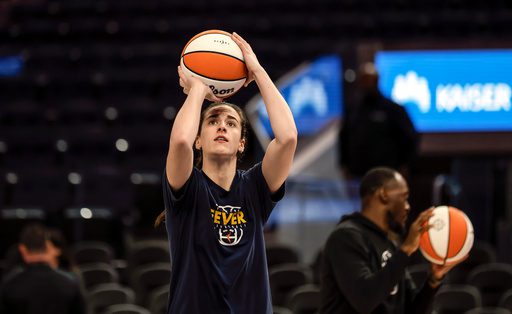
On Monday night, in a city perpetually consumed by politicking, Clark offered a different kind of decisive vote. Down by a point with 1.2 seconds etched into the clock, the Indiana Fever phenom – she’s just 24, mind you, carrying the weight of a franchise and, often, an entire league on her shoulders – launched a three-pointer from well beyond the arc. The shot found nothing but net, a defiant answer to the cacophony of critics and commentators who’d been, let’s face it, pretty eager to dissect her every perceived failing during a rocky season start.
It’s easy to forget she’s an athlete, a person, beneath all the hype. But it’s also clear what she represents. Indiana Coach Stephanie White put it rather succinctly after the 78-76 victory over the Washington Mystics, a win many said the team absolutely couldn’t afford to fumble. “I think sometimes we take great players, and certainly generational talent, for granted,” White mused, likely understating the pressure cooker her star operates in daily. “What she did was incredible for us. She’s going to have many more moments like that.” You get the feeling she means more than just game-winners, doesn’t she?
Because this season hasn’t been a smooth ride for Clark or the Fever, which entered the game at a middling 5-5. The statistics? She’s filling the stat sheet, sure, but her shooting percentages have prompted enough head-shaking and keyboard-tapping to fuel a small industry. She’s been in foul trouble, been caught in feisty sideline exchanges, and endured no shortage of criticism for occasional theatricality on court. You could say it’s been a trial by fire, played out under a magnification the likes of which women’s basketball has perhaps never seen.
Her momentary lapse, missing two crucial free throws earlier in the fourth quarter with just 36 seconds remaining, almost added another chapter to the ‘what’s wrong with Clark?’ narrative. But before the online tribunals could reconvene, Washington coughed up the ball, Clark found Kelsey Mitchell for a go-ahead layup, and then, the final, dramatic inbound play: Cotie McMahon lunged for a steal, missed, and left Clark all alone at the logo. A cleaner look she mightn’t have had all night, a shot she simply had to make. And she did.
“You better make this,” Clark recounted thinking in that solitary moment, her hands, she admitted, a little clammy. “All those plays are plays we work on after practice, so everybody knows their role.” But let’s be honest, everyone knows *her* role: to hit the impossible shot, to rescue the narrative, to keep the conversation going – even when it gets uncomfortable.
📄 POLICY WIRE WHITEPAPER PUBLISHED: PAKISTAN'S NATIONAL SECURITY POLICY PRIORITIES
👉 READ BY CLICKING HEREWhat This Means
Clark’s singular ability to command attention, good or bad, isn’t just about basketball; it’s about shifting market dynamics. This shot, for all its sporting drama, functions as an economic shockwave. It ensures viewership remains astronomical, driving advertising revenue and expanding the league’s global footprint in ways unthinkable just a few years ago. Consider this: WNBA viewership surged 30% in 2023, according to ESPN’s annual report, a trend largely accelerated by college women’s basketball’s increased profile. That’s tangible impact.
But it’s also about a different kind of influence, reaching even far-flung regions like South Asia. Just as the IPL transforms cricket into a global entertainment spectacle drawing interest in Pakistan, the growing international appeal of women’s athletics — with figures like Clark at the forefront — is beginning to resonate. Communities in nations like Bangladesh or Malaysia, increasingly connected to global sports narratives via social media, are seeing in these athletes not just sporting prowess, but symbols of female empowerment and breaking cultural barriers, however indirectly.
Dr. Zara Karim, a prominent global sports economics analyst often consulted on emerging markets, observed, “Clark isn’t merely an American phenomenon; she’s a commodity in the attention economy. Every game she plays, every shot she takes, injects cultural capital into a global sporting narrative, attracting investment and conversation from Tokyo to Tehran. Her ‘noise,’ as some call it, is a magnet for the twenty-first-century viewer, a viewership that extends far beyond the traditional Western sports consumer base.”
And yes, that ‘noise’ often reflects broader societal tensions—about gender, about media portrayal, about what it means to be exceptionally talented but imperfectly human. Clark didn’t just win a game Monday night. She bought herself, — and the league, another round in the court of public opinion. And for a journalist—or frankly, anyone watching—that’s always a compelling story.