
Hoops, Handbags, and High Stakes: The Geopolitics of a ‘Lucky’ Game Day
POLICY WIRE — New York, United States — It was never just about a basketball game. On a crisp autumn evening at Madison Square Garden, the usual roar of partisan fervor got a peculiar, almost...

POLICY WIRE — New York, United States — It was never just about a basketball game. On a crisp autumn evening at Madison Square Garden, the usual roar of partisan fervor got a peculiar, almost theatrical overlay. The New York Knicks, in their quest to sweep the San Antonio Spurs, found themselves hosting not just a fiercely anticipated Game 3, but also a confluence of celebrity drama and presidential security theater. Because when former President Donald Trump decides to grace the courtside seats, even the most mundane accessories — like a preferred handbag — morph into symbols of defiance, policy, and the sprawling, sometimes silly, economics of fame.
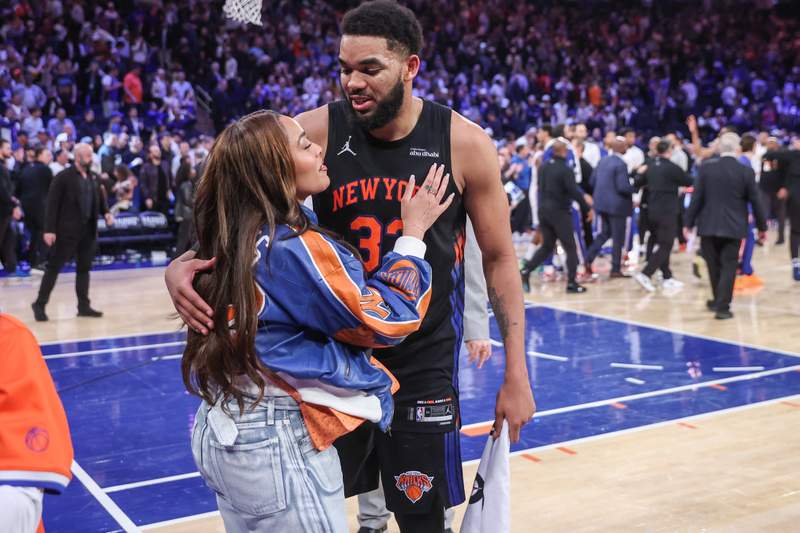
The Garden, that venerable coliseum of sport and spectacle, became an accidental stage for an object lesson in navigating modern American celebrity-political confluence. At the heart of a minor brouhaha was Jordyn Woods, fiancée to Knicks’ power forward Karl-Anthony Towns (KAT), and her self-professed ‘lucky bag’. MSG, preparing for Trump’s high-profile attendance, had imposed a stringent no-bag policy, a protocol usually reserved for securing heads of state or managing potentially unruly crowds at a major political rally, not typically an NBA Finals game. And let’s be honest, Woods wasn’t just bringing any bag; she needed her *lucky* bag. The dilemma was truly American: superstition clashing with stringent security measures.
Woods, ever the entrepreneur—she’s got her own line of statement pieces, ‘Woods by Jordyn’—famously engineered a ‘girl boss’ solution: converting her beloved carry-all into what she claimed were, in essence, shoes. She detailed this ingenious workaround in an Instagram clip, much to the amusement and admiration of her considerable following. “I’m gonna see if I can find a way to get Karl to get the bag in,” she quipped, knowing full well the security dragnet awaiting anyone attempting to circumvent Secret Service protocols. It’s a snapshot, really, of how quickly personal inconvenience escalates into a public performance under the watchful gaze of social media and global media alike.
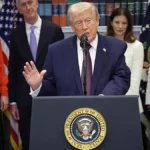
But the former president’s presence at an NBA Final isn’t just about tightened security and innovative fashion hacks; it’s a political play. “There’s just tremendous energy in this building, tremendous fans here in New York,” Trump reportedly told a gaggle of reporters as he made his entrance, flashing a thumbs-up. His appearance isn’t an anomaly. It’s a calculated projection, an assertion of relevancy and an appeal to a demographic that might not follow his political rallies. Madison Square Garden’s Crucible: Where Athletic Pedigree Meets Primal Fandom is where such figures seek validation, where optics often trump policy discourse.
And what about the officials, the silent conductors of this highly orchestrated symphony? Stephen A. Smith, never one to mince words, reportedly labeled Trump’s move as ‘narcissistic,’ underscoring the deep divisions Trump’s very presence invariably evokes. A spokesperson for MSG, speaking on condition of anonymity, later dryly remarked, “Our security protocols are non-negotiable when dealing with former heads of state. Guest convenience, while important, cannot compromise safety.” It’s a boilerplate statement, yes, but it reveals the rigid lines drawn when the weight of federal protection descends upon a private venue.
Across the court, Karl-Anthony Towns—a six-time NBA All-Star, mind you—was busy dropping 19.5 points, 12.5 rebounds, and 4.0 assists per game in the series. He’s been holding his own against young phenom Victor Wembanyama, too. He’s trying to win a championship. His fiancée’s handbag drama, while amusing, reflects a larger dynamic. Hoops Hysteria and the Market for Manufactured Drama: What a Celebratory Hug Really Tells Us—it’s all about the narrative, isn’t it?
This entire spectacle, for all its local flavor, gets exported. Imagine the headlines in Islamabad or Dhaka, where front pages often grapple with much grimmer realities—economic instability, political turmoil, cross-border tensions. While an NBA Finals game might grab a sidebar, the sheer focus on a celebrity’s ‘lucky’ item amidst a presidential visit highlights the striking disparities in global media attention. According to recent market research, the global sports and entertainment sector, largely driven by events like the NBA Finals, is projected to reach an eye-watering valuation of nearly $500 billion by 2027. It’s an economic behemoth that often, ironically, produces these small, absurd dramas as its high-stakes, glittering byproduct. That valuation dwarfs the entire annual GDP of several small nations, placing a spotlight on where the world’s focus—and capital—is directed.
What This Means
The incident at Madison Square Garden isn’t just a quirky anecdote; it’s a case study in modern public life where lines blur between sports, entertainment, and hardcore politics. When former presidents attend high-profile events, security overheads become monumental, affecting everyone from the arena staff to regular attendees who might not even be aware of the underlying threats. For venues like MSG, it means grappling with logistical nightmares and potential public relations headaches, even as they reap the financial benefits of presidential presence and associated media buzz. Because heightened security means delays, frustration, and an entirely different spectator experience, turning what should be a straightforward game into a tightly controlled operation. The event underscores the ever-present tension between freedom of movement in public spaces and the iron-clad requirements of presidential protection. For celebrities, this environment presents both an opportunity—for visibility and branding, as Jordyn Woods masterfully demonstrated—and a constraint. It also exposes how American cultural exports, including basketball and celebrity antics, dominate a global stage where audiences from Karachi to Cairo consume the same media narratives, albeit often through very different political lenses. It’s a peculiar dance, really, of capitalism, cultural hegemony, and logistical control, all played out on the gleaming hardwood of an NBA court.