


Madison Square Garden’s Crucible: Where Athletic Pedigree Meets Primal Fandom
POLICY WIRE — New York City, USA — It wasn’t the basketball, not really, that gripped the global consciousness this week. Sure, two titans clashed on the hardwood—or at least one titan and one...

POLICY WIRE — New York City, USA — It wasn’t the basketball, not really, that gripped the global consciousness this week. Sure, two titans clashed on the hardwood—or at least one titan and one rising colossus. But the true spectacle, the kind that spills beyond sports pages into broader cultural conversations, was the sheer, visceral rejection emanating from the very soul of Madison Square Garden.
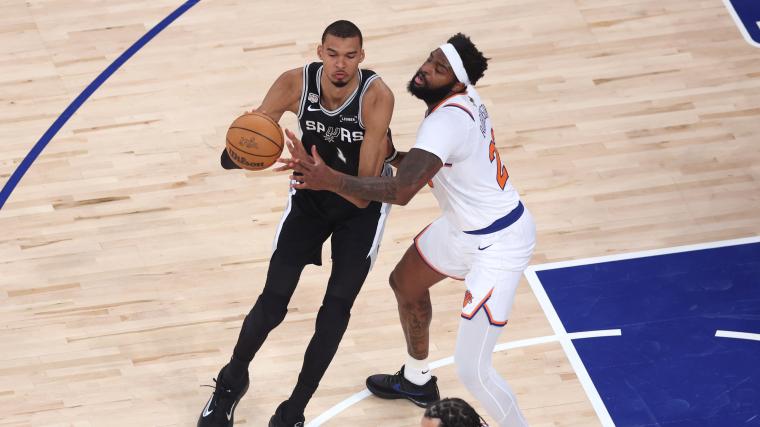
It was a prime example of urban tribalism writ large, a reminder that in America’s sporting cathedrals, the polite applause of the global audience sometimes gives way to something far more elemental. We’re talking about an entire arena, collectively deciding it despises a twenty-year-old French phenom. Not because of a personal failing, not a scandal, but a brief, unpenalized nudge. But such are the demands of high-stakes play; sometimes the perceived slight ignites a powder keg. Victor Wembanyama, the prodigious Spurs center, found himself in that unenviable position. And boy, did the New York faithful let him have it.
The chants of “F— you, Wemby” weren’t just background noise; they became an insistent, guttural refrain echoing through the world’s most famous arena. These aren’t just boisterous fans; these are patrons—some of whom, let’s be real, likely possess enough influence to swing policy debates—lending their collective, unfiltered voice to a sporting vendetta. You don’t see this every day, not quite so unanimously. This isn’t the kind of adulation one typically expects for a player generating billions in broadcast rights and merchandising worldwide. It’s a sharp lesson in how quickly public sentiment, even among those in the luxury boxes, can curdle when their local heroes feel wronged. Jalen Brunson, the Knicks’ diminutive dynamo, became the object of their fierce protection after a rather mundane play near the first half’s close.
Wembanyama, who had actually started this particular Game 3 with more aggression and a double-digit scoring streak—an improvement over his initial series outings—found himself squarely in the crosshairs. What was the offense? During a defensive sequence, he pushed Brunson aside. There wasn’t a whistle. The referees, for whatever reason, let it go. Richard Jefferson, commentating on the ESPN broadcast, apparently believed it should have been a flagrant foul. But no call meant, in the collective mind of thousands, a grievous injustice left unpunished, ripe for direct fan intervention. The roar intensified; it wasn’t just a simple chant. It became a weapon.
And so, as the clock ticked down to halftime, with Karl-Anthony Towns at the free-throw line, the message became deafeningly clear. There was little subtlety. It’s hard to imagine Wembanyama had experienced such a singular wave of hostility before, especially not from so many people, many of whom wouldn’t recognize a double-dribble from a diplomat’s gaffe but certainly understood the universal language of displeasure. This wasn’t just noise; it was an exercise in pure, undiluted emotional leverage. The fans needed a villain, — and a perceived injustice delivered one on a silver platter. They took to it with relish.
Because that’s how these things often go down. A small incident escalates, fueled by tribal loyalties, turning a basketball game into a grand psychological theatre. And Wembanyama, with his extraordinary height — and even more extraordinary hype, made for an easy target. It’s a phenomenon not dissimilar to the intense public scrutiny faced by emerging figures on the international stage. Think about how rapidly narratives shift, how an individual’s image can be transformed from prodigy to pariah based on a single perceived misstep, amplified by the cacophony of modern media. Pakistan, for instance, has seen its share of promising cricketers, artists, and politicians lionized then pilloried by an expectant public, each ‘no-call’ or policy misstep magnified by the raw emotion of national identity and global perception. That particular sentiment—the sudden, widespread turning against a celebrated figure—is a truly global phenomenon, regardless of the cultural context. From Lahore to London, a perceived slight can unravel even the most meticulously constructed public image in minutes. We’ve seen it countless times, not just in sports.
The intensity here, the coordinated venom of the crowd, serves as a fascinating if brutal case study in mob psychology. For an athlete, it’s not merely a game. It’s a gladiatorial contest against thousands, often broadcast to hundreds of millions globally. A 2023 report from SportsPro Media and Broadcast Sport indicated that NBA games average more than 350 million viewers per year outside North America, indicating that this incident resonated far beyond the confines of a single New York City borough. This level of global exposure ensures that these emotionally charged moments, whether cheers or jeers, become indelible parts of a player’s developing legend—or infamy.
What This Means
The incident at Madison Square Garden, while seemingly confined to a basketball court, carries broader implications about the intersection of sports, media, and public sentiment. Economically, these raw emotional displays, even negative ones, arguably contribute to the overall spectacle and marketability of the NBA. The league thrives on drama, rivalry, and moments that become indelible—for good or ill. The viral circulation of those chants, ironically, further entrenches Wembanyama’s status as a must-see player, someone capable of provoking such extreme reactions. This isn’t a loss for his personal brand, quite the opposite: it adds an edge, a narrative of the heroic outsider battling the establishment. Think of it as free advertising, though perhaps a rather uncomfortable form of it for the athlete in question. From a political economy perspective, such events underscore the value of ‘attention capital.’ Generating discussion, regardless of its tenor, keeps a brand (be it an athlete, a team, or a league) in the public discourse, which translates directly to advertising revenue, merchandising, and viewership figures.
this outburst highlights the enduring power of local identity in an increasingly globalized world. The Knicks fan base, steeped in decades of tradition and frustrated by a championship drought, views its home court as sacred ground. Any perceived threat, particularly from a seemingly unstoppable newcomer, becomes a matter of collective defense. It’s a microcosm of nationalism, playing out with short-shorts — and jump shots. This isn’t just about winning or losing; it’s about the assertion of civic pride against an external challenger, a pattern observable in countless geopolitical contexts. The boos and chants aren’t just aimed at Wembanyama; they’re a declaration of territory, a passionate (if profane) statement of allegiance that binds the collective and solidifies their cultural standing. We shouldn’t dismiss it as just noise. There’s something more profound there—a demonstration of public fervor, and sometimes, public fury—that any analyst tracking public sentiment, whether about a new tariff policy or an international incident, should watch very, very carefully. And they’ll never call it a technical foul, will they?