


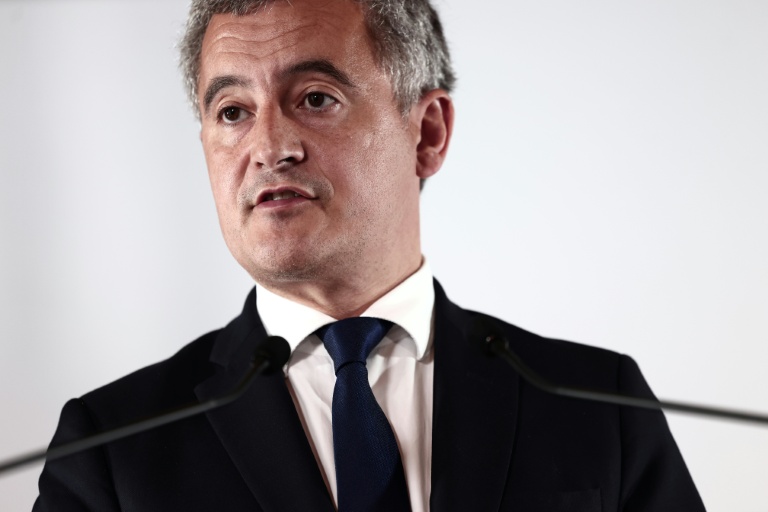
Minister Éric Dupond-Moretti Stays Put Amidst Firestorm, Testing France’s Justice Fabric
POLICY WIRE — Paris, France — Another public maelstrom engulfs the French judiciary. Not with grand statements or high-minded policy debates, mind you, but with the visceral agony of a nation...

POLICY WIRE — Paris, France — Another public maelstrom engulfs the French judiciary. Not with grand statements or high-minded policy debates, mind you, but with the visceral agony of a nation grappling with a heinous crime and, worse, a perceived lack of accountability from those sworn to uphold the law. It’s been weeks since a young girl’s brutal murder convulsed France—a case so chilling it ripped right through the veneer of Gallic stoicism. Yet, even as public indignation boils over and whispers turn into shouts of outrage, Justice Minister Éric Dupond-Moretti remains resolutely anchored to his post, a study in political defiance.
His insistence on staying isn’t just a political calculation; it’s a direct challenge to a public sentiment already frayed by a succession of high-profile security failures and perceived institutional inertia. People, they’re really tired. This isn’t just about a minister’s career—it’s about the very concept of justice. About whom it serves, — and who shoulders the blame when it misfires catastrophically.
And misfire it did, if you listen to the clamor from citizens — and opposition benches alike. Details of the case, a horrific one involving a child and questions swirling around judicial oversight, have seeped into the national consciousness like a poison. The minister’s position? He’s merely implementing reforms, trying to fix a creaky system. Never mind the public’s thirst for a scapegoat, or a symbol of moral culpability.
“Resigning would be an admission of guilt where there’s none,” Dupond-Moretti famously declared, his voice thick with a certain gravitas, during a recent, terse press conference at Place Vendôme. “My job is to see through the changes necessary to make our justice system more efficient, not to be a sacrifice for political convenience.” It’s a classic defense, isn’t it? Blame the system, pledge reform. Don’t ever fall on your sword.
But Marine Le Pen, leader of the National Rally, didn’t buy it for a second. “Monsieur Dupond-Moretti’s obstinacy reveals a contempt for the victims and for the French people,” she snapped, her words cutting through the usual parliamentary decorum like a surgeon’s scalpel. “This government, with its endless alibis, continues to fail where it matters most: protecting our children. He needs to go. Now.” Her words echoed across media outlets, gaining traction with segments of a populace disillusioned with the establishment.
The incident also casts a long, unsettling shadow beyond France’s borders. In South Asia, particularly in nations like Pakistan, where public trust in state institutions—especially the police and judiciary—often hovers perilously low, such steadfast refusal to accept ministerial responsibility despite intense pressure isn’t seen as an anomaly. It’s viewed as a depressing European parallel, confirming suspicions that powerful figures across the globe operate within their own shielded bubble. For many, it’s a stark reminder that cries for justice, regardless of their legitimacy or volume, frequently bounce off walls of political expediency—a stark reflection that, in some ways, the issues transcend geographical divides, resonating with a universal sense of institutional aloofness.
📄 POLICY WIRE WHITEPAPER PUBLISHED: PAKISTAN'S NATIONAL SECURITY POLICY PRIORITIES
👉 READ BY CLICKING HEREPolls are telling their own story. A recent survey from IFOP suggested that nearly 70% of French citizens believe the government isn’t doing enough to combat violent crime, a sentiment undoubtedly fueled by high-profile cases like this one. Those aren’t just numbers; they’re a roaring indicator of public faith in government dwindling faster than trust in the reliability of an aging pocket computer.
The minister’s personal history—a renowned defense lawyer—doesn’t really help here. His very presence often conjures images of legal loopholes and technicalities, not raw, unvarnished justice for the average citizen. It’s an optical problem, to be sure. His political foes love to hammer on it. You know they do.
What This Means
Dupond-Moretti’s stubbornness isn’t just a fleeting political crisis; it’s a deep structural crack exposing the foundational strain within the French Fifth Republic’s political culture. For Macron’s administration, it means continued political hemorrhaging, particularly amongst a centrist electorate that demands order and accountability. Economically, while not directly impacted by ministerial tenure, such prolonged periods of social unrest and public disillusionment don’t exactly inspire investor confidence, especially when compounded by broader European anxieties. It also empowers the political extremes, particularly the far-right, who stand ready to capitalize on any perceived government weakness regarding security and immigration—issues frequently intertwined in public discourse around justice. The optics for France on the international stage, especially given its traditional posture as a beacon of rule of law, also take a hit. This isn’t some backroom deal; it’s playing out for the world to see. It suggests a government that values internal cohesion and perhaps personal loyalty above responding effectively to public outcry, a move that—however understandable within the Beltway of French power—will surely cost it dearly in future electoral contests.