


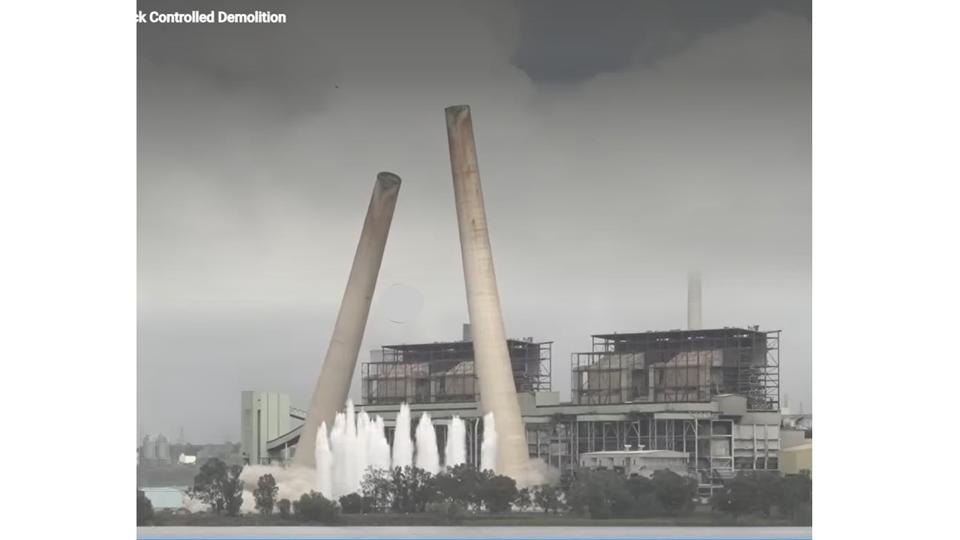
Australia’s Grand Energy Divorce: Coal Towers Tumble as the Future Beckons, Uneasily
POLICY WIRE — Liddell, Australia — For decades, the towering smokestacks of places like Liddell stood as hulking, undeniable symbols of Australia’s wealth—the grimy, carbon-belching engines...

POLICY WIRE — Liddell, Australia — For decades, the towering smokestacks of places like Liddell stood as hulking, undeniable symbols of Australia’s wealth—the grimy, carbon-belching engines that powered a continent. Now, they’re just monuments to a bygone era, slowly picked apart or brought down with a controlled rumble. It’s less a boom, more a prolonged, agonizing whimper for a sector that once ruled, paving the way for something newer, shinier, and — frankly — less dependable, at least for now.
It isn’t merely about shutting down an old power station; it’s about tearing down the industrial identity of entire communities. This decommissioning isn’t some neat, clean switch-flick. No, it’s a complicated, drawn-out process where economic realpolitik collides with climate aspirations. Because when the last turbine at a major coal plant spins its final revolution, the immediate effect isn’t just clean air. It’s lost jobs, destabilized grids, and the quiet dread of an uncertain future hanging heavy over towns built on black gold.
Australia, for all its sun and wind, has been stubbornly attached to coal, clinging to its export markets like a life raft. But internal pressure, alongside a rapidly changing global energy landscape, has started cracking that stubborn resolve. “We’ve got no choice but to modernize our grid and decarbonize our energy supply,” Federal Energy Minister Chris Bowen recently stated, his tone firm. “The world isn’t waiting for us, and our long-term economic prosperity depends on us being ahead of the curve, not stubbornly behind it. It’s a generational opportunity, messy though it’s.”
But ‘opportunity’ feels like a distant hum when the lights flicker, or energy prices spike. The challenge is immense. Because you can’t just replace a baseload coal generator with an intermittent solar farm and call it a day; the physics just don’t work that way. The transition requires massive investment in transmission, storage, and, honestly, a serious rethink of how Australia powers its future. It means grappling with the ghosts of its coal past.
And then there’s the broader ripple effect. Countries like Pakistan, for instance, a nation grappling with its own acute energy crisis and climate vulnerabilities, watches Australia’s shift with a keen, anxious eye. They’ve also been reliant on fossil fuels—and the imported ones at that—but lack Australia’s deep pockets or vast expanses for easy renewable deployment. It makes you wonder: what lessons does Australia’s fraught journey hold for nations where the stakes are even higher, where electricity is a luxury, not a given? The shift in global energy dynamics, driven by choices in places like Sydney, profoundly impacts how nations across South Asia secure their own futures.
📄 POLICY WIRE WHITEPAPER PUBLISHED: PAKISTAN'S NATIONAL SECURITY POLICY PRIORITIES
👉 READ BY CLICKING HEREBut many aren’t convinced this path is all sunshine — and green pastures. “The rhetoric sounds great, but where’s the contingency plan for the days when the wind doesn’t blow and the sun doesn’t shine?” asks Queensland Premier Annastacia Palaszczuk, her skepticism barely veiled. “We’re talking about reliable power for millions. It’s a leap of faith, and some days, it feels like we’re jumping without a parachute.” This sentiment isn’t just political grandstanding; it reflects genuine concerns about energy security. Government data indicates that, as of early 2023, fossil fuels still generated around 69% of Australia’s electricity, a clear sign the heavy lifting of transition is far from over.
The pace is accelerating, regardless. We’re seeing fewer smoke plumes and more acres of glinting solar panels, but the journey from carbon-heavy reliance to a clean energy superpower is a long, winding, and—some might say—perilous one. It’s not just an engineering feat; it’s a societal restructuring, forcing tough choices on who pays, who benefits, and who gets left behind.
What This Means
Australia’s high-stakes pivot away from coal isn’t just an internal affair. Economically, it recalibrates one of the world’s largest commodity exporters, impacting its trade relationships—particularly with key Asian markets like China, Japan, and India, all still ravenous for coal. This energy divorce pushes Canberra to redefine its economic future, emphasizing critical minerals, green hydrogen, and renewable energy technologies. The labor market, meanwhile, braces for deep structural changes, necessitating massive reskilling programs and creating entirely new industries, sometimes from scratch. Politically, the transition presents a tightrope walk for any government: balancing global climate commitments against domestic economic stability and the political power of well-established, well-funded fossil fuel lobbies. Australia’s success or failure here will be intensely scrutinized globally, offering a roadmap—or a cautionary tale—for other developed nations heavily reliant on traditional energy sources.