


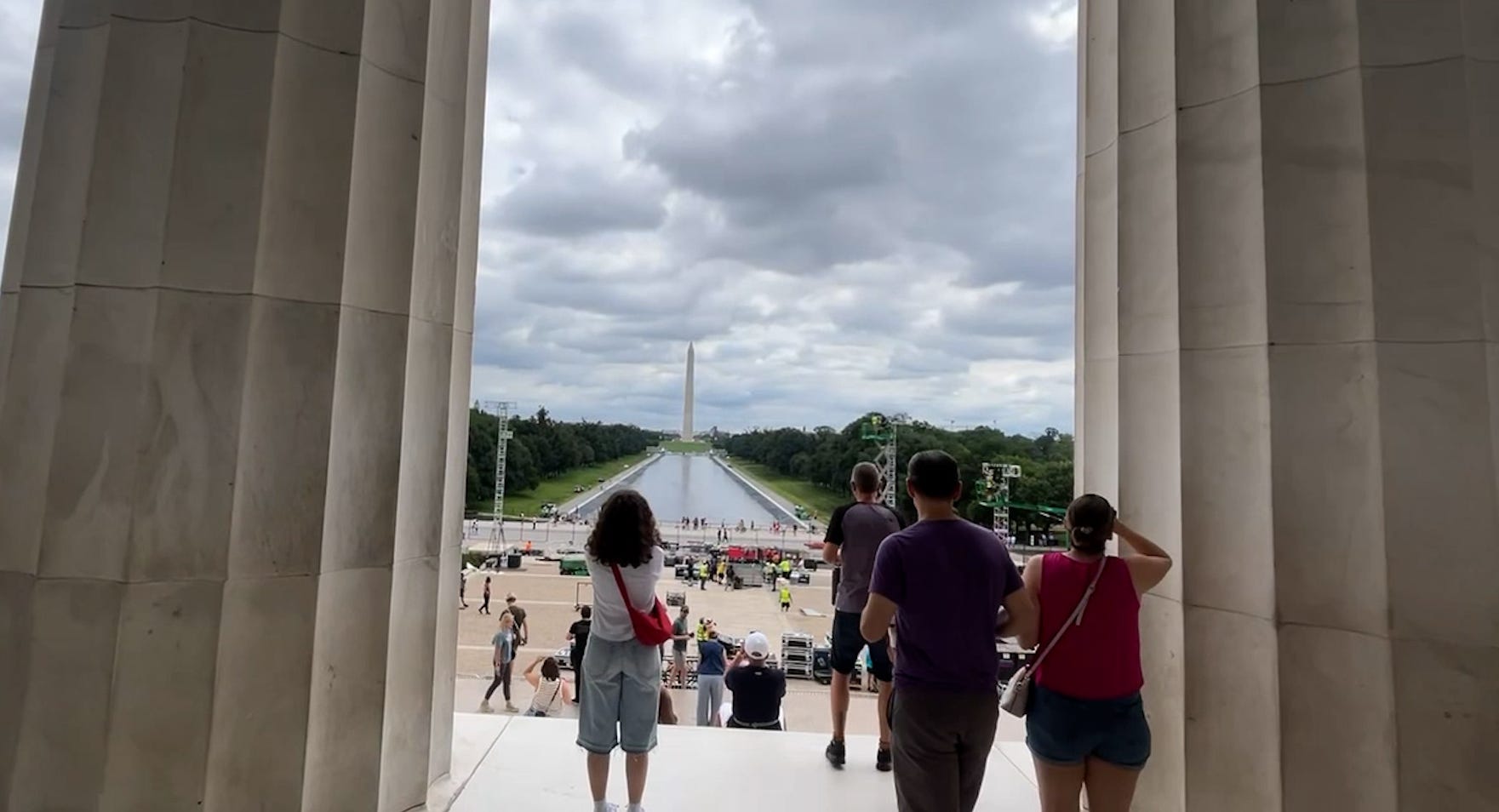
The Refurbished Reflection: More Than Just Water on the Mall
POLICY WIRE — Washington, D.C. — You expect to see tourists with selfie sticks, maybe a student group, probably some earnest families squinting at the Washington Monument. What you don’t...

POLICY WIRE — Washington, D.C. — You expect to see tourists with selfie sticks, maybe a student group, probably some earnest families squinting at the Washington Monument. What you don’t anticipate is a conversation about civil engineering specifications with a gentleman who claims to have advised on the infrastructure projects of Islamabad. Yet, there he was, notepad in hand, admiring the newly revitalized Lincoln Memorial Reflecting Pool—its smooth lines and subtle shifts—with an almost proprietary air, dissecting the finer points of its redesign. His unexpected commentary quickly moved beyond mere aesthetics, settling on the rather pragmatic aspects of water retention and subterranean drainage, a stark, unsentimental assessment of what, for many, remains an emotional symbol of national unity and aspiration.
It’s easy to dismiss such an encounter as an oddity, just another D.C. moment. But the observation wasn’t entirely off-base. Because this wasn’t simply a cosmetic refresh; it’s a massive underground upgrade, a testament to just how much intricate work goes into maintaining America’s grandest public stages. The pool, famously drained for a costly rehabilitation project years ago, now draws its water not from the city’s potable supply but from a dedicated, deep aquifer well. And that’s no small feat. It’s a hydrological triumph, actually, making the entire system much more sustainable, more self-sufficient, a little less dependent on municipal infrastructure that’s perpetually under strain. [QUOTE_PLACEHOLDER]
I mean, look, the initial reports — which, granted, were decades in the making — were all about addressing leaks and preserving the existing historic basin. But what’s been achieved goes beyond just patching things up. They’ve integrated a sophisticated recirculation system, a genuine improvement for environmental efficiency. This new system drastically reduces the hundreds of millions of gallons of potable water previously used annually to refill it. That’s a serious conservation win, especially for a city facing its own water management challenges—even if it’s got no Sahara on its doorstep.
There’s a subtle grandeur now, too, even to the way the water behaves. It reflects the sky — and monuments with a renewed crispness, making the iconic scene even more striking. But the real story, beneath that calm surface, is one of public funds meticulously, even grudgingly, spent on foundations rather than flourishes. The National Park Service (NPS) confirmed back in 2011 that the renovation cost totaled around 34 million dollars, a figure published by the Associated Press, encompassing everything from new filtration systems to improved visitor accessibility, demonstrating a sustained commitment to historical preservation that frequently gets lost in political bickering. It’s hard to complain about where that money went once you see it, the engineering is subtle but deep.
And yes, my Pakistani acquaintance from earlier would likely appreciate the long-term thinking here. Nations like Pakistan, wrestling with everything from desertification to unprecedented flooding—their annual monsoon cycles can be brutal—face entirely different scales of infrastructure problems, certainly. But the underlying principle, the need for robust, intelligent public works capable of sustaining iconic public spaces and managing scarce resources, well, that’s universal. They, too, contend with grand architectural ambitions alongside immediate practical needs; you don’t build a national monument without a view to its permanence, right? You just can’t.
Think about it: whether it’s the meticulous restoration of Lahore Fort or the sustainable water management initiatives cropping up around Islamabad, the dialogue about balancing heritage, public access, and environmental responsibility, it echoes, doesn’t it? Here, at the Reflecting Pool, it’s about a silent kind of resilience built into the very ground. They fixed the plumbing. It’s not sexy, not flashy, but it’s critical. The old Reflecting Pool used to draw all its water from the city’s supply — and drain straight into the Tidal Basin. It was quite a water hog. Now, it reuses much of it. That’s practical stewardship, plain — and simple.
The whole area feels more intentional, less accidental. And it makes you wonder what else is happening below the surface across other national parks, what other infrastructure fixes are quietly extending the lifespan of these American touchstones. Perhaps we just don’t give enough credit to the subterranean battles, do we?
What This Means
The revitalization of the Lincoln Memorial Reflecting Pool offers more than just a pretty view; it’s a case study in subtle, impactful governance and long-term public asset management. In an era when legislative bodies often struggle to find common ground for large-scale, generational infrastructure investments, this project demonstrates how focused, often invisible, upgrades can yield significant ecological and operational dividends. It reflects (pun intended, you’re welcome) a quieter victory for bureaucratic persistence and environmental pragmatism, eschewing short-term political grandstanding for durable, foundational improvements. For countries in the broader South Asian and Muslim world, often grappling with limited resources and competing development priorities, this project’s emphasis on sustainable water management within an existing, symbolic framework could be a potent, albeit perhaps unglamorous, lesson. It’s not just about building new marvels, it’s about making existing ones work better, more responsibly. You want to see forward thinking in action? Look at how we keep our historical parks from literally drying up or leaking into obsolescence. It’s smart policy disguised as landscape architecture. Policy-makers, especially those facing growing climatic pressures and finite water sources, might want to check out some of the innovations used to rehabilitate complex historical sites for modern, greener functionality. This isn’t just a nice view; it’s a blueprint for enduring public works management, a lesson many parts of the world, even those concerned with global conflicts impacting vulnerable populations, could certainly use. You could almost argue it represents a form of national maturity: caring for what you have, making it work for the next hundred years, not just the next election cycle. There’s a pragmatic elegance to that, a quiet understanding of enduring impact. This kind of investment—strategic and understated—isn’t always headline-grabbing, but it’s essential for a nation’s foundational integrity, much like the often overlooked economic factors influencing the true value of national pastimes.