


Ghost of Coal Past: Australia’s Industrial Monuments Tumble as Energy Horizon Shifts
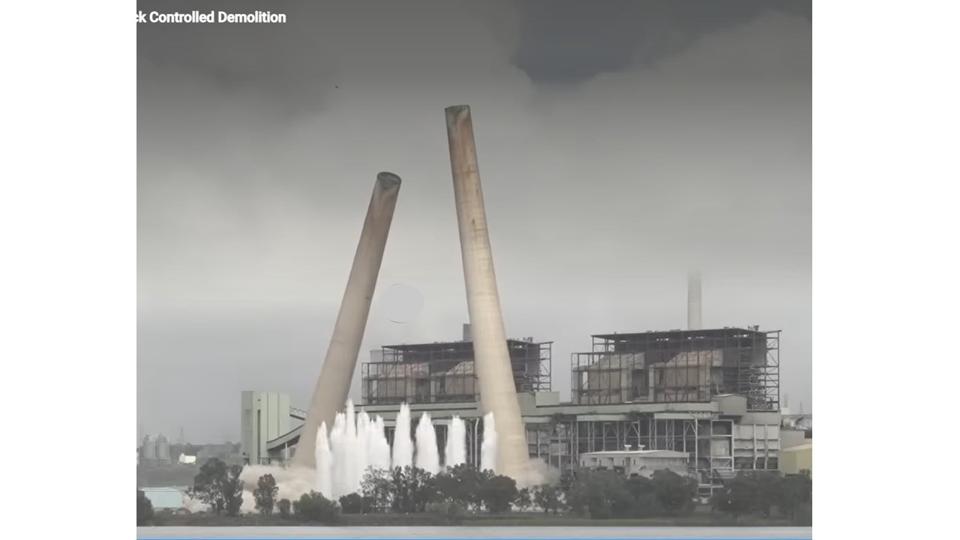
POLICY WIRE — Sydney, Australia — The ground trembles. Not from an earthquake, but from the planned, deliberate implosion of a nation’s energy past. Smoke stacks, once defiant symbols of...

POLICY WIRE — Sydney, Australia — The ground trembles. Not from an earthquake, but from the planned, deliberate implosion of a nation’s energy past. Smoke stacks, once defiant symbols of industrial might — and reliable baseload power, are giving way. They’re crumbling into dust and memories across Australia, a physical manifestation of a profound energy shift that’s far more complicated—and ironic—than a mere preference for green electrons over sooty ones. It’s a pragmatic, often messy, reckoning with economics, geopolitics, — and a changing climate. What’s left isn’t just rubble; it’s a void filled with questions about the future grid, investment, and global energy diplomacy.
It’s an era of demolition, sure, but it’s also a high-stakes bet. These aren’t just concrete giants; they’re metaphors. For decades, coal-fired power stations were the backbone of Australia’s economic miracle, providing cheap, plentiful electricity. Now, they’re financial liabilities. They’re old, increasingly inefficient, — and facing a deluge of cheaper renewable alternatives. The decisions driving their demise aren’t solely ideological; they’re largely capitalistic. Investors just don’t see a profitable long-term future in burning rocks when the sun’s free and the wind’s cheap, even with the grid complexities that entails. [QUOTE_PLACEHOLDER]
And let’s not forget the workers—communities built around these leviathans. For them, it’s not a romantic end to a bygone era; it’s job losses, the erosion of local economies, and a genuine struggle to retrain for a different future. Government assurances about retraining and new jobs in renewables feel distant, often abstract, to someone whose entire working life was tethered to a boiler or a turbine. It’s a difficult transition, economically disruptive for a few regions, even as it signals broader progress.
The pace is accelerating. Where once it felt like a distant dream, now you’ve got power stations, like the one recently demolished, being scheduled for decommissioning decades ahead of original plans. Because renewables are, quite simply, eating their lunch. In 2022-23, renewable energy sources actually supplied 35.8% of Australia’s total electricity, a figure cited by the Australian Energy Regulator, showcasing how quickly the grid’s composition is evolving. This isn’t just about environmental zeal; it’s hard business. You don’t stay open if you can’t compete.
But the story isn’t all solar panels — and wind farms. Australia remains a gargantuan exporter of coal. While its domestic consumption shifts, its role in fueling economies abroad, particularly in Asia, persists. This creates an awkward paradox. It’s akin to meticulously cleaning your own house while continuing to sell mops — and buckets of dirt to your neighbors. For nations like Pakistan, for instance, still grappling with immense energy deficits and developing infrastructure, Australian coal remains a cost-effective, if environmentally costly, option. They face their own delicate balancing act: providing reliable power for burgeoning populations versus addressing acute climate vulnerabilities—vulnerabilities amplified by global warming, much of it driven by fossil fuels. The conversation around Australia’s domestic energy shift thus resonates far beyond its shores, raising questions about global equity and the responsibility of historical emitters. They’re watching, weighing their own paths.
And this push toward renewables—it isn’t seamless, it’s got wrinkles. Integration into an aging grid is a nightmare. Energy storage is a puzzle that’s far from fully solved at scale. Transmission lines need massive upgrades. It’s one step forward, often two steps of intricate, expensive engineering backward before moving ahead. These challenges don’t get the same dramatic implosion footage, but they’re just as real, perhaps even more consequential, to whether Australia can deliver a truly reliable green grid. We’re in a new sort of industrial revolution, slower perhaps, but definitely happening.
📄 POLICY WIRE WHITEPAPER PUBLISHED: PAKISTAN'S NATIONAL SECURITY POLICY PRIORITIES
👉 READ BY CLICKING HERESo, as the dust settles from another downed smokestack, it’s a stark reminder: the future won’t wait. Australia’s energy transition, though sometimes fraught, sends a clear message. Economies are shifting away from traditional carbon-intensive models, not out of altruism alone, but because the numbers—and the market—dictate it. There’s a certain irony, a biting observation really, that for a nation built on extracting resources, the ultimate resource now proves to be the ingenuity to switch course. This complex dance between destruction and creation is playing out daily, with global repercussions, for better or for worse.
What This Means
Australia’s accelerating retreat from coal-fired power signals a recalibration of national identity and global energy markets. Economically, this isn’t just an ecological victory; it’s a massive investment pivot. Old assets are being retired early because they’re unprofitable, making space for private capital to pour into renewables, transmission, and storage. It suggests a future where energy security is defined not by how much coal you can burn, but by how effectively you harness sun, wind, and storage. That’s a fundamental shift in capital allocation, — and it isn’t stopping anytime soon.
Politically, the implications are thorny. While the federal government pushes ambitious renewable targets, state-level governments often grapple with the immediate socio-economic fallout in former coal communities. The challenge is ensuring a just transition, not merely a green one. Fail to manage this well, and you create political headwinds—populist sentiment brewing in forgotten towns—that can undermine broader climate goals. This interplay of local economic distress and national policy objectives creates a political minefield, one that demands more than simply proclaiming the superiority of solar over soot. Other nations, from Europe to Asia, are watching intently how these intricate domestic balances are struck, as they consider their own trajectories away from — or perhaps stubbornly towards, as outlined in The American Engine Fetish: Automakers Churning Out Bigger Powerplants as the Planet Warms—fossil fuels. This dynamic shapes everything from regional power distribution to the viability of nascent green industries.
Australia’s evolving domestic energy mix provides interesting fodder for its international relations, particularly with its coal-importing partners. While it cleans its own grid, its continued status as a top global coal exporter poses a diplomatic tightrope walk, often prompting questions from nations pressing for stronger climate action. It means Australia simultaneously projects an image of climate leader (domestically) and resource provider (internationally), a nuanced and sometimes contradictory position that demands deft foreign policy. This dual identity will certainly be a topic for intense scrutiny and debate in regional forums, influencing how other countries in South Asia, including key trade partners, perceive and interact with Canberra’s long-term energy strategies.