


The Arena Roars: When Presidential Politics Invades America’s Courtroom
POLICY WIRE — New York City, U.S. — The scent of popcorn and manufactured enthusiasm usually masks the deeper, more tribal loyalties simmering beneath the surface of a professional sporting event....

POLICY WIRE — New York City, U.S. — The scent of popcorn and manufactured enthusiasm usually masks the deeper, more tribal loyalties simmering beneath the surface of a professional sporting event. But on a recent Monday night, within the hallowed confines of Madison Square Garden, something more potent was cooking. It wasn’t the Knicks’ game three heroics, nor the dazzling play of the Spurs. No, this was pure, unfiltered political theater—a collision of America’s hyper-partisan landscape with its favorite pastime.
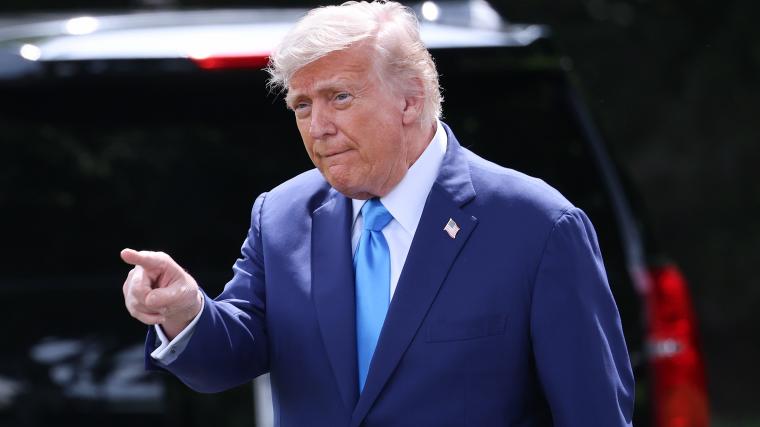
Fans, those quintessential arbiters of athletic merit, found themselves thrust into an unexpected referendum. Their collective gasp, followed by a cacophony of boos (and, yes, some scattered cheers, we’ll admit), erupted when a familiar face flashed across the JumboTron during the national anthem: former President Donald Trump. He was up in a suite, invited by Knicks owner James Dolan. First sitting U.S. president to attend a Finals game? Not quite. But his return to the spotlight—especially in blue-state New York—was guaranteed to draw an audience reaction, and it sure as heck did.
It’s moments like these, where the rigid protocols of statecraft meet the unvarnished emotions of a crowd, that tell you more about the American psyche than any polling data. Trump, seen saluting the flag, reportedly weathered a storm of disapproval from many in the stands. It wasn’t just noise; it was an echo, a palpable public temperature check.
The whole affair, inevitably, wasn’t without its logistical headaches. Players themselves felt it. “Look, we’re here to play ball,” lamented Spurs guard De’Aaron Fox to reporters, visibly weary. “All that other stuff? It’s just noise, an unnecessary distraction for the players and the real fans trying to enjoy a game.” He called the enhanced security and resulting lines an “inconvenience,” a diplomatic understatement for what probably felt like a right royal pain.
The incident wasn’t confined to a sports page debate. Because the spectacle of American political polarization, amplified in a grand sports arena, provides a vivid—if sometimes distorted—mirror for observers abroad. In countries like Pakistan, grappling with its own deep political rifts and often volatile public demonstrations, such scenes are observed with keen interest. The overt public dissent against a prominent former leader in a U.S. sporting venue isn’t merely news; it offers a complex narrative, juxtaposing democratic freedoms of expression against the potential for social division. Many see U.S. political theater as an indicator of global stability, or perhaps a template for their own struggles for political voice.
📄 POLICY WIRE WHITEPAPER PUBLISHED: PAKISTAN'S NATIONAL SECURITY POLICY PRIORITIES
👉 READ BY CLICKING HEREBut back to the home front. What does it signal when an ex-president can’t watch a basketball game without becoming the game himself? Jim Dolan, owner of the Knicks, played his part, too. He’s reportedly got his own ties and, well, certainly wasn’t going to turn away a high-profile guest who’s publicly voiced an appreciation for the Knicks. You might say it’s just two rich guys watching a game. But then the cheers, the jeers, — and the whole darn public weigh in. And suddenly, it’s not just a basketball game anymore. It’s a statement.
Political figures thrive on attention, positive or negative. And frankly, this episode delivered it in spades. “They just don’t want to see a winner,” said a representative for Trump’s campaign, speaking anonymously to our reporter about the reaction. “We had tremendous support inside the building, believe me. The fake news just focuses on the dissent.” Yet, it’s hard to spin away the sound of a large percentage of a packed arena letting loose. According to a recent Siena College poll, roughly 68% of registered voters in New York City lean Democratic. The acoustics of Madison Square Garden don’t lie. For more on the event’s cultural impact, see Boo-Ting History: Trump’s Courtside Commotion Ignites MSG.
What This Means
This episode is less about who rooted for whom, and more about the ongoing—and increasingly pervasive—politicization of public life. No arena, it seems, is truly neutral territory anymore. Sports, once an escape, now often serve as inadvertent backdrops for cultural clashes, mirroring national divides. This convergence isn’t going away; it only seems to be intensifying. For politicians, it offers a raw, direct channel to public sentiment, bypassing traditional media filters. For the public, it means their escapes are shrinking. They can’t just watch a game; they’re often forced to consume a side dish of political theater, whether they want it or not. The financial implications for venues are also significant, given the extra security costs and the delicate balance between drawing high-profile guests and maintaining an uncontentious atmosphere for all attendees. It’s a tricky dance, this blurring of lines—one that shows no sign of ending anytime soon.