


Fentanyl’s Shadow: First Responders Caught in a Spreading Chemical War
POLICY WIRE — Albuquerque, N.M. — It used to be a call about a troubled soul, maybe a crisis intervention. Now, for America’s first responders, every emergency scene holds the potential for chemical...

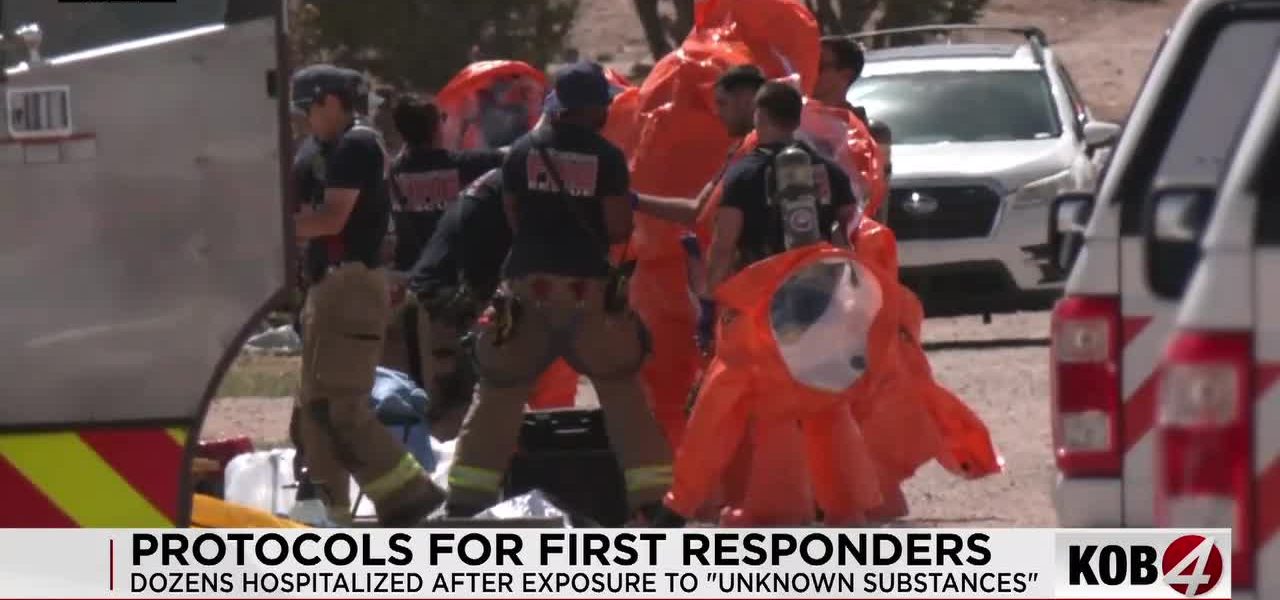
POLICY WIRE — Albuquerque, N.M. — It used to be a call about a troubled soul, maybe a crisis intervention. Now, for America’s first responders, every emergency scene holds the potential for chemical warfare. The fight against illicit narcotics, especially fentanyl, has spilled over the user population, transforming into a direct threat against the very people society tasks with saving lives. The ground truth? These folks are facing a danger few outside the drug trade truly grasp, sometimes without even knowing they’ve stepped into the crosshairs.
Consider the past few weeks: nearly 30 first responders hospitalized. Not for heroic struggles with a suspect, or a bad fall from a ladder, but from simply showing up to help. It’s a grim calculus, a modern twist on the Hippocratic oath — first, do no harm; second, hope the air doesn’t harm you. And it’s not an isolated issue, far from it. New Mexico, for example, finds itself ranked number one in the United States for drug addiction, a chilling metric reflecting widespread despair and, consequently, widespread risk.
Just the other day, down in Deming, a Popeyes bathroom turned into an exposure zone. A person reportedly locked themselves inside — and smoked some fentanyl. Employees, innocent bystanders, got hit with the fallout, experiencing illness serious enough for a hospital trip. You think about customer service, not chemical exposure, when grabbing a bite, don’t you? But this is where we’re.
It’s the new permutations of the drug that truly put folks on edge. Fentanyl itself is notorious, yes. But its monstrous progeny, substances like carfentanil and P-4 fentanyl, crank up the danger to an unimaginable degree, up to 100 times stronger than the original. That’s a tiny speck with a huge punch. Former chief of international operations for the DEA, Mike Vigil, points out a persistent myth that just touching the stuff is lethal. That’s not the primary risk. Rather, as he clarified, the substance needs to enter the body through the eyes, nose, or mouth, getting into the bloodstream and wreaking havoc.
Then there’s the insidious art of disguise. Criminal outfits aren’t just selling straight fentanyl. They’re cutting it, pressing it into pills that look just like legitimate meds—Xanax, for instance. And there’s no quality control there, only fatal guesswork. Vigil didn’t mince words: “You’re playing Russian roulette,” he cautioned. And then, “About six or seven of those tablets could be lethal doses. There’s no quality control.” That’s not hyperbole; it’s a stark warning for anyone buying pills outside a pharmacy.
Naturally, public health officials are scrambling for counter-measures. Harm reduction is the new front. Fentanyl test strips, over-the-counter Narcan (naloxone), these are readily available in New Mexico, even orderable through the state’s Department of Health. But these are defensive tools, band-aids on a gushing wound.
📄 POLICY WIRE WHITEPAPER PUBLISHED: PAKISTAN'S NATIONAL SECURITY POLICY PRIORITIES
👉 READ BY CLICKING HEREBack to the frontline heroes. In Mountainair, 25 people—a mix of civilians and responders—wound up hospitalized after contact with a meth-fentanyl cocktail. Three of four overdose victims perished. Later, in Silver City, 10 first responders needed treatment after an overdose call, though officials are still tight-lipped about the exact substance involved. The scene is the danger. “We never know what we’re walking into,” declared Kyle Thornton, EMS Bureau Chief with the New Mexico Department of Health. It’s a throw-the-dice scenario every time the siren wails. Standard operating procedure calls for PPE—gloves, masks, the works—but volatile situations don’t always afford perfect conditions. When powdered drugs get disturbed, as in Mountainair, they can become airborne. Vigil outlined the chilling reality: [QUOTE_PLACEHOLDER] He further explained that while this might not cause fatal overdoses, “it can trigger severe symptoms.” That’s small comfort when you’re coughing, disoriented, and heading to the ER after a routine call.
It boils down to constant vigilance. Vigil advised, [QUOTE_PLACEHOLDER] Thornton put it succinctly, a kind of weary tribute: “We ask them to make scenes as safe as possible—fully knowing they risk everything to help others.” What’s happening in Silver City? No updates from the Grant County Sheriff’s Office just yet. Because, well, investigations take time.
What This Means
The increasing endangerment of first responders in the U.S. due to potent synthetic opioids isn’t just a local tragedy; it’s a critical stress test on public health infrastructure, emergency services, and even geopolitical dynamics. From a policy standpoint, we’re staring at ballooning healthcare costs for these brave professionals—long-term consequences from even non-lethal exposures remain largely unquantified, creating potential future burdens on workers’ compensation and disability systems. Recruitment into these already demanding professions will likely suffer, too, when a ‘bad day at the office’ means exposure to a weaponized narcotic. The economic implications ripple out to every tax bracket, every municipal budget already stretched thin trying to combat the drug crisis itself.
Internationally, this American epidemic has a stark, if indirect, echo in regions like Pakistan and parts of the wider Muslim world. While the specific drug profiles may differ—heroin from Afghanistan’s poppy fields is often the primary concern, with synthetic opioids gradually making inroads—the strain on under-resourced first responders is acutely similar. In places with nascent emergency services, the challenge isn’t just dealing with dangerous substances; it’s the fundamental lack of proper equipment, training, and institutional support needed to face such a pervasive and evolving threat. Resources dedicated to containing the flow of narcotics often compete directly with public health budgets, creating a vicious cycle of systemic stress. The fentanyl crisis in the West could, perversely, serve as a stark global lesson: invest in your frontline, understand your enemies—even microscopic ones—or pay a far steeper price down the road. It’s a reminder that security, health, and economic stability are far more interconnected than politicians sometimes let on.