


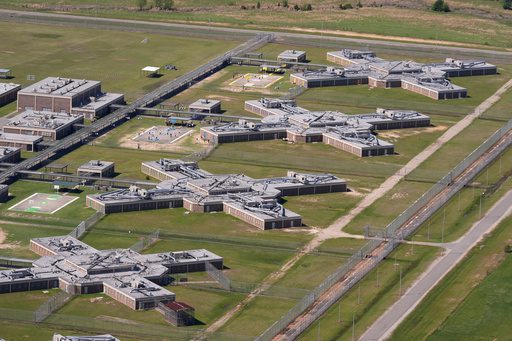
Louisiana Detention Facility: A Repeating Cycle of Death and ‘Insanitary Conditions’
POLICY WIRE — Washington, D.C. — Somewhere, a clock ticks. Maybe it’s marking the time since another man, desperate for safety or just a new start, ended up in a U.S. detention center. Or...

POLICY WIRE — Washington, D.C. — Somewhere, a clock ticks. Maybe it’s marking the time since another man, desperate for safety or just a new start, ended up in a U.S. detention center. Or perhaps it’s counting down to the next tragedy. Because, here in the U.S., a federal facility holding immigration detainees has clocked its second death in less than two months.
It’s the Winn Correctional Center in Winnfield, Louisiana, an Immigration — and Customs Enforcement (ICE) facility. But the deaths—they aren’t isolated incidents. They’re a stark punctuation mark on a laundry list of accusations, reports citing everything from [QUOTE_PLACEHOLDER] to outright medical malpractice. Just last week, an official watchdog report pointed out a whole heap of problems here.
Mamuka Artmeladze, 43, from the country of Georgia, was discovered unresponsive on June 4. An ambulance was called, he was carted off to a local hospital, — and a doctor pronounced him dead in under an hour. Not many details emerged about that day. ICE, in its Sunday press release, stated its staff tried [QUOTE_PLACEHOLDER], which is standard protocol. But still. Death.
He’d been cooped up at Winn for almost four months. Artmeladze, like most of the facility’s 1,500-plus male detainees, carried no criminal record. His transgression? Entering the country without authorization. After an encounter in September 2022, Border Patrol allowed him temporary residence under ICE supervision. But that status changed. And when ICE determined he [QUOTE_PLACEHOLDER] to stay, he was arrested in Alabama this past February.
And that’s the brutal calculus, isn’t it? This system—it can sweep someone up, hold them for months, and then, if a life ends, a press release and a pending autopsy are often all the public gets. He’s the 19th detainee to die in ICE custody since January 1 of this year, which is quite a figure. The numbers don’t lie, do they?
But Artmeladze wasn’t the first at Winn. Not recently, anyway. Alejandro Cabrera Clemente, a 49-year-old from Mexico, died on April 11. He was found unresponsive during a security check. Staff attempted resuscitation. Cabrera, like Artmeladze, was transported to the same hospital, where he also succumbed.
A coroner’s report for Cabrera, which The Associated Press obtained, said the cause was [QUOTE_PLACEHOLDER] due to cardiovascular disease. And here’s where it gets particularly chilling. The report mentions Cabrera woke up hours before his death, coughing — and wheezing. Yet, he said he felt okay, so he went back to sleep. An ICE report on Cabrera’s death later said other detainees tried to alert nurses to his unresponsiveness, noting his [QUOTE_PLACEER] and discolored skin. He had been getting treatment for high blood pressure and other medical issues throughout his detention, which raises its own set of concerns.
Because, well, these deaths aren’t happening in a vacuum. There’s mounting scrutiny on ICE detention centers, suspicions that detainees are facing severe medical neglect and living in frankly inhumane conditions. ICE? They’ve denied the charges. They always do. But sometimes, denials sound pretty thin.
Just last week, the Department of Homeland Security’s Office of Inspector General chimed in, releasing a report after an unannounced inspection at Winn. It was a proper bombshell. The inspection found a string of violations against standards governing [QUOTE_PLACEHOLDER], food service, how force is used, and medical care. The conditions sound less like a correctional facility — and more like… a fixer-upper. Only, with human lives at stake.
We’re talking water leaking through kitchen vents, big ol’ holes and exposed insulation in the intake building’s ceiling. Freezers? Holding food above safe temperatures. You really don’t wanna think about what’s in those. And then the medical staff. Their records for treatment and lab testing weren’t being updated, something the report explicitly warned could [QUOTE_PLACEHOLDER] for detainees. How’s that for patient care?
But it wasn’t just neglect. The report also flagged use-of-force policy violations. There was an officer who used a banned chokehold on a detainee. Another officer — and get this — reportedly stabbed a detainee’s thumb with a pen, simply because the detainee wouldn’t remove his hand from a door. These aren’t the acts of professional wardens; they’re disturbing instances of what appears to be petty cruelty, if not outright abuse.
ICE, for its part, agreed to nine recommendations for improvements. They’ve even implemented a few, they claim. It’s a good start, maybe, but it feels a bit like closing the barn door after a few prized horses have bolted. The question is, how many more lives have to be lost before these recommendations become truly binding mandates? And what about accountability?
What This Means
The repeated tragedies at Winn Correctional aren’t just isolated incidents. They’re symptomatic of a larger, systemic vulnerability within the U.S. immigration detention apparatus. The findings of the DHS Inspector General are more than damning; they paint a picture of facilities operating with an apparent disregard for basic human dignity and due process, conditions that wouldn’t be tolerated in mainstream correctional systems, let alone those housing individuals whose primary infraction might be seeking a better life.
Politically, these deaths provide more ammunition for critics who argue that the U.S. is failing to uphold its own human rights standards, particularly in how it treats migrants — and asylum seekers. This narrative reverberates far beyond American borders, influencing global perceptions. Nations in the Muslim world, and particularly countries like Pakistan — with its own complex migration dynamics and often-fraught relationship with Western immigration policies — watch such developments keenly. Perceptions of harsh or unjust treatment of migrants in the U.S. can complicate diplomatic efforts, fuel anti-American sentiment, and undermine calls for human rights adherence in other regions, especially where similar concerns about state-sponsored violence or inhumane detention practices are common. It also puts pressure on domestic advocacy groups and elected officials who champion immigrant rights, demanding greater oversight and fundamental reforms to an opaque system.
Economically, there are costs, too. While facilities like Winn Correctional often operate via private contractors or local sheriff’s offices receiving federal funds, the public outcry and subsequent investigations consume resources. Lawsuits against ICE or facility operators are inevitable when negligence is alleged, leading to payouts that ultimately come from taxpayer money. the ‘inhumane conditions’ identified often necessitate expensive repairs and overhauls—retroactively addressing problems that proactive oversight could have prevented. It’s a fiscal drain that compounds the human toll. For the international community, including partners and competitors in South Asia and elsewhere, the consistency of these reports speaks to a broader credibility deficit for Washington on matters of human rights and justice. You can read more about how complex diplomatic relationships are often influenced by domestic policy here: Beijing’s Game: Why Xi Jinping’s Pyongyang Jaunt Rattles Washington.
But this isn’t just about diplomatic relations or budgets. It’s about fundamental principles. When an entity like ICE consistently struggles to provide basic safety and medical care, the very legitimacy of its detention practices comes under question. And when alleged abuse, like an officer stabbing a detainee’s thumb, surfaces, it suggests a profound breakdown in oversight and training. Because what are we saying when such acts occur without swift, transparent accountability?
And because the implications are chilling. These aren’t hardened criminals often. These are individuals, some seeking refuge, some caught in bureaucratic tangles, but all deserving of fundamental protections. If we can’t get basic human decency right in these facilities, what does that say about the foundation of the system itself? For the global community, particularly developing nations whose citizens often navigate these systems, the repeated failures serve as a sobering, and often infuriating, benchmark. It reinforces concerns about whether public scrutiny truly breaks poise, or if some institutions are just too big to fail—or too entrenched to truly reform.