


Global Air Travel: Your Wallet Is the Latest Casualty of Geopolitical Flare-ups
POLICY WIRE — Washington D.C., USA — That eagerly anticipated summer getaway? It’s not just a budget item; it’s now a barometer for international stability. Because while folks were planning beach...

POLICY WIRE — Washington D.C., USA — That eagerly anticipated summer getaway? It’s not just a budget item; it’s now a barometer for international stability. Because while folks were planning beach vacations or business trips, the invisible gears of geopolitics were grinding, spitting out numbers that’d make even the most seasoned airline executive flinch. Global air travel, an industry already operating on perilously thin margins, just got slammed with a fiscal headache—a $20 billion dollar one, to be precise—all thanks to a simmering pot far from any terminal.
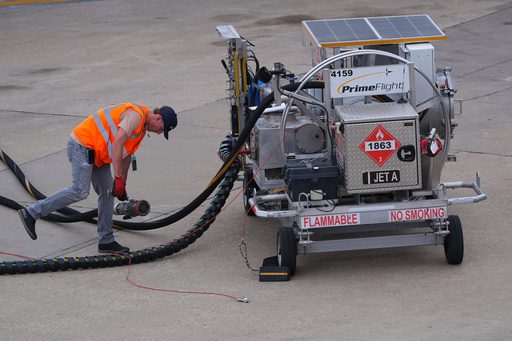
It’s a brutal equation, really. Carriers here in the U.S. managed to shell out a staggering $6.5 billion on jet fuel during April alone. And that’s not some statistical anomaly; that’s up a colossal 78% from just a year prior. You’d think they were flying more, right? But no, government data shows they actually burned slightly less fuel. Think about it: paying way more for less. It’s enough to make a bean-counter weep. And for many of us, it means the dream of hopping on a cheap flight to see Grandma just flew out the window, possibly for good. [QUOTE_PLACEHOLDER]
This isn’t a problem isolated to a single country. The International Air Transport Association, or IATA for those in the know—the big dogs representing pretty much all the world’s airlines—recently sounded the alarm bells, loud and clear. They’re now projecting global airline net profits in 2026 to hit a paltry $23 billion. You wanna talk about a downgrade? That’s almost half their previous, much rosier outlook of $41 billion. This isn’t a bump in the road; it’s a crater. And the primary culprit isn’t hard to find.
But the true kicker here isn’t just airline balance sheets; it’s the chain reaction set off by conflict, specifically in the Middle East. When American and Israeli forces squared off against Iran earlier this year, much of the crucial shipping traffic through the Strait of Hormuz—that narrow, pivotal chokepoint right next to Iran—got stuck, like traffic on a Monday morning, but way more serious. That jam doesn’t just mean fewer goods; it pushes oil and, consequently, jet fuel prices sky-high. The ramifications of such regional instabilities extend well beyond the immediate theater of conflict. For a country like Pakistan, for instance, heavily reliant on imported energy, disruptions around the Strait of Hormuz translate directly into higher fuel prices for its national carrier, PIA, and a significant dent in the country’s already strained foreign exchange reserves. It’s a cruel feedback loop, you see.
To absorb these insane costs, airlines worldwide haven’t had much choice. They’ve raised airfares, piled on fees, cut perks, and yeah, they’ve just flat-out canceled flights or trimmed down schedules. You’re noticing it, aren’t you? Those convenient red-eye options or direct routes suddenly vanishing. It’s not an accident. The transience of global air travel is suddenly feeling less fluid.
Look at the numbers. According to the Bureau of Transportation Statistics, the cost of a gallon of jet fuel in April was $4.11. Just last April, it was $2.31. That’s nearly double in twelve months for the exact same commodity. Geopolitical events have a nasty habit of throwing economic wrenches into the works.
📄 POLICY WIRE WHITEPAPER PUBLISHED: PAKISTAN'S NATIONAL SECURITY POLICY PRIORITIES
👉 READ BY CLICKING HEREWillie Walsh, IATA’s director general, didn’t mince words: Airlines are bearing the brunt of the fuel price shock. While airfares are rising, airlines are still absorbing part of the hike in their bottom lines. And that’s the uncomfortable truth. IATA expects jet fuel to average $152 a barrel in 2026, which is nearly 70% higher than in 2025. That monstrous bill for global aviation? It’s jumping from $252 billion to $350 billion in a year. And, fuel is forecast to account for more than 31% of airline operating expenses in 2026, up from about 25% last year. It’s an escalating drain.
You’ve seen the headlines yourself. American Airlines had to suspend some routes this summer. Lufthansa Group plans to cut 20,000 short-haul flights. Air Canada pulled its New York JFK service for months. It’s a broad, almost desperate scramble across the industry, with giants like United, Delta, Air France-KLM, and even Asian carriers like Philippine Airlines and Cathay Pacific either cutting services, rejigging schedules, or halting expansion plans. It’s not just a Western issue; it’s a global contraction.
What This Means
This isn’t merely about airline profits; it’s a tangible demonstration of how geopolitical tremors in one part of the world can create economic aftershocks felt globally. The Middle East remains the planet’s energy jugular, and any constriction there has an immediate, inflationary impact on vital commodities like oil. This scenario highlights the inherent fragility of a globalized economy that’s still heavily tethered to fossil fuels, and therefore, to the often-volatile politics of producing regions.
Economically, you’re looking at higher prices for pretty much everything that moves by air – passengers, cargo, everything. This contributes to broader inflationary pressures, impacting consumer spending power and potentially stalling economic recovery efforts worldwide. For economies in South Asia and the wider Muslim world, many of which are already grappling with debt, currency devaluations, and energy deficits, this sharp surge in fuel costs isn’t just an inconvenience; it’s a severe headwind to stability and growth. It drains national coffers that might otherwise be spent on essential public services or infrastructure development. reduced air connectivity affects trade, tourism, and direct foreign investment, slowing the very engines these economies rely on. Politically, the higher costs feed public discontent, putting pressure on governments already struggling with a confluence of domestic and international challenges. It’s a stark reminder that even seemingly distant conflicts possess an economic gravity that pulls everyone in.